On 18/12, the Lang Son Provincial Police Investigation Agency announced the indictment of 22 individuals involved in this criminal network. They face charges of using computer networks, telecommunications networks, and electronic means to appropriate property.
The defendants, aged 18 to 41, hail from various provinces including Lang Son, Dong Nai, Thanh Hoa, An Giang, Gia Lai, Lam Dong, Hai Phong, and Ha Noi. Nguyen Thi Chin, also known as Hoa, a 30-year-old from Hai Phong, was identified as the leader of the Vietnamese segment of the ring. She was the common-law wife of the foreign mastermind.
Initial investigations reveal that the group operated under the guise of various shell companies within the Tam Thai Tu, The Sampeou, Kaol Thum, and Kandal areas of the Kingdom of Cambodia. These facilities were managed by foreign nationals, with all operations conducted in secrecy.
The scam began with new recruits being provided with detailed scripts and dialogues to memorize. Each individual was then assigned to a specific team to carry out the fraud. Chin, as the leader of team one, was responsible for directly managing and overseeing the scam operations, including task assignment. She also monitored daily targets and directed staff to approach and entice victims to appropriate their assets.
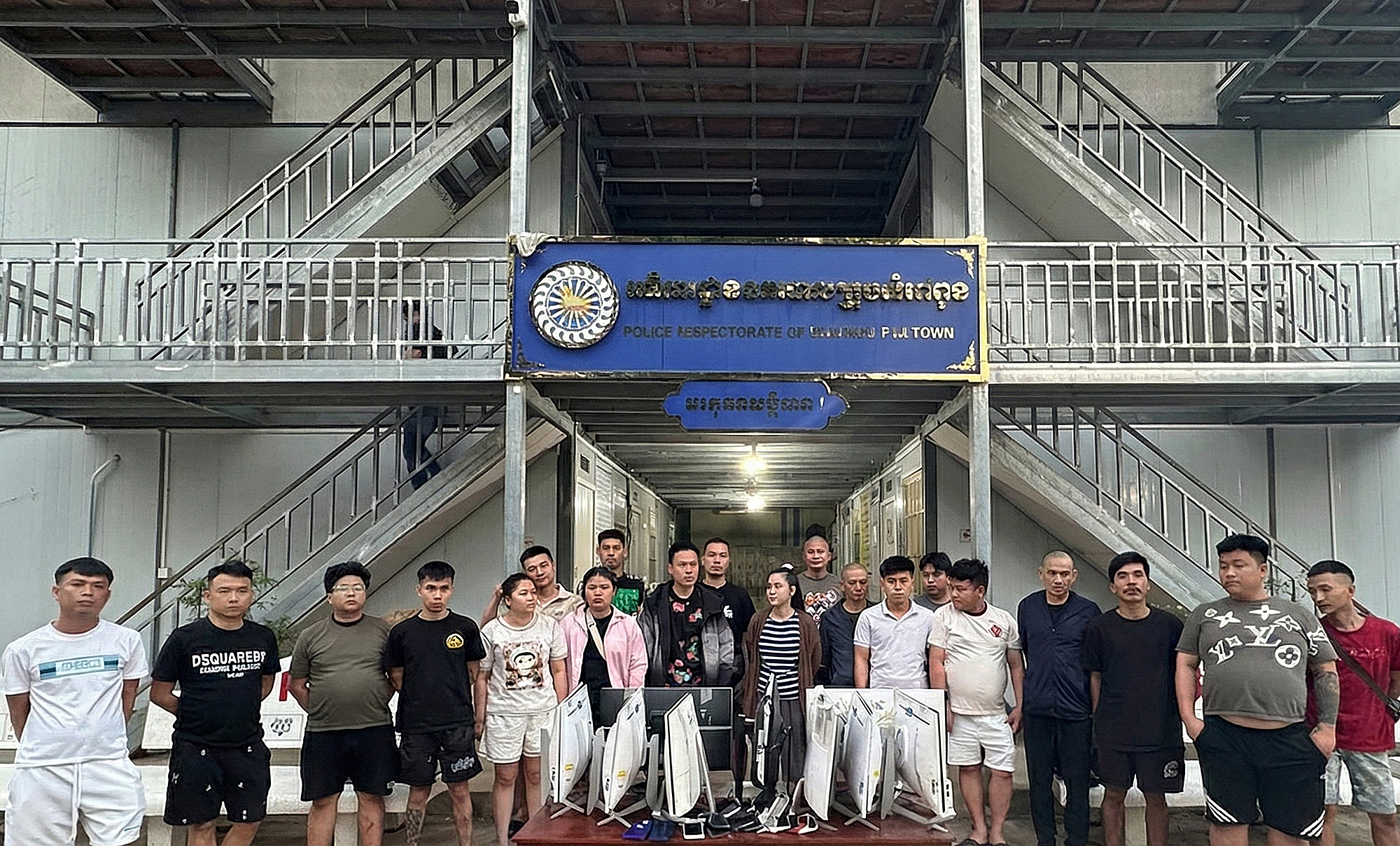 |
This ring operated from the Tam Thai Tu area in Cambodia to carry out their scams. Photo: Police provided |
Team members directly engaged in fraudulent activities by creating fake accounts on social media platforms, primarily TikTok, Facebook, and Zalo. To initiate conversations and build rapport, they used stolen images of others to craft personas of successful, single, or divorced individuals seeking companionship. The scammers predominantly targeted middle-aged women who were single or divorced.
Once trust was established, they engaged in frequent messaging and video calls, sharing fabricated stories about their lives, work, and personal circumstances. They even concocted tales of betrayal and isolation to elicit sympathy and pity. The next step involved painting a picture of a romantic future and happiness, promising marriage and cohabitation, followed by opening a company and investing in business together. When the victims' trust was fully secured, the "closing the deal" phase commenced.
Exploiting emotions to gain trust
The scam's script involved inviting victims to participate in fixing security vulnerabilities at casinos in Hong Kong and Macau. They claimed to have discovered loopholes that could bypass the system to earn money daily at 3 p.m. and 8 p.m. In reality, victims were lured to fake websites operated by the scammers.
To build confidence, scammers would temporarily grant victims access to their own accounts, claiming they were "too busy with work or in security meetings" to manage them. When victims performed transactions, the fake system displayed successful withdrawals, complete with images of receipt confirmations. However, these were fabricated tricks, and no real money was ever received.
Next, victims were instructed to open their own investment accounts and deposit real money into the fake system, with promises of high returns ranging from 5% to 30% daily. Initially, victims were allowed to make small withdrawals to reinforce their belief in the scheme. When larger sums were deposited, scammers used emotional manipulation and psychological pressure, urging further investment to quickly accumulate funds to "build a shared future."
 |
The arrested scam group was brought across the border to Vietnam. Photo: Police provided |
If victims lacked funds, they were encouraged to borrow money, mortgage assets, or ask relatives for help. Once victims could no longer provide funds, the scam group simulated system malfunctions, delayed withdrawals, then locked accounts and cut all communication. All images, videos, transactions, and online conversations were deleted or disabled, causing victims to lose all invested money and making it impossible to trace the transactions.
Investigators determined that this group defrauded nearly 3,000 victims using these tactics, with total transactions exceeding 7,500 billion dong.
After launching a special investigation, the Lang Son Provincial Police led a coordinated effort with professional units and the An Giang Provincial Border Guard. They arrested 20 individuals involved in the case within the Tam Thai Tu special zone in the Kingdom of Cambodia. These individuals were subsequently repatriated from Cambodia to Vietnam via the Long Binh border gate in An Giang province.
Police described this as an organized, large-scale, professional, sophisticated, and cross-border scam. Vietnamese operators colluded with foreign masterminds to perpetrate online scams. This network not only caused significant economic damage but also carried potential risks of other crimes such as money laundering, human trafficking, forced labor, and organizing illegal immigration.