This proposal is part of the draft Law on Cultural Industry Development, currently under appraisal by the Ministry of Justice, and is expected to be submitted to the National Assembly for consideration in October.
The law aims for cultural industries to contribute 7% of GDP by 2030 and 9% of GDP by 2045.
The draft stipulates that investors of civil infrastructure projects, meeting specific scale and project type criteria set by the Government, must allocate a portion of their project budget to cultural industries. Investment levels and related regulations will be determined by the Government.
Cultural and artistic components expected to receive investment in these projects include: building, installing, and displaying public art; sponsoring public cultural industry facilities; contributing to the Culture and Arts Fund; or constructing, repairing, renovating, and upgrading cultural industry structures.
While not mandatory, the law encourages investors to dedicate land and space within projects for cultural industry investment, fostering harmony between economic, urban, and sustainable cultural development.
Additionally, the draft proposes allowing intellectual property, such as games and film scripts, to be used as collateral for bank loans, enabling these assets to generate revenue and circulate equally in the financial market.
Maximum tax exemptions and reductions for cultural businesses
Alongside cultural infrastructure development, the law also, for the first time, proposes a "co-investment" mechanism between the state and businesses in cultural industry development projects.
This means the state will contribute capital, purchase shares, or share revenue with the private sector in key cultural product production projects and original, distinctive intellectual property.
Management agencies note that cultural investments often carry high risk and long capital recovery periods, making the private sector hesitant. The state's co-investment or investment through venture funds aims not to replace market functions but to play a leading role, building confidence for other investors.
Regarding tax policy, the draft law identifies investment in cultural industry infrastructure as a specially incentivized investment sector. Creative industrial complexes and zones are therefore proposed to receive incentives equivalent to areas with particularly difficult socio-economic conditions. These incentives include maximum current exemptions and reductions for land rent and corporate income tax.
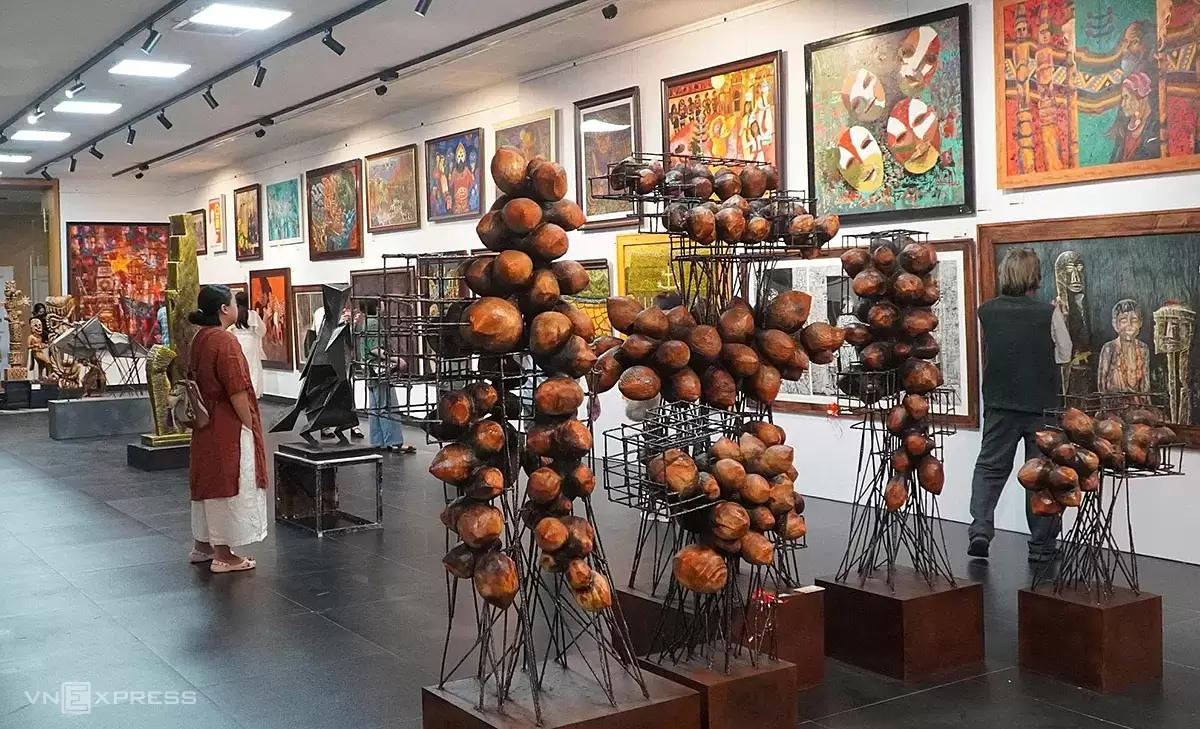 |
The 30th Regional Fine Arts Exhibition V - South Central and Central Highlands opened on 6/8, showcasing 257 paintings, graphic works, and sculptures by 217 artists from the region. *Ngoc Oanh* |
For businesses producing and supplying cultural products, the state proposes import tax exemptions for specialized machinery, equipment, and materials not yet produced domestically, to support the creation and production of digital content. These policies are expected to help domestic cultural businesses enhance their technological capabilities and competitiveness against international products.
International experts in this field, along with their families, will also be granted 5-year temporary residence cards, enjoying personal income tax exemptions for the first two years and a 50% reduction for the subsequent four years.
The draft is currently open for public feedback until 25/8.
Hai Thu