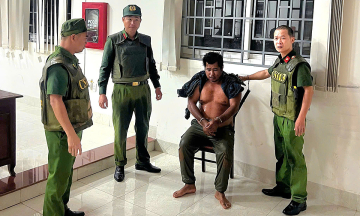
On 11/9, Nguyen Tuan Anh was arrested by the Ho Chi Minh City Police's Criminal Police Department for investigation into property robbery and illegal possession of firearms.
 |
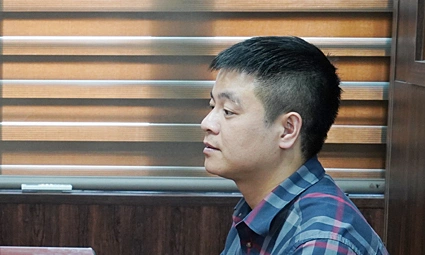
Nguyen Tuan Anh at the investigative agency. Photo: Ho Chi Minh City Police
Earlier, on the morning of 9/9, police received reports of a robbery at a villa. The armed perpetrator broke in, held family members captive, and stole money.
The Ho Chi Minh City Police Board of Directors directed the Criminal Police Department to coordinate with An Khanh Ward Police and other specialized units in the pursuit. Within over three hours, detectives apprehended Tuan Anh, the perpetrator.
According to the investigation, Tuan Anh developed the robbery plan after failed cryptocurrency investments left him 1,3 billion dong in debt. He identified his target through social media, where the victim in An Khanh Ward regularly posted images of their home, vehicles, and personal life, suggesting the family's affluence.
Tuan Anh prepared two handguns and bullets, thoroughly surveying the victim's house. He rented an oto for his escape. After several days of stakeouts around the villa, avoiding cameras and finding an entry point from the river behind the house, he decided to act.
In the early morning of 9/9, Tuan Anh scaled a wall to enter the villa. He waited for everyone to be asleep before searching rooms with a handgun. When discovered, he used the gun to restrain and threaten the family, demanding they open the safe. Family members attempted to talk him down.
Seizing a moment of the robber's inattention, a family member escaped and alerted police. Realizing he was exposed, Tuan Anh fired a shot, lightly injuring one person, then fled. Following his trail, police arrested Tuan Anh, seizing two revolvers, 14 bullets, and 5 shell casings, identified as military-grade weapons.
Following this case, authorities issued a strong warning: individuals should exercise caution when publicly posting images and information on social media. This includes details revealing valuable assets, residences, daily routines, and family member information.
Criminals can collect and analyze this seemingly harmless data to select targets and plan their crimes.
Quoc Thang - Pham Hai