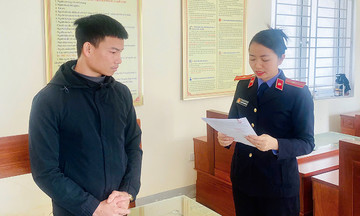
Phan, a woman from a large, impoverished family in a village in Yingtan City, Jiangxi province, poisoned her husband, Wu, on 27/7/1997. Her act was the culmination of a deeply abusive marriage that began with an arranged "exchange marriage" when she was 24 years old. After her crime, Phan fled, living under a new identity for 27 years before police finally apprehended her in 2024.
The tragic events unfolded from a brutal marital conflict. Wu was a gambler, violent, and frequently beat Phan, often forcing her into sexual acts even during sensitive periods. Phan felt trapped, as her parents had rejected her attempts to divorce, fearing her third brother would also lose his wife if the "exchange" fell apart. On 26/7/1997, Wu verbally abused and physically assaulted Phan while they worked in the fields and later at home. That evening, he again forced her into a sexual act and beat her when she resisted. It was then that Phan resolved to kill him.
The next morning, 27/7, as Wu prepared for work, Phan added tetramine rat poison to the rice she was cooking for his lunch. She cooked porridge and stir-fried vegetables in a separate pot. Upon returning home, Wu ate the poisoned rice. Soon after, he experienced severe stomach pain, convulsions, and foamed at the mouth. Wu’s father initially believed his son suffered from sunstroke and sought traditional remedies. Despite being rushed to the village clinic, where a medic urged immediate transfer to a county hospital due to his critical condition, Wu died shortly after arrival.
Initially, Wu’s family did not suspect foul play, attributing his death to severe sunstroke from working in the fields. His parents, along with Phan, organized the funeral and burial the following day. However, when Wu’s older brother, who worked in Shanghai, returned home and heard the details, he suspected poisoning and reported his concerns to the Yujiang County Public Security Bureau in Yingtan City.
On 30/7, police exhumed Wu’s body for an autopsy. The examination confirmed the presence of tetramine rat poison in his tissues and stomach, determining the cause of death as poisoning. Investigators focused on those who had contact with Wu’s food, identifying Phan, his father, and a young nephew. Phan became the primary suspect when police noted she had discarded all the leftover food from that day. Phan fled immediately after the police opened their investigation. Due to limited forensic technology at the time, authorities were unable to track her.
For 27 years, Phan lived as a fugitive. After fleeing Wu’s home, she took a bus to Zixi County, where she stayed with a friend of her older brother. Through this friend’s introduction, Phan found work at a bakery in Jiangsu province, adopting a new name to conceal her identity. In 1998, her friend introduced her to a man named Liu, then around 30 years old, in Guixi. Although Liu found Phan’s background suspicious, he did not dwell on it. With lax household registration management at the time, Liu helped Phan register at the local police station under her new name. They married and had two sons. Liu recounted that Phan was extremely cautious: "She never dared to argue with anyone in the village. In the first few years, she rarely showed herself to villagers. Later, as her sons grew up, she gradually integrated."
The cold case of Wu’s poisoning remained unsolved until 2024, when the Yujiang County Public Security Bureau launched a campaign to resolve long-standing murder cases, prioritizing Wu’s death. A breakthrough emerged when police discovered that Phan’s birth family had a hereditary thyroid condition. Investigators cross-referenced women of similar age suffering from thyroid disease across Yingtan City, identifying 18 potential matches. Through careful comparison, they focused on a woman named Lu in Guixi, whose appearance strongly resembled Phan’s.
Further investigation revealed that Lu had moved from Yujiang to Guixi in 1998. After her marriage, she never returned to her birth family, nor did any family members visit her. On 21/7/2024, police confirmed that Lu was indeed Phan and arrested her at her home. During interrogation, Phan confessed to the crime she committed 27 years prior.
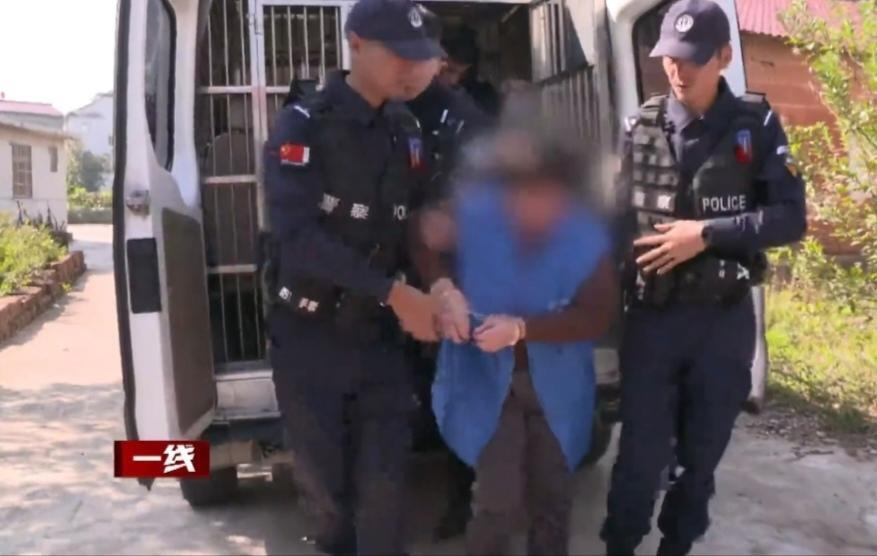 |
Phan being escorted by police to the crime scene 27 years later. Photo: CCTV |
According to a ruling published on the Supreme People's Court’s website, the trial court found Phan guilty of intentional homicide. Her actions of unlawfully taking another’s life through poisoning, stemming from marital conflict, resulted in one death. The court sentenced Phan to life imprisonment and lifelong deprivation of political rights. She was also ordered to pay Wu’s family over 50,000 yuan in funeral expenses and other economic damages in a related civil lawsuit. Phan appealed the verdict, but the appellate court rejected her appeal.
Tue Anh (according to Hongxing News, China Court)