Traditionally, birdwatching evoked images of retirees in khaki vests, guidebooks in hand. The Covid-19 pandemic shifted this perception. A 2022 survey by the U.S. Fish and Wildlife Service revealed that about 37% of people aged 16 and older participated in wildlife observation, including birdwatching. On social media, videos on this topic garner hundreds of thousands of views.
"Birdwatching is becoming a trend. It's like eating potato chips; once you start, it's hard to stop," said Vesper Rothberg, 27.
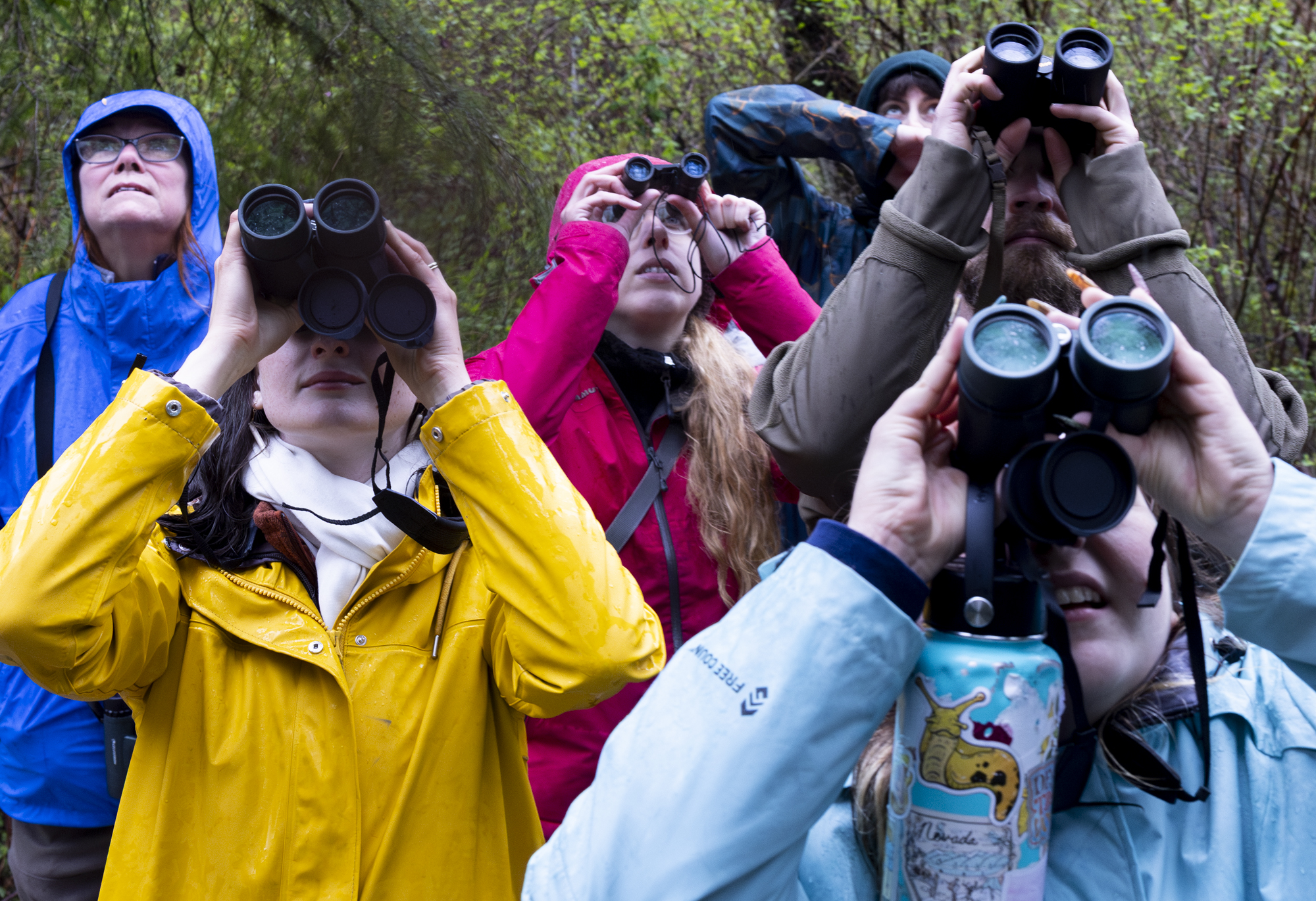 |
Birdwatching enthusiasts point binoculars towards a tree, searching for woodpeckers during a walk with the Bellingham Birdwatching Society on 14/4. Photo: Cascadiadaily |
The trend's popularity stems from two reasons. Advancing technology makes birdwatching more accessible through apps that identify bird calls and images. Concurrently, it offers young people a chance to 'detox' from smartphones and escape the stress of modern life. A study in Scientific Reports indicates that listening to bird calls improves mental well-being for up to 8 hours afterward.
Kate Brown, 30, founder of a birdwatching group in Washington state, often integrates 10-minute mindfulness breaks into her trips. "People seek to escape anxiety and focus on the present moment, nature, and those who share their interests," she stated.
This activity also fosters community connection. Birdwatching walks now attract diverse age groups, from students to individuals in their 70s. Rothberg recounted striking up a conversation with an older gentleman in Florida while they both observed burrowing owls. "We chatted freely, even though we normally wouldn't have many opportunities to interact. The birds bridged that gap," Rothberg explained.
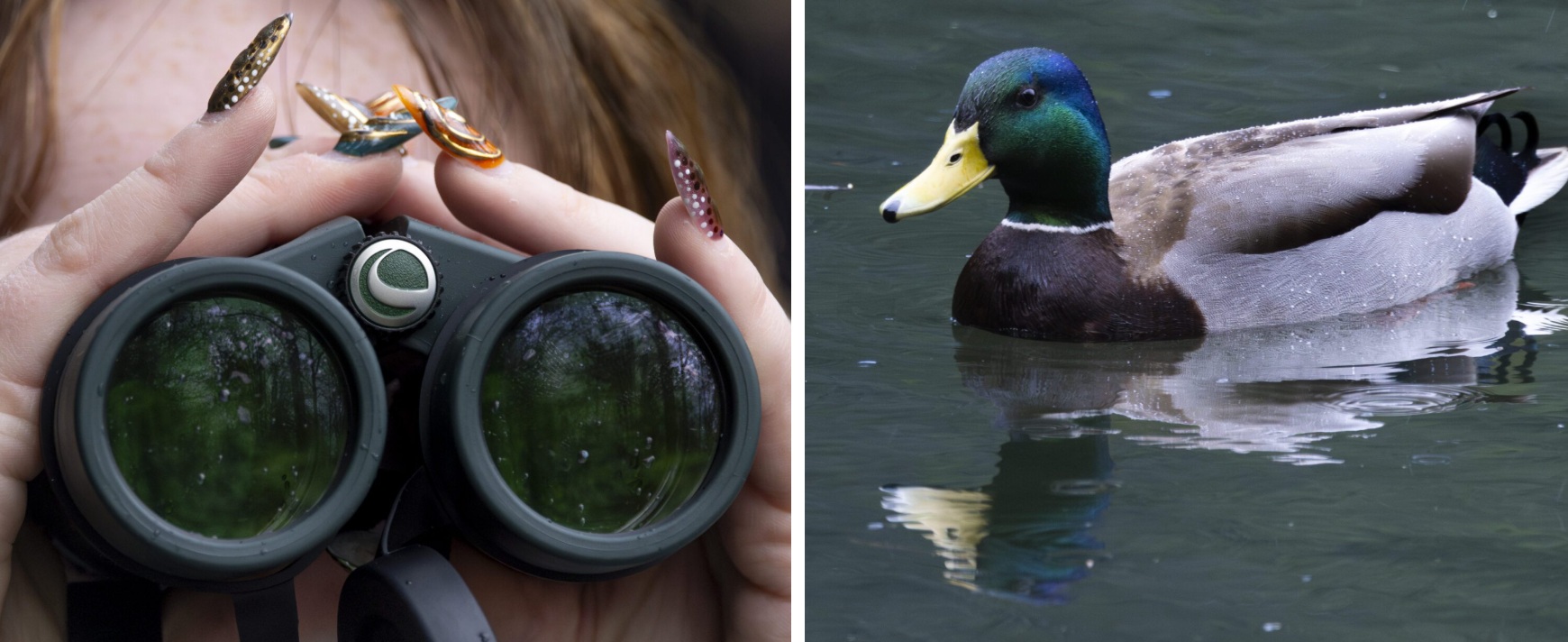 |
Clove Veach observes a duck through binoculars during a birdwatching walk organized by Bird Bellingham at Whatcom Falls Park. Photo: Cascadiadaily |
The rise in young participants is transforming the structure of conservation organizations. Alex Jeffers recalled being a rare member under 60 when he was invited to join the board of a birding society in 2019. Currently, data from amateur birdwatchers plays a crucial role, helping scientists monitor and protect species' habitats.
To begin this hobby, Jeffers advises young people to start small, such as observing all bird species within a 1,6 km radius of their home. "Just by watching the sparrows sing in your yard for 10 minutes each day, you'll find yourself gradually falling in love with it," Rothberg said.
By Nhat Minh (Source: Cascadiadaily)