Fitness coach and health consultant Toby King from the UK highlights that exercises demanding strong muscle tension, such as squats, weightlifting, or intense abdominal work, often lead individuals to unconsciously tighten their pelvic floor muscles.
"Many men tend to brace their bodies when lifting heavy objects and maintain this tension throughout the day. Over time, this can lead to overactivity in the pelvic floor muscles, hindering erectile function and even causing pain," King explains.
Other exercises, including leg presses, ab wheel rollouts, hanging leg raises, and planks, can have similar effects due to the continuous demand for core engagement. Additionally, individuals who frequently cycle or participate in triathlons may experience pressure on nerves and muscle tissue in sensitive areas from prolonged incorrect saddle posture.
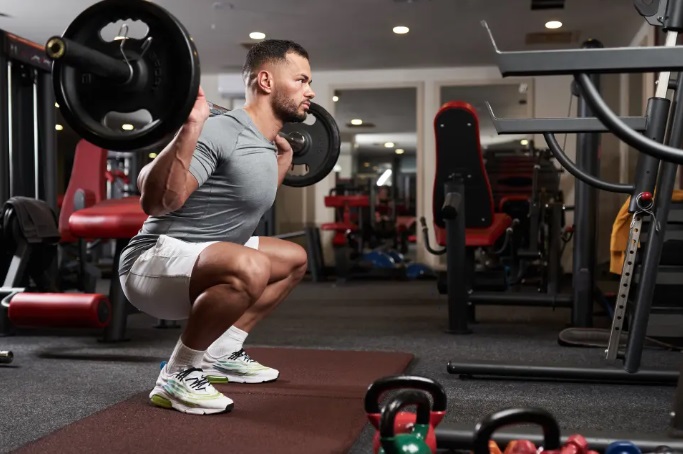 |
Illustration: *New York Post*.
Beyond physical factors, anxiety about declining sexual function can increase stress, making it more challenging for pelvic floor muscles to relax and perpetuating a vicious cycle.
Despite these concerns, individuals do not need to avoid squats or weightlifting entirely. Experts recommend modifying training routines, particularly by limiting movements that intensely impact the groin, inner thighs, and deep hip muscles, especially if experiencing discomfort.
Learning to relax the pelvic floor muscles is crucial. This can be achieved through breathing exercises and glute and hip stretches like child's pose or happy baby pose. Furthermore, "reverse Kegel" exercises, which focus on pelvic floor relaxation through deep diaphragmatic breathing, can help alleviate tension in the area.
Doctor Tia Dankberg at Brooks Rehabilitation Physical Therapy Institute in the US emphasizes that no muscle group functions in isolation. Interventions often include stretching exercises aimed at improving the flexibility of the chest and hips, which in turn reduces pressure on the pelvic floor. If symptoms persist, consulting a physical therapist is advisable to identify the specific underlying cause.
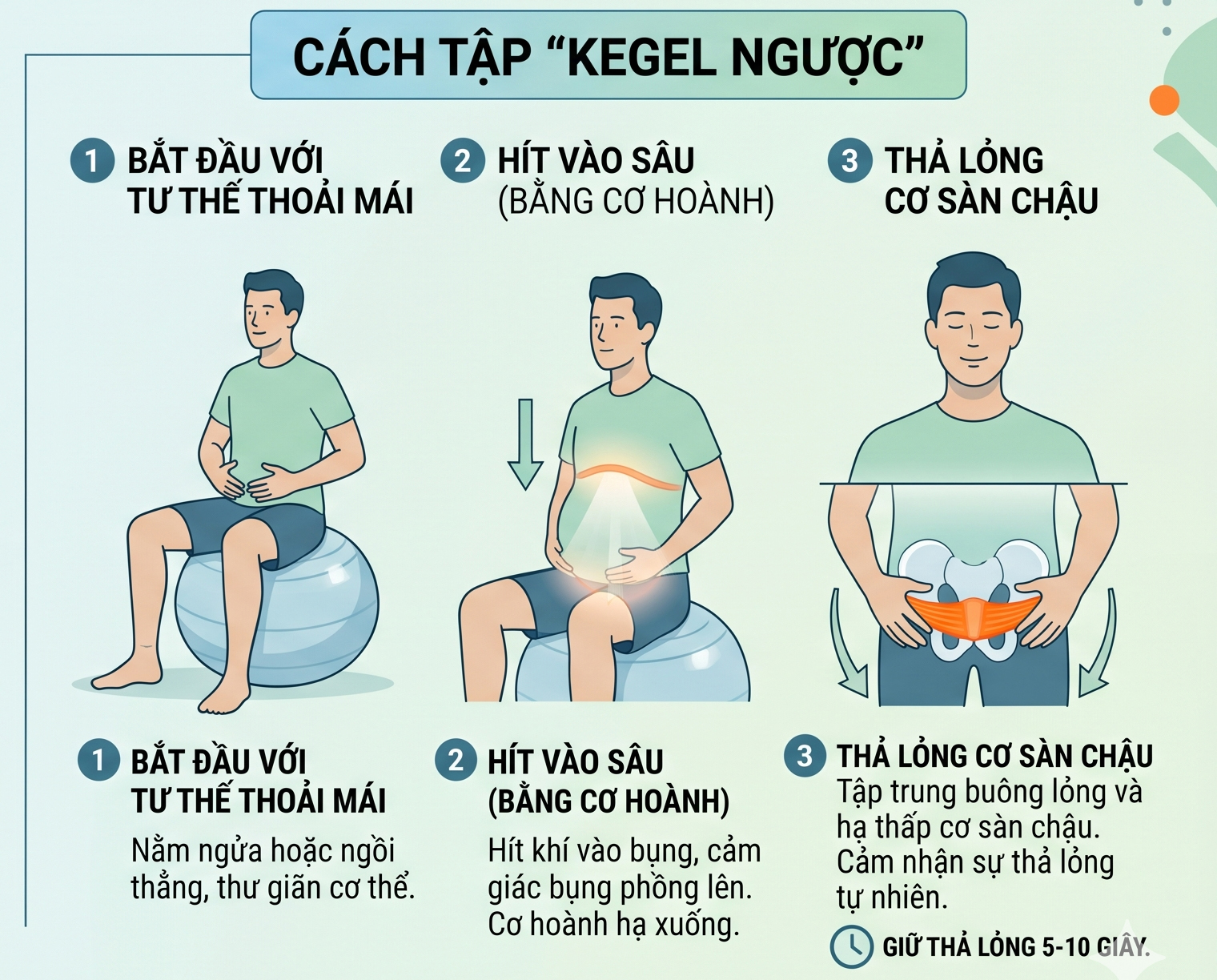 |
Three steps for "reverse Kegel" exercises to relax the pelvic floor. *Graphics: NM/Gemini*.
Nhat Minh (According to New York Post)