Why does chicken float before being fully cooked?
From a scientific perspective, when chicken is boiled, high temperatures cause proteins in the meat to coagulate and fat under the skin to melt. This process expels gases and steam, reducing the chicken's density relative to water, causing it to float.
However, this phenomenon only reflects an external physical change. For native Vietnamese chickens, especially older or free-range varieties which have thick and sinewy thigh muscles, heat penetrates very slowly. Therefore, a chicken floating does not mean that its 'core' – the deepest part of the thigh – has reached a safe cooking temperature.
Conversely, some chickens may be fully cooked but do not float prominently, especially when boiled in a deep pot or over very low heat. Thus, floating is merely a reference sign, not a definitive indicator of doneness.
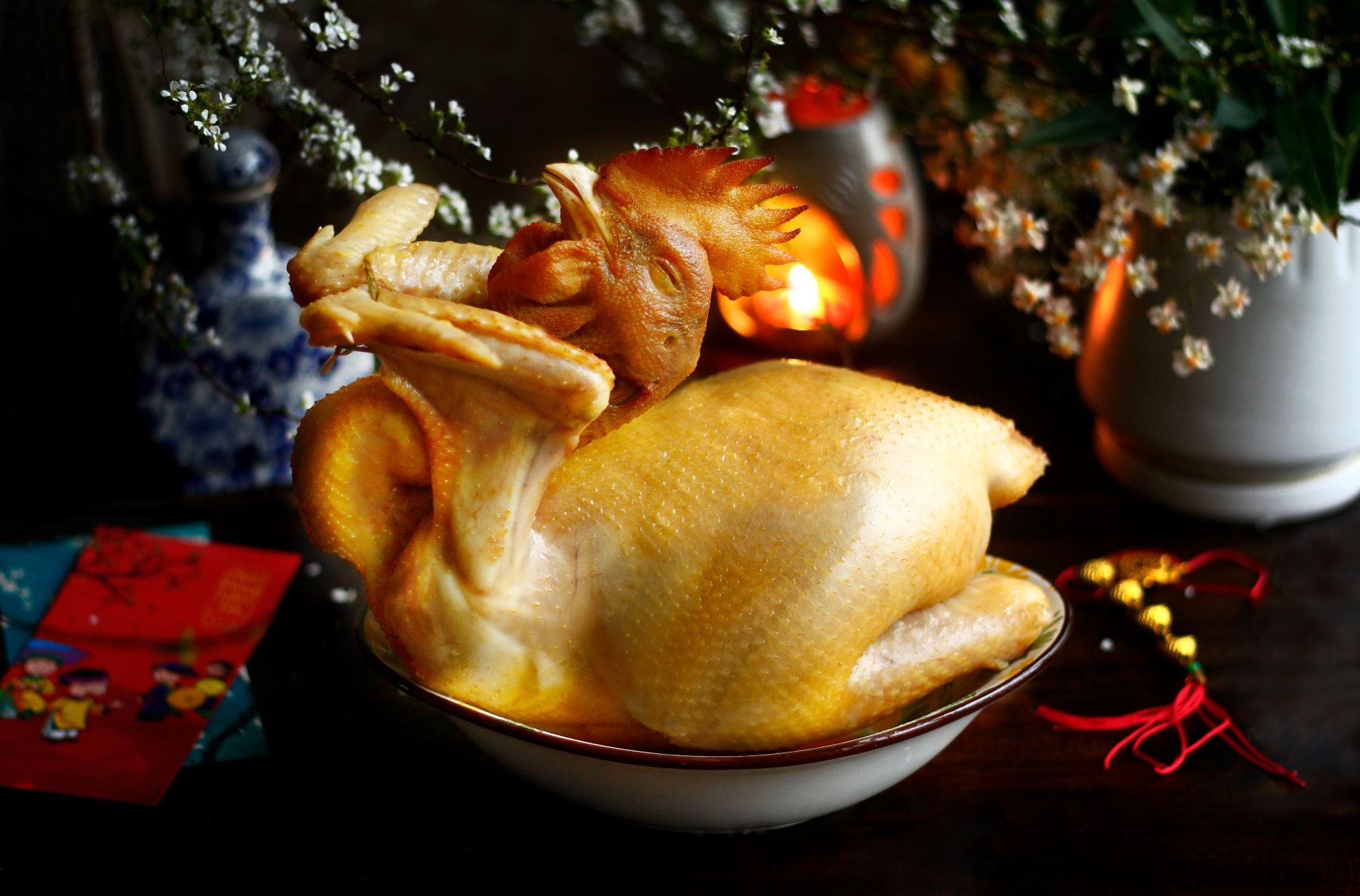 |
Illustration: Bui Thuy |
Poking the thigh – the 'gold standard' for checking doneness
According to international food safety organizations, poultry meat should reach an internal temperature of approximately 74°C to eliminate harmful bacteria. The simplest way to check this without a thermometer is to use a bamboo chopstick or a sharp skewer to poke the thickest part of the thigh.
Here's what to look for:
- If pink or red liquid seeps out: Myoglobin has not fully broken down, indicating the meat is not yet cooked and needs more boiling.
- If clear liquid without any blood seeps out: The chicken is perfectly cooked. The meat will be firm but not tough or mushy.
The secret to boiling ceremonial chicken: 'Boil for 5 minutes, simmer for 20 minutes'
To ensure a beautiful, golden-skinned ceremonial chicken for Giao Thua (New Year's Eve, the transition from the old to the new year) that is free from cracks and red bones, avoid boiling it vigorously from start to finish. Instead, apply the 'Om' technique:
- **Choose a pot**: Use a thick-bottomed, deep pot. Line the bottom with a ceramic plate or rack to prevent the chicken skin from sticking and tearing.
- **Boiling water**: Fill with enough water to fully submerge the chicken from the start. Add roasted ginger, shallots, and coarse salt to neutralize odors and enhance the meat's sweetness.
- **Boiling phase**: Cook over medium heat until the water gently simmers. Continuously skim off foam to keep the broth clear and prevent the chicken from darkening.
- **"Om" phase**: Once the water boils, reduce the heat to a very gentle simmer for about 5 minutes, then turn off the stove. Cover the pot tightly and let the chicken steep ("om") in the hot water for 20 to 30 minutes, depending on its weight.
The residual heat in the water will slowly cook the chicken thoroughly to the bone, preventing the skin from tearing and the meat from drying out.
Cooling: Remove the chicken from the pot and immediately immerse it in a basin of clean ice water (you can add a squeeze of lemon or kumquat) to help the skin contract, become crisp, and appear whiter. For an attractive golden skin, you can brush on a layer of rendered chicken fat mixed with turmeric.
Important note: Never carve the chicken while it is still hot, as this will crush the meat fibers, resulting in crumbly and dry pieces. Always allow the chicken to cool completely and drain thoroughly before carving and arranging it on a serving platter.
Bui Thuy