At 6 p.m. on 9/2, Le Minh, 27, left his office on Pham Van Bach Street in Cau Giay Ward. After a stressful day of closing books, he chose a taxi instead of a motorbike to catch some rest. However, this decision led to regret.
His taxi took 30 minutes to crawl past the company gate. Through the window, Minh saw motorbikes jammed onto the sidewalks. Over two hours later, Minh reached Nguyen Trai Street, about 5 kilometers from his starting point. Only a few hundred meters remained to his home, but ahead of him was a sea of red taillights, with no gaps in the traffic.
At 8 p.m., Minh decided to pay the fare and get out to walk. He squeezed through narrow spaces between car bumpers, the acrid heat of engines blowing into his face. "The road home has never been such a physically draining ordeal," Minh said. He added that he skipped dinner due to exhaustion.
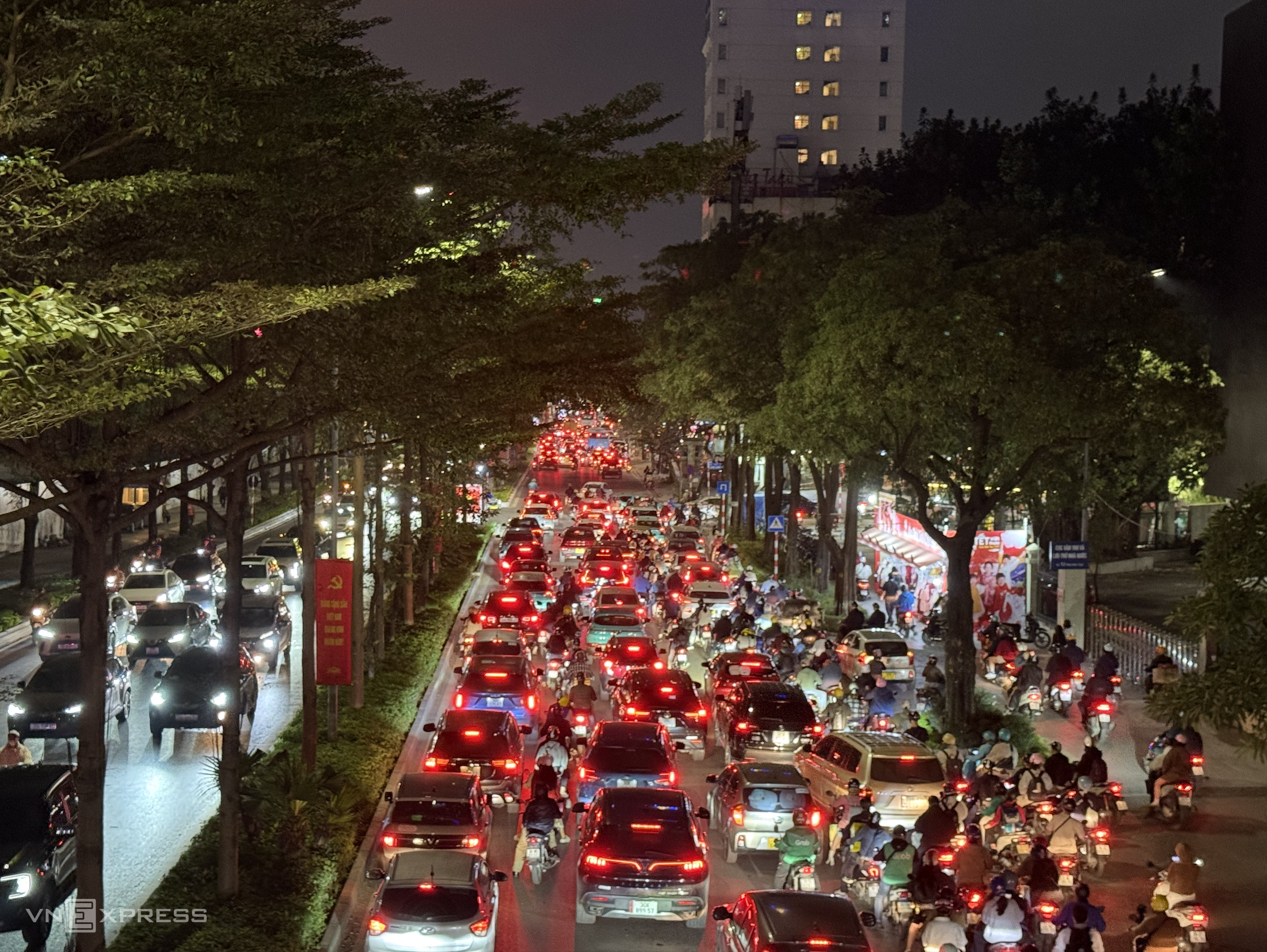 |
Dao Tan Street, Giang Vo Ward, was severely congested during the evening commute from Kim Ma to Cau Giay at 8 p.m. on 8/2. Photo: Quynh Nguyen. |
Dao Tan Street, Giang Vo Ward, was severely congested during the evening commute from Kim Ma to Cau Giay at 8 p.m. on 8/2. Photo: Quynh Nguyen.
In a similar predicament, Thanh Lieu, 30, from Tay Ho Ward, learned her lesson after a week of being stuck for three hours daily on the 8,5-kilometer route from Tran Duy Hung to her home. Last night, her work bag included bread, milk, and a fully charged phone.
"I had to use the restroom and eat a snack right in the car because I knew I would be trapped for hours," Lieu recounted. Normally, she would linger at the office to wait out peak hours, but in the days leading up to Tet, this strategy proved futile as traffic extended late into the night. Looking at nearby vehicles, Lieu saw many children dozing off on their parents' backs. "My commute home takes longer than catching a bus to my hometown of Thanh Hoa," she remarked.
VnExpress observations over the past week showed traffic groups constantly updating congestion points. Traffic maps glowed red from Ring Road 2 and elevated Ring Road 3 to radial routes like Lang, Truong Chinh, and Giai Phong. Gridlock spread to areas including Hoan Kiem, Cau Giay, Thanh Xuan, Nam Tu Liem, and Bac Tu Liem. Many drivers reported travel times three to four times longer than usual.
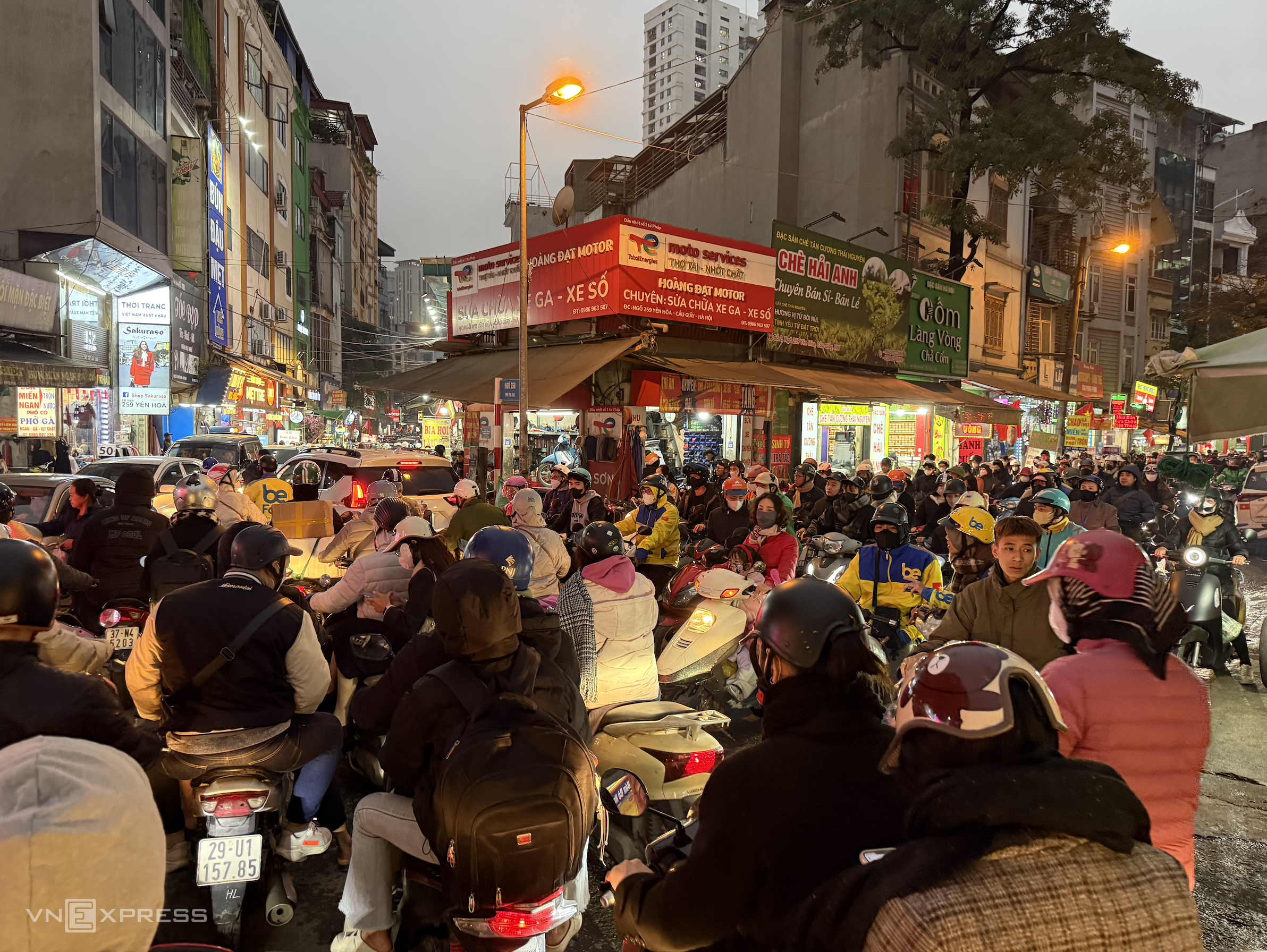 |
Yen Hoa Street, Yen Hoa Ward, Hanoi, was severely congested, with residents waiting 15-20 minutes to move 2-3 meters on the evening of 9/2. Photo: Quynh Nguyen. |
Yen Hoa Street, Yen Hoa Ward, Hanoi, was severely congested, with residents waiting 15-20 minutes to move 2-3 meters on the evening of 9/2. Photo: Quynh Nguyen.
Not only private vehicle users but also bus commuters struggled. Thien An, from Hoang Mai Ward, reported her bus was almost at a standstill at Mai Dong Bridge on the afternoon of 6/2. After the driver announced it could take another 1,5 hours to get through, An and many other passengers decided to get off and walk, weaving through the traffic to reach home. At 7:30 p.m., checking the traffic map application still showed red for all routes, prompting An to abandon her plans for dinner out.
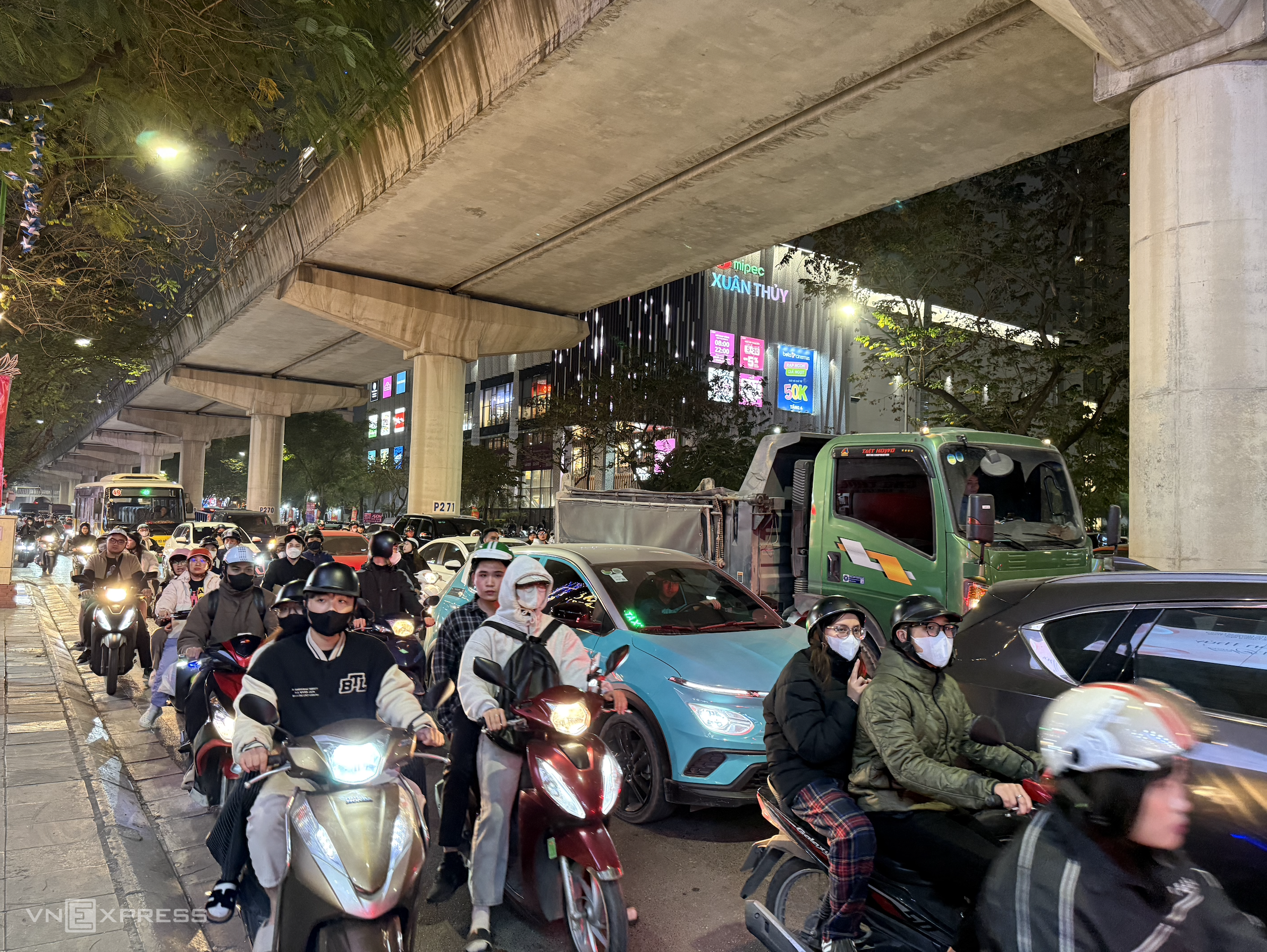 |
Xuan Thuy Street, Cau Giay Ward, was congested for over one kilometer at 9 p.m. on 8/2. Photo: Nga Thanh. |
Xuan Thuy Street, Cau Giay Ward, was congested for over one kilometer at 9 p.m. on 8/2. Photo: Nga Thanh.
Explaining the cause, Nguyen Xuan Thuy, former Director of the Transport Publishing House, stated that population density and infrastructure imbalance are the root causes. Hanoi currently has over 9,2 million vehicles, yet the land allocated for traffic infrastructure is only 12-13%, significantly lower than the standard 20-26%.
Another traffic expert noted that year-end congestion stems from five contributing factors: a surge in travel and shopping demand during the Tet season; bulky goods vehicles distributing to the inner city; pavement encroachment by ornamental plant vendors; construction barriers; and a sharp decline in traffic awareness when roads are crowded.
Quynh Nga