In late March, crowds began converging on Dhaka's fuel stations before sunrise. Amidst the thick smell of gasoline and road dust, long lines of motorcycles, engines off, stood bumper-to-bumper. Many faces showed clear exhaustion after hours of seemingly futile waiting.
By 8:00 h, the queue at a fuel station on Mirpur road stretched for several blocks. Many reported waiting for over an hour, while others shared that they had left empty-handed yesterday.
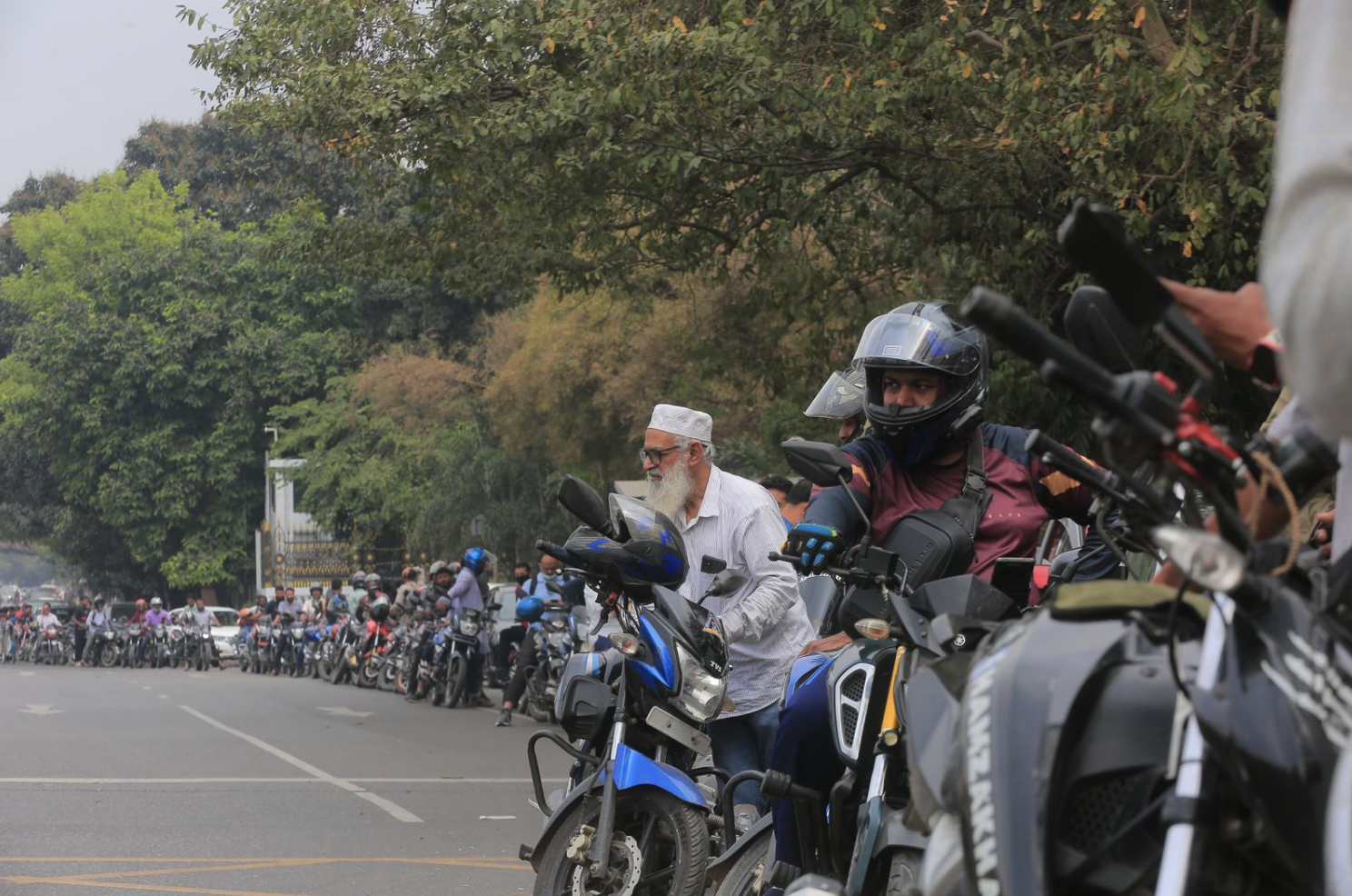 |
Residents queue with motorcycles and automobiles along city blocks, waiting to purchase fuel in Dhaka, Bangladesh, in late 3/2026. Photo: Anadolu |
Parvez Ashraf, who owns a small plastics workshop, arrived at dawn. After hours under the scorching sun, he managed to buy 300 Taka (approximately 62,000 dong) worth of fuel, enough to last him one or two days.
A similar scene unfolded across the capital, from Mohammadpur to Jatrabari. Fuel stations began implementing a rationed, drip-feed sales policy, forcing commuters, delivery personnel, and drivers into a "battle" for every liter of fuel.
Fuel station owners attributed this scarcity to supply chain disruptions caused by tensions in the Middle East. The crisis directly impacts Bangladesh, a nation that imports up to 63% of its energy from the Gulf region. Although authorities consistently reassure the public that domestic reserves are sufficient for several weeks, the reality on Dhaka's streets suggests otherwise.
"I need fuel daily for my livelihood", sighed Rafiqul Alam, a salesperson, leaning against his motorcycle, which had moved less than half a meter in 30 minutes. "If I can't get fuel today, I'll have to miss work again tomorrow. This situation cannot continue indefinitely", he stated.
Drivers are among those hardest hit. Bus and compressed natural gas (CNG) vehicle owners struggle to maintain operations. Sultan Ahmed, a ride-hailing driver for Pathao, expressed that freelancers like him cannot survive if their vehicles are idle. "If I don't fill my tank today, I consider my entire week's income lost", he said.
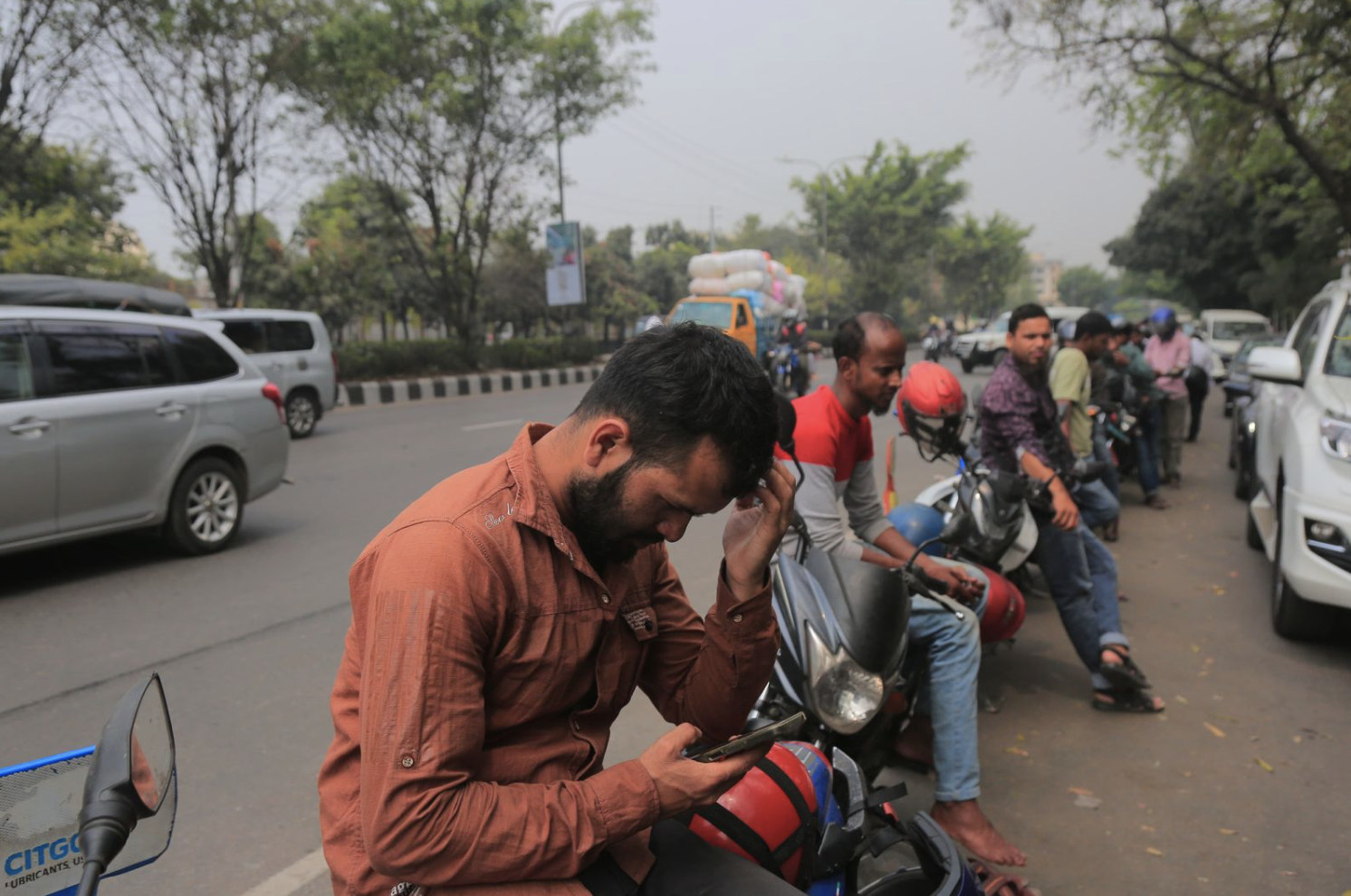 |
Residents in Dhaka, Bangladesh, use their phones to "kill" time while waiting to buy fuel, in late 3/2026. Photo: Anadolu |
On the supply side, fuel station owners also face extreme pressure. Local media reported that some stations ran out of stock by midday, leaving latecomers stranded. Md Nazmul Haque, President of the Bangladesh Fuel Station Owners Association, stated that the limited distribution policy itself triggered panic, prompting residents to rush and hoard fuel.
At the Mirpur fuel station, the sweating crowd continued to inch forward. The endless wait persisted, and faith in a stable supply dwindled along with empty fuel tanks.
"They announce on television that there's enough fuel, so why are we stuck here all day?", one resident angrily questioned.
Minh Phuong (According to Anadolu)