Over-soaking sticky rice is a common mistake that can lead to a sticky, clumpy texture.
While soaking allows grains to absorb water and cook evenly, excessive soaking causes the surface starch to swell too much. When heated, this starch layer breaks down, releasing amylose and making the grains stick together and clump at the bottom. For nep cai hoa vang, the ideal soaking time is 6-8 hours, while newer or nep nuong varieties may only need 3-4 hours.
Failing to thoroughly drain soaked rice before steaming is another frequent error.
Any residual water introduced into the steamer will cause the bottom layer to receive direct moisture, while the upper layers cook primarily by steam. This imbalance results in a soggy, clumpy, or even broken bottom layer, while the top remains dry. Many overlook this, mistakenly believing "sticky rice needs a lot of water to be soft."
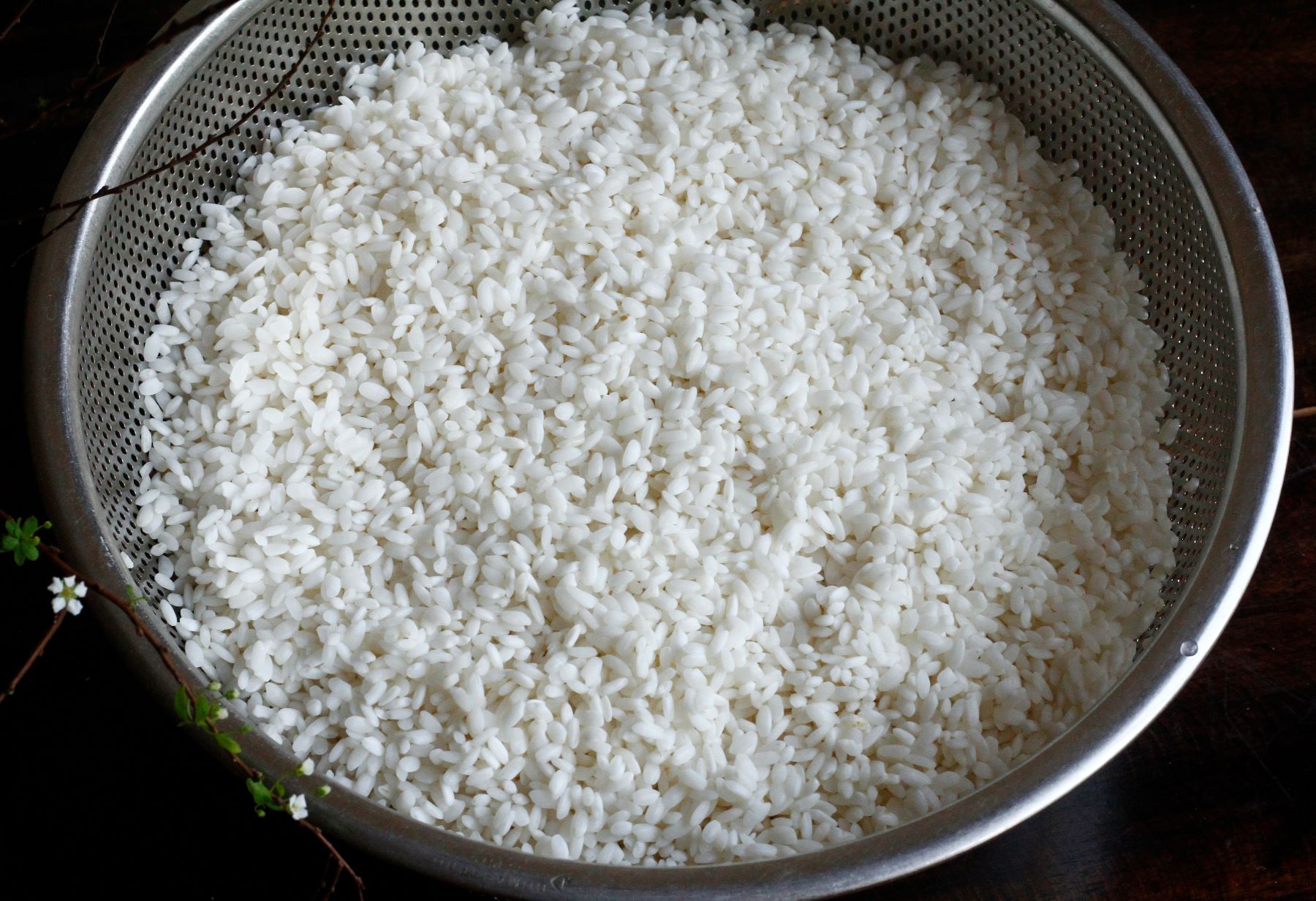 |
Sticky rice needs to be drained before being put into the steamer. Illustration: Bui Thuy |
Allowing the water in the pot to touch the base of the steamer directly undermines the steaming process.
When the water boils, it will directly contact the rice, effectively cooking it like regular rice rather than steaming it with vapor. This causes the starch to gelatinize excessively, leading to a sticky, cohesive mass stuck to the steamer. Proper sticky rice preparation relies on steam cooking, not boiling. The water level should be only one-third of the pot's capacity and brought to a boil before placing the steamer, lined with gauze cloth, and adding the rice.
Applying excessive heat from the beginning can ruin the texture of sticky rice.
High, continuous heat causes rapid steam production and a sudden increase in temperature, leading to abrupt starch gelatinization. This 'locks' the surface of the grains before they cook thoroughly from the inside, often resulting in cracking and starch release, which contributes to stickiness at the bottom. Achieving perfectly cooked sticky rice requires medium, even heat and consistent steam for stable grain expansion.
Neglecting to stir or fluff the sticky rice midway through steaming can lead to uneven cooking.
During steaming, steam tends to concentrate at the bottom. If the rice is not occasionally fluffed, the lower portion can become excessively moist and sticky compared to the top. Stirring helps redistribute heat and steam, ensuring the sticky rice cooks evenly, resulting in fluffy, well-separated grains and preventing moisture accumulation at the bottom that causes clumping.
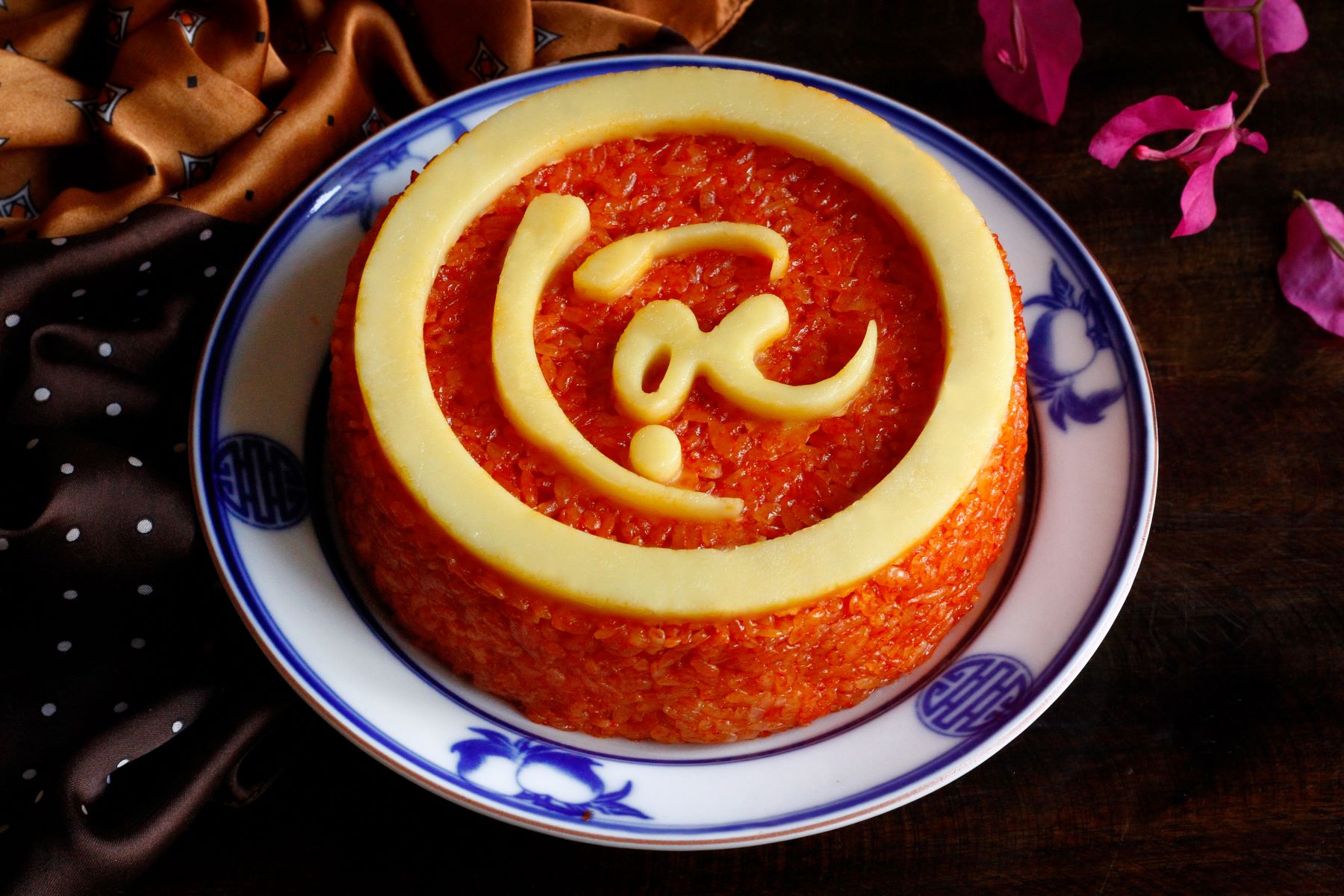 |
Gac sticky rice is soft and the grains are glossy after steaming. Photo: Bui Thuy |
Incorrect timing for adding water or oil can negatively impact the final texture of sticky rice.
Adding water or cooking oil before the sticky rice is fully cooked can further break down the outer starch layer. Oil should only be introduced when the rice is almost done, to lightly coat the grains, making them glossy and preventing stickiness. If additional water is necessary, it should be applied as a fine mist just before a second steaming or when the steam begins to diminish.
A steamer with inadequate ventilation can trap moisture, leading to soggy sticky rice.
An overly sealed steamer or one with small vents causes steam to condense and drip back onto the bottom, creating persistent dampness. This makes the sticky rice sticky, even if all other preparation steps are correct. Traditional bamboo steamers or those with proper ventilation slots help ensure drier, lighter sticky rice. Some experienced cooks wrap a thick gauze cloth around the pot lid to prevent condensed steam from dripping back and making the rice mushy.
Bui Thuy