In the bustling Yiwu market, Zhejiang province, in the days leading up to Tet Binh Ngo 2026, the most sought-after item was not the usual dragon or phoenix mascots, but a red plush horse adorned with a gold bell, featuring shy eyes and a tearful expression. On social media, it was dubbed the "crying horse".
Ms. Zhang Huoqing, owner of Happy Sister store, explained that the plush horse was originally designed with a cheerful expression for Tet. However, a production error occurred when a worker accidentally sewed the mouth upside down, giving the toy a sulky, rather than smiling, face.
"When I discovered the mistake, I intended to offer a refund," Ms. Zhang recounted. "But customers didn't want to return it. They took photos and posted them online, finding it amusing and saying it perfectly matched their mood."
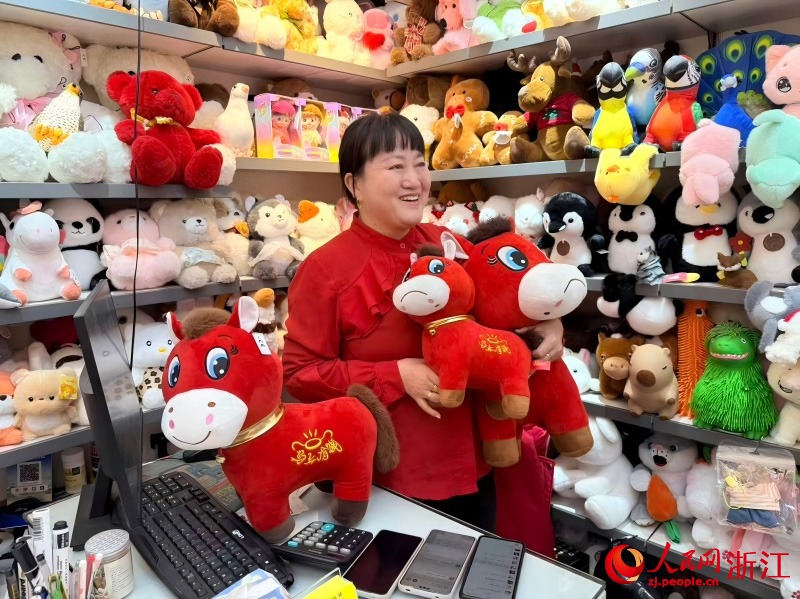 |
Ms. Zhang Huoqing with the first defective products, which initiated an online phenomenon in early 2026. Photo: People Daily.
The image of the defective horse quickly went viral on Weibo. Many users identified with the horse, seeing it as a "mascot" that precisely captured their current feelings of exhaustion, pressure, and work-related fatigue. A comment that garnered thousands of likes stated: "The crying horse is you at work. The smiling horse is you after work."
Social media users imbued the story with positive meaning, connecting it to the Chinese idiom "Sai Weng Shi Ma" (The Old Man Lost His Horse), which suggests that a loss is not necessarily a bad thing, as fortunes can reverse. Others found simple comfort in owning an imperfect, yet genuine, item.
Instead of correcting the error, Ms. Zhang's factory decided to "embrace the mistake." Daily sales soared to 15,000 products. Production lines ran at full capacity to fulfill orders from wholesalers across Southeast Asia, South Africa, and Russia. Stalls frequently posted "crying horse" sold out signs.
Mark Tanner, Chief Executive Officer (CEO) of market research firm China Skinny, expressed skepticism about the "production error" story, but acknowledged it as a clever business strategy.
"This trend has emerged in recent years, particularly linked to movements like ‘lying flat’," Tanner noted. "It reflects the general sentiment of many Chinese consumers who are less optimistic about the future."
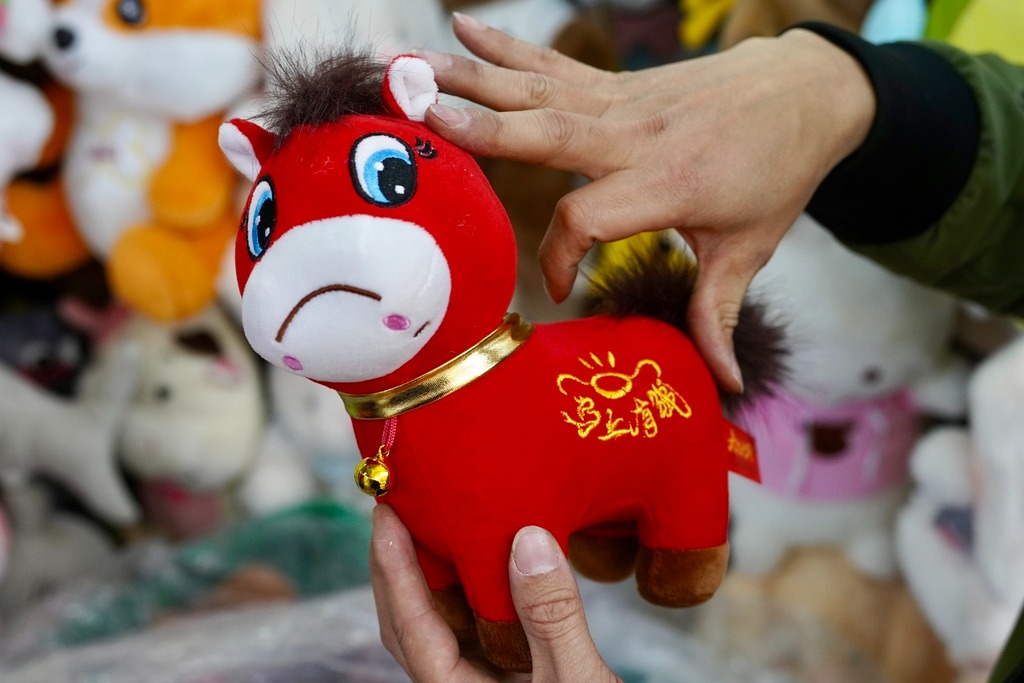 |
From a sewing error, the "crying horse" suddenly saw soaring sales. Photo: CGTN.
Jacob Cooke, CEO of Beijing-based consulting firm WPIC, explained the craze by noting that young consumers are increasingly comfortable expressing stress through humor and satire. "Consumer products and memes become tools for them to talk about work pressure, where consumption and emotional expression are closely linked," he observed.
This trend aligns with the "ugly-cute" phenomenon, which has driven the success of toy lines such as Labubu and Crybaby. Jason Yu, CEO of CTR Market Research, believes the manual error gave the horse its "soul." "It's not stiff like mass-produced items," Yu stated. "The emotional value this horse brings is higher than any perfection."
By Nhat Minh (Source: Free Malaysia Today/ABC News Australia)