Phung Minh Huy, 36, from Ha Giang, who drove North-South passenger routes for seven years, said the most frightening things were drowsiness, high-speed cut-offs, and fog on mountain passes.
In 2019, Huy established a transport company specializing in passenger routes from Ha Giang to Ho Chi Minh City (TP HCM), with stops in Quang Nam, Kon Tum, Gia Lai, Dak Lak, and Vung Tau. He currently manages 5 sleeper buses. Each bus has two drivers, two assistants, and one manager, working rotating shifts.
Huy stated that previously, each trip lasted about 40 hours. Since the highways from Phu Tho to Hue have gradually been completed, the journey has shortened to about 35 hours. However, the smooth roads, fewer residential areas, and dark, cold, and quiet cabin interiors can easily become a "sleeping potion" for drowsy drivers.
"Drowsiness washes over you like a wave; the harder you try to keep your eyes open, the more you're pulled under", Huy said.
To stay awake, the driver often eats sour fruits, drinks strong tea, and asks his assistant to talk with him. When these methods fail, he pulls over at a rest stop to switch drivers. "Energy drinks only offer temporary effects and are harmful to health", said driver Phung Minh Huy.
Beyond drowsiness, drivers also face risks from reckless vehicles. When cut off, Huy chooses to gently apply the brakes and reduce speed rather than swerving to prevent the bus from overturning. "One wrong move of the steering wheel, and the lives of dozens of people would be in danger", Huy recounted.
 |
Phung Minh Huy, 36, a sleeper bus driver on the Ha Giang - TP HCM route. *Photo: @Huyhaihuoc23*
The section of National Highway 14 through Lo Xo Pass in the Central Highlands provinces also presents a challenge. The mountain road is patched and riddled with potholes. Thick fog often blankets the area at night, reducing visibility to under 3 meters. He recalled witnessing many cars plunge into ravines due to brake failure. When encountering dense fog, he activates warning lights, has his assistant walk ahead to guide the way, and maintains a speed of 20-30 km/h.
The pressures and risks behind the wheel led driver Hoang Phuc, from Phu Tho, to abandon bus driving for eight years. He opted for short-distance tour driving, which offered more rest time.
Earlier this year, he accepted a sleeper bus route from Phu Tho to TP HCM on the condition that the company would not impose strict time targets. The company allocates two days per trip, and buses are given one day of rest at the terminal before returning. For safety, he chooses to use the North-South Expressway and National Highway 1.
Getting enough sleep before departure allows the driver to avoid coffee, strong tea, or energy drinks. "During night shifts, I place an ice-soaked towel on my neck and play ghost stories loud enough to hear, keeping my nerves active", Phuc said.
Studies highlight fatigue as a significant cause of accidents both internationally and in Vietnam. According to research in the UK, Australia, and Brazil, fatigue accounts for 20% of serious highway accidents. In the US, 56,000 sleep-related accidents are recorded annually, resulting in over 1,500 fatalities.
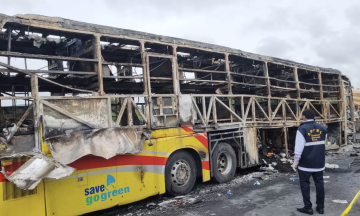
In Vietnam, numerous sleeper bus accidents have occurred. For example, in the early morning of 21/7, a passenger bus caught fire on National Highway 1, killing 7 people and injuring 5. The driver was prosecuted for falling asleep at the wheel and losing control. In 10/2023, a 29-year-old truck driver in Thai Nguyen fell asleep, swerved into another lane, and collided with a 16-seat car, killing one person and injuring 12, in Buon Ho town (Dak Lak).
A 2021 study by the Institute of Occupational Health and Environment noted that long-distance drivers consistently experience neurological stress due to extended working hours, night shifts, unstable shift changes, and prolonged incorrect sitting postures. The survey found that 52,5% of drivers experienced fatigue, 44,5% had reduced patience, 42,5% lacked relaxation, 35% felt anxious, and 30% had poor risk control, collectively increasing accident risk by 2,1 times.
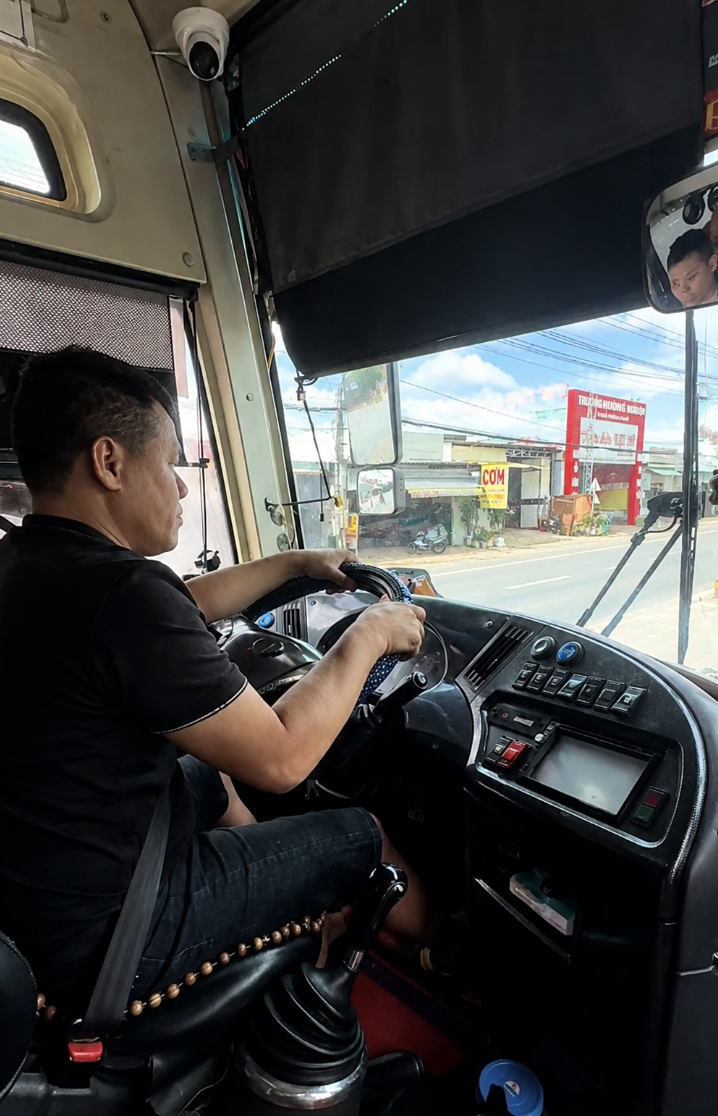 |
A driver switching shifts with Minh Huy on the Ha Giang to TP HCM route on 14/7. *Photo: @Huyhaihuoc23*
Doctor Khuong Kim Tao, from the Vietnam Automobile Transportation Association, emphasized that the inherent challenges of night driving for sleeper buses, including limited visibility and long distances, exacerbate driver fatigue. He proposed a synchronized three-pronged solution: Regulatory agencies should digitize speed monitoring using dashboard camera data and cockpit monitoring devices. An automated system should detect and report violations to an operations center, replacing manual patrol and speed gun methods. The transportation sector also needs to add risk warning signs on complex road sections.
For drivers, mandatory requirements include adhering to driving hour limits, ensuring sufficient sleep, and switching shifts when fatigued. "Only when bus operators, drivers, and authorities collaborate with both technological solutions and heightened awareness can the risks of traffic accidents be controlled", the expert said.
Behind the statistics are valuable lessons. In late 2011, Ho Hoang, now 50, from Nghe An, drove a truck for 15 continuous hours. Despite splashing cold water and drinking energy drinks, he still collapsed at the wheel while passing through Hoang Mai town (Nghe An). His vehicle collided with the rear of a container truck at 60 km/h, resulting in a fractured skull and a broken spine. After three months of treatment, he became a construction worker and refused all offers to drive sleeper buses.
"If I can't protect my own life, I have no right to be responsible for the lives of others", the former driver stated.
Quynh Nguyen