A video circulating on indian social media in late december shows a long line of vehicles inching along Rohtang pass in Himachal Pradesh.
Despite no snowfall and before any official holiday, people flocked to the region. They call it a "last refuge" journey as the air quality index (AQI) in the capital, Delhi, consistently reaches hazardous levels.
Vamika Grover, 32 years old, is one such person. Having overcome Hodgkin lymphoma, Grover acutely feels the danger in every breath as winter approaches. "My lungs struggle to filter the air. Pollution is no longer seasonal; it is year-round", she said.
Since october, Delhi's AQI has often exceeded 300 - three times the safe limit, with some areas surpassing 1,000. Lung specialists are advising chronic patients to leave the city for at least two months.
This "climate migration" is creating a new tragedy. Once peaceful hill towns like Mussoorie and Landour are now overwhelmed. Forest roads are congested, parking lots are overloaded, and construction projects are rapidly emerging to accommodate those escaping the smog.
Professor Kapil Joshi of IIT Roorkee warns of environmental consequences in these supposed sanctuaries. Plastic waste litters mountain roadsides, flowing into groundwater. "The sudden surge in visitors is turning relaxing journeys into tests of patience and polluting the rare green spaces that remain", he stated.
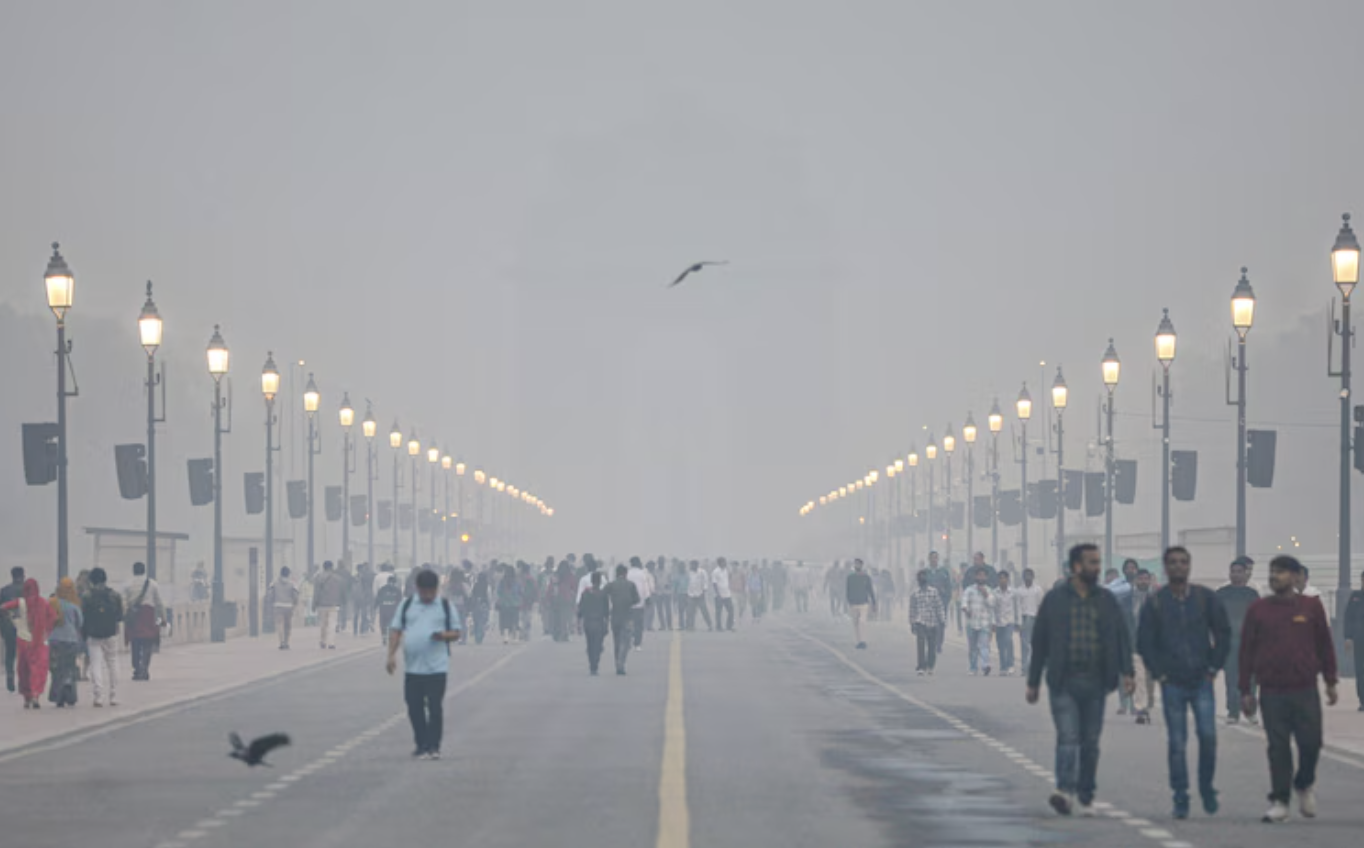 |
Smog covers Kartavya Path on 17/12 as people walk in low visibility conditions in New Delhi, India. Photo: PTI |
Smog covers Kartavya Path on 17/12 as people walk in low visibility conditions in New Delhi, India. Photo: PTI
Climate data indicates mountain resorts are warming. Dr. Anil Joshi, an environmental conservation expert, stated that Dehradun's AQI, a city at the foothills of the Himalaya, is consistently between 150-300. "Visitors are starting to find the mountains as suffocating as the plains", he noted.
The trend of buying second homes in cooler regions like Kasauli or Rishikesh has surged, causing a sudden population increase. This places pressure on water resources and public services, which were originally designed for smaller communities.
While authorities struggle with solutions like air purifiers or misting, deemed ineffective, individuals like Vamika Grover have run out of patience. She decided to move permanently to Singapore.
"Between staying in my homeland and preserving my life, I chose to leave", Grover said.
Minh Phuong (According to IndiaToday, NDTV, FP)