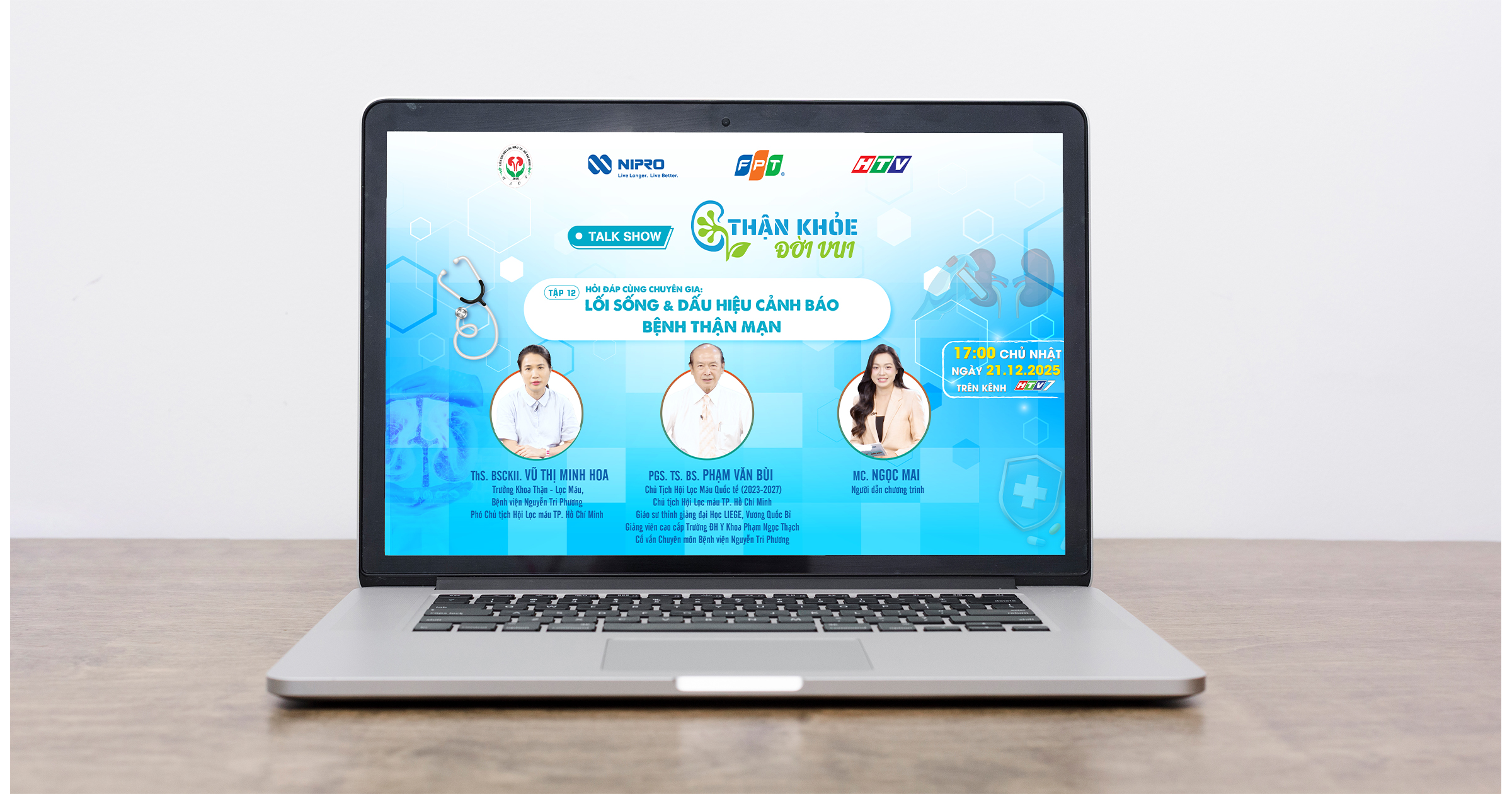
Episode 12 of the talk show series "Healthy Kidneys - Happy Life", titled "Q&A with Experts: Lifestyle and Warning Signs of Chronic Kidney Disease", will air on HTV7 at 17:00 on 28/12. The program features Associate Professor, Doctor Pham Van Bui, President of the International Society of Hemodialysis (2023-2027) and President of the Ho Chi Minh City Hemodialysis Association, along with Master, Doctor Vu Thi Minh Hoa, Vice President of the Ho Chi Minh City Hemodialysis Association and Head of the Nephrology - Hemodialysis Department at Nguyen Tri Phuong Hospital (TP HCM).
The "Healthy Kidneys - Happy Life" talk show series is a collaboration between the Ho Chi Minh City Hemodialysis Association, Nipro Medical Corporation, and FPT Healthcare Technology Unit. It addresses the rapid increase and younger demographic of chronic kidney disease, aiming to provide expert knowledge and enhance community understanding of the illness.
 |
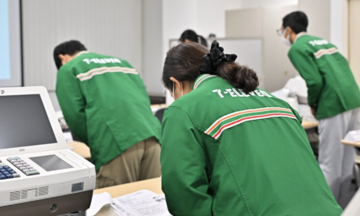
Viewers watching the introductory video for episode 12 of "Healthy Kidneys - Happy Life". *Photo: FPT*
The program has received many audience questions since its initial broadcasts, with viewers seeking to understand chronic kidney disease better. Many have also shared their personal issues to receive advice from experts. Therefore, episode 12 is dedicated to answering questions about lifestyle and the warning signs of chronic kidney disease, empowering viewers with knowledge to protect themselves and prevent the illness.
Staying up late indirectly affects kidneys
In modern life, many individuals stay up late due to work or other unhealthy habits. Experts explain that unscientific sleep patterns, while not directly impacting the kidneys, can affect them indirectly through various mechanisms. When someone works late into the night, all bodily organs must function, especially the brain and heart. Kidneys support these organs during nighttime activity, meaning they continue to assist with the body's metabolism.
Furthermore, for many, staying up late often involves snacking and consuming tea or coffee. In small, scientific doses, tea and coffee can benefit kidney and cardiovascular health. However, their abuse can be counterproductive. The scientifically recommended bedtime is no later than 22:00.
 |
Staying up late can indirectly harm the kidneys. *Photo: nabhs*
Unhealthy eating habits harm the kidneys
Many young people today frequently consume processed foods, eat few vegetables, and lead inactive lifestyles. Experts state that a high-salt diet leads to excessive sodium intake, which over time can affect cardiovascular health and cause high blood pressure. These conditions can ultimately result in kidney failure. Processed foods, often high in salt and preservatives, also force the kidneys to work harder to filter excess substances from the body.
Conversely, green vegetables and fruits are rich in vitamins and fiber, contributing to the body's defense against oxidation. A lack of these nutrients, or their consumption in low proportions, can disrupt the body's metabolic state, leading to inefficient metabolism.
The World Health Organization recommends that a normal adult's daily diet should contain less than 5 g of salt, equivalent to one teaspoon. This includes salt from all seasonings, such as salt, seasoning powder, soup base, and fish sauce, used in cooking.
 |
A high-salt diet can adversely affect kidney function. *Photo: Pexels*
Drinking too much water can overload the kidneys
While drinking water benefits the kidneys, consuming excessive amounts beyond the body's capacity is abnormal. Water intake and urine excretion are directly linked to the kidneys; therefore, over-hydration forces the kidneys to work harder to eliminate excess water, potentially causing long-term damage. In some cases, excessive water intake can lead to electrolyte imbalances, such as low blood sodium, resulting in fatigue and headaches.
For individuals with impaired kidney function, drinking too much water can cause fluid retention in the body, leading to edema, shortness of breath, and posing a life-threatening risk to patients.
Experts generally recommend that a healthy individual without underlying conditions should drink about 1,5-2 liters of water daily. Those who are highly active or sweat a lot may need to drink more, potentially around 3 liters per day. It is important to note that daily fluid intake should include filtered water, milk, fruit juice, soup, and other liquid dishes.
 |
Drinking too much water forces the kidneys to work harder to eliminate excess water. *Photo: Pexels*
In episode 12, experts also debunked misconceptions such as "individuals with early-stage chronic kidney disease should drink lemon water mixed with salt in gradually increasing doses" and "elderly people with kidney failure should not seek treatment but merely live with the condition". The experts shared insights into kidney calcification and kidney stones, and compared the concepts of kidney failure in Eastern and Western medicine. The program concluded with experts reiterating crucial lifestyle tips and common risks for early prevention of kidney disease, to avoid long-term harm. Episode 12 marks the end of the "Healthy Kidneys - Happy Life" talk show series. However, viewers with further questions about kidney disease can still submit them through the QR code displayed at the end of the broadcast, to receive answers from the experts.
Kim Anh
For more information about kidney disease, viewers can watch the "Healthy Kidneys - Happy Life" program, produced by the Ho Chi Minh City Hemodialysis Association in collaboration with Nipro Medical Corporation and FPT Healthcare Technology Unit. The show features leading experts in nephrology and hemodialysis, airing every sunday at 17:00 on HTV7.
The "Healthy Kidneys - Happy Life" program addresses questions and provides useful information on kidney health, a silent yet vital organ for everyone's well-being. Viewers can interact with the program via its official Fanpage to receive various gifts. A QR code appears on screen at the end of each episode, allowing viewers to submit questions directly for expert answers in upcoming segments.
Episode 12, "Q&A with Experts: Lifestyle and Warning Signs of Chronic Kidney Disease", will also be re-uploaded on the program's official Fanpage. Readers can rewatch it there.