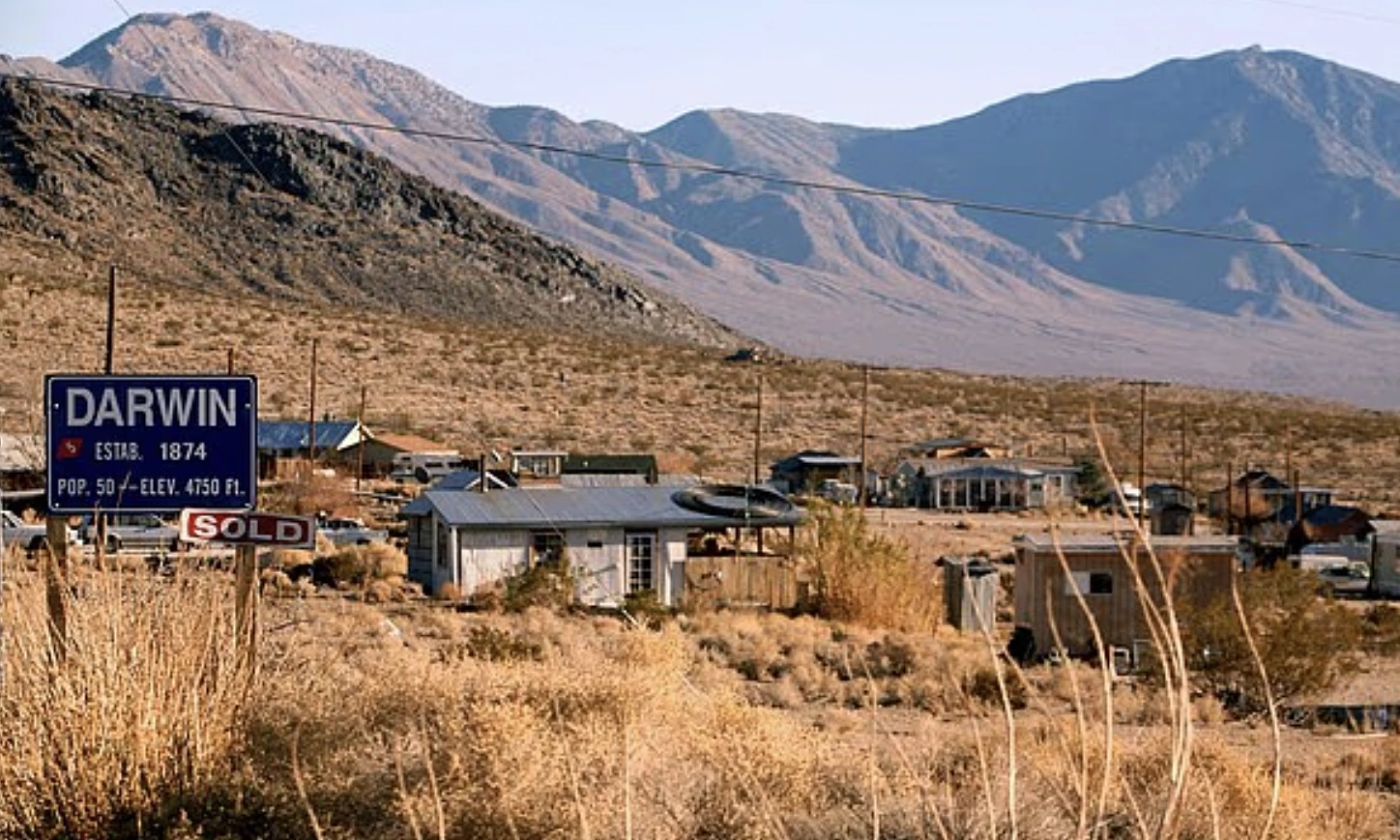
Learning from previous years, Mr. Xie from Shenzhen decided to drive from his hometown back to the city in the early morning to avoid traffic. However, as he entered the highway, he was astonished to see a long line of red taillights ahead. Tens of thousands of other drivers shared his "leave early to be safe" mentality.
"I thought I was the smartest one choosing this hour," Mr. Xie said, "but it turns out the road is full of 'smart people' just like me."
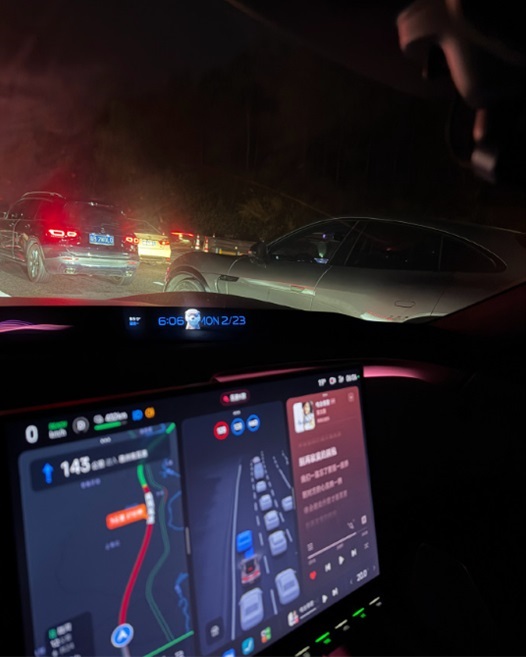 |
Midnight traffic congestion in China. *Photo: Sina* |
In a similar predicament, Mr. Cao, a driver who left Hunan at 3h30, anticipated a 12-hour journey. However, after 19 hours behind the wheel, he had only covered 600 km. On his navigation screen, the estimated travel time showed a disheartening figure: more than 40 hours.
When vehicles could no longer move, congested highway sections transformed into "community living rooms." Many drivers took the opportunity to get out of their cars to exchange food, play mahjong right on their car hoods, and even brought out mini gas stoves to cook instant noodles for a meal in the middle of tunnels.
However, behind the laughter was a real concern. Mr. Cao stated that his car trunk was filled with Tet gifts from his hometown, including fresh chicken and dried meat. To prevent the food from spoiling, he was forced to keep his engine running with the air conditioning on continuously, even as his fuel supply dwindled.
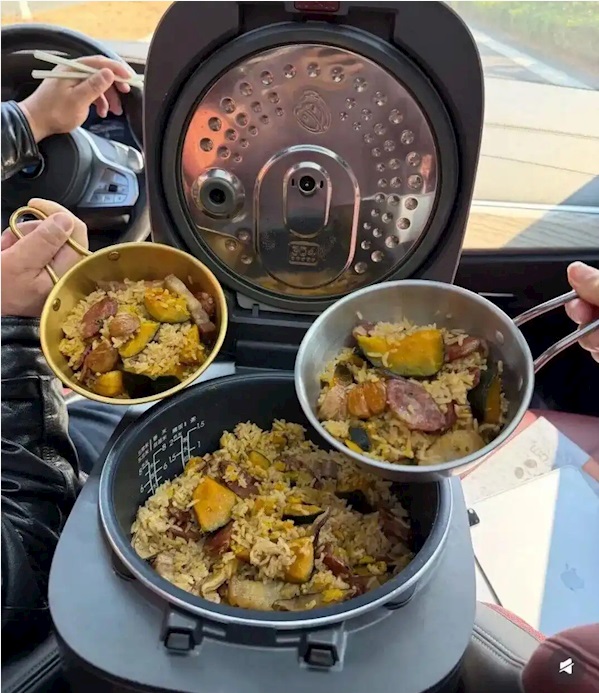 |
Drivers cooking by their cars while waiting to move. *Photo: Sina* |
According to sociologists, this phenomenon is known as the "Fallacy of composition." When each individual makes a choice that seems most logical for themselves (traveling during off-peak hours), the convergence of millions of such choices creates a collective disaster.
The advancement of technology also inadvertently became a culprit. With billions of daily accesses to smart navigation applications, AI guided millions of vehicles to converge on the same "optimal route," quickly paralyzing the infrastructure system.
The situation was particularly dire for electric vehicle owners. At rest stops, queues for charging lasting over 4 hours were common. To conserve their dwindling battery power, many drivers opted to turn off their heating systems, shivering in the cold of the winter night, creating a weary cycle on the road.
"Chunyun" (Spring Festival travel) is an annual event during the Lunar New Year in China. According to official data, the 2026 Chunyun period, lasting 40 days from 2/2 to 13/3, is expected to set a historical record with approximately 9,5 billion inter-regional trips. Personal oto and the road network continue to play a dominant role, accounting for about 80% of the total traffic volume.
With an enormous volume of travel far exceeding the capacity of any transportation system globally, this figure of 9,5 billion trips clearly explains why China's infrastructure frequently becomes paralyzed, transforming drivers' midnight "traffic avoidance" calculations into a widespread disaster.
Nhat Minh (According to Sina)