"Restaurants near the office now charge at least 15,000 won (approximately 11 USD) per meal, with some reaching 20,000-30,000 won (approximately 15-22 USD)," Park noted. "Meanwhile, at the market, a bowl of bean sprout bibimbap costs just 5,000 won (approximately 3.7 USD), and fresh noodles are around 6,000 won (approximately 4.5 USD)."
Park epitomizes a growing trend of Seoul office workers flocking to traditional markets or cafeterias during lunch hours.
At 12:30, dozens of people wearing employee badges and suits queued amidst stalls selling fresh fish and meat at Yeongdong market in Gangnam district, one of the capital's most expensive areas. Seo, 47, a restaurant owner at Yeongdeungpo market, stated that in over 10 years of business, she has never seen such a large number of office customers.
"An increasing number of employees from the Yeouido financial district rent public bicycles to come here for lunch," Seo added. "They are willing to travel a bit further to save money."
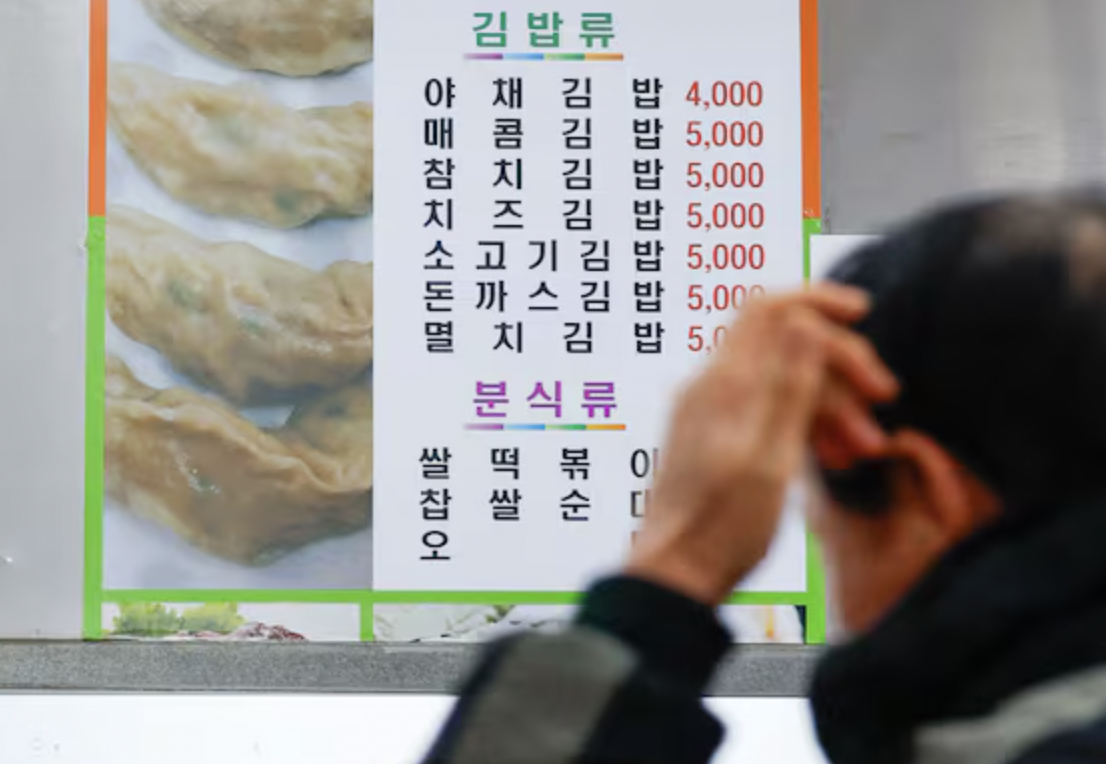 |
Illustration: Chosun |
Data from Payco, a provider of electronic meal vouchers, shows that in the first half of last year, the average lunch cost in key Seoul office districts surged. In Samseong-dong, an average lunch cost approximately 15,000 won, in Gangnam it was 14,000 won, and in Yeouido, around 13,000 won. These figures were approximately 2,000-4,000 won higher than the city-wide average.
To cope with the situation where an affordable lunch has become a luxury item, traditional markets and cafeterias have gained prominence.
The cafeterias of Korea Railroad Corporation (Korail) at Yongsan and Cheongnyangni stations are always packed with customers during lunch hours. For approximately 7,000 won (approximately 5.2 USD), diners receive rice, soup, and three side dishes such as steamed tofu, kimchi, and bean sprouts. Even employee cafeterias at some hotels in Jung-gu district have opened their doors to external customers, offering appealing rotating menus like breaded pork cutlet and braised tofu, attracting a large number of employees from nearby buildings.
Professor Lee Eun-hee of Inha University stated that this trend reflects a shift in young Koreans' consumer behavior amidst inflationary pressures. "It's not just about saving money; eating at markets or cafeterias also offers a sense of genuine value for money, fitting the current context of tightened spending," Lee said.
Ngoc Ngan (According to Chosun)