At 18h, after finishing work, Zhang Jin, 25, takes a bus directly to the Yiyang nursing home in Suzhou, Jiangsu province. In the main lobby, an 89-year-old man often waits for her. Upon seeing her, he eagerly asks, "Are you tired from work, my child?" This simple conversation has been a familiar rhythm for the young woman over the past three years in a place primarily for the elderly.
"I often joke with my friends that I retired early at the age of 22," Zhang says with a smile.
In 2022, after graduating and starting her career in Suzhou, Zhang faced intense financial strain. With rent consuming over half her income, she discovered an advertisement for "resident volunteers" at Yiyang. The requirements were: under 35 years old, no existing home, full-time employment, and a commitment to dedicate 15 hours each month to support the elderly. In exchange, the room rent was only 200-300 yuan (approximately 700,000 - 1,000,000 VND), a mere one-tenth of the market price.
Outperforming 40 other applicants, Zhang became the first young person to move into the facility and was assigned a private room.
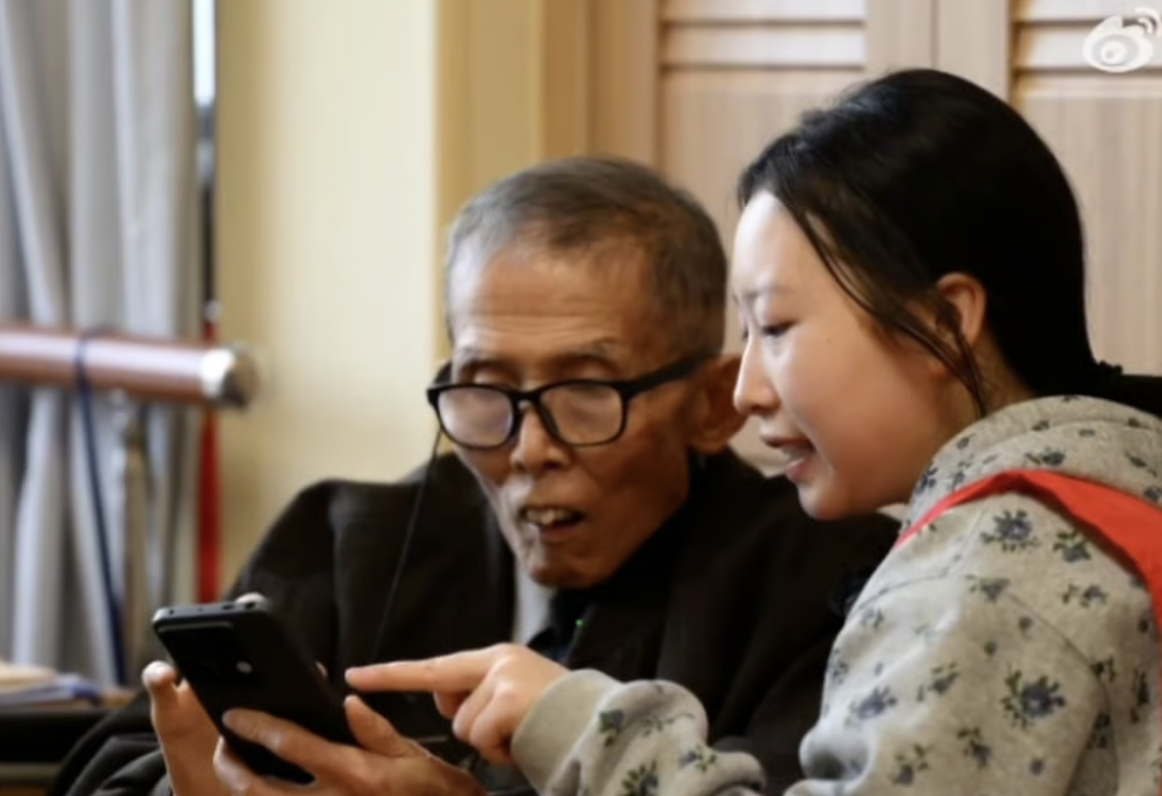 |
Zhang Jin teaching an elderly man at the nursing home how to use a smartphone. |
Her primary responsibility involves companionship with the elderly residents. On weekends, she teaches them how to use smartphones, practices modern dance with them, or simply listens to their stories from the past. In return, during her time living there, she receives warm care from her unique neighbors. Once, when Zhang fell ill, the elderly couple in the adjacent room woke up at 5h, diligently preparing a hot bowl of soup and bringing it directly to her bedside.
"I have no relatives in this city. If I return late without notice, the seniors become anxious, waiting just like my grandparents back home," Zhang shares. The nursing home has inadvertently become a crossroads, where the loneliness of young people far from home and the emptiness felt by the elderly are both filled.
Zhang Jin's choice reflects a new social trend in China. With nearly 300 million people over 60, nursing homes across the nation are working to dispel the stigma of isolation by inviting young people to live alongside their elderly residents.
Shen Rong, manager of Yiyang nursing home, notes that the presence of young individuals brings vitality and positive energy to the nearly 1,500 elderly residents. However, this model is challenging to sustain. Out of the 5 people recruited in the same cohort as Zhang, 4 have since left due to marriage or job changes. Currently, Zhang remains the only resident volunteer.
Sociology experts consider this a "win-win" model. Young people alleviate their cost of living burdens, while the elderly experience improved mental well-being. Crucially, it breaks down generational barriers, fostering a miniature community where kindness and human connection become the primary measures of value, rather than purely material considerations.
Thanh Thanh (According to China Daily, SCMP)