Chef Vu Nhat Thong, founder of Eric Vu Cooking Class, notes that in cuisine, dishes with fewer ingredients are more challenging to master. To successfully prepare black bean sweet soup, home cooks need to grasp the scientific essence through four key steps.
The principle of soaking beans
Black beans have a skin containing anthocyanin pigments, which give them their characteristic dark purplish color and hinder water penetration. The interior, rich in starch and protein, is encased by firm cell walls. Water can only enter through a small "gateway" called the hilum, or seed scar.
Soaking is an essential step, allowing water to gradually permeate through the hilum, softening the cell walls and hydrating the bean's interior. Skipping this step and cooking immediately will result in beans that are difficult to soften and require more energy to cook.
The ideal soaking time is 4-6 hours at room temperature. If the weather is hot, above 30 degrees C, beans should be soaked in the refrigerator to prevent microbial growth that could spoil the ingredient.
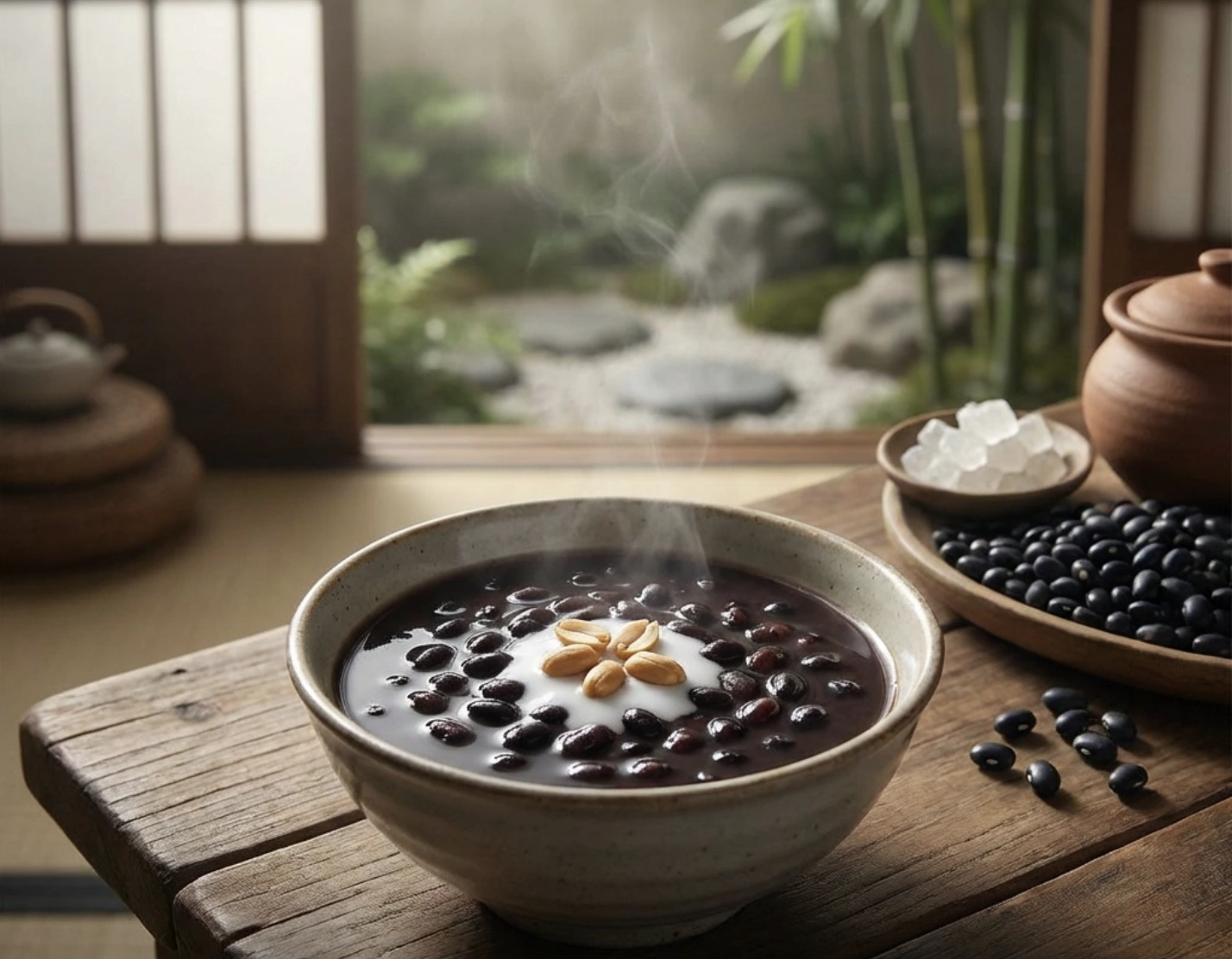 |
Black bean sweet soup is simple, but cooking it well requires knowing the secrets. Photo: AI |
Controlling cooking temperature
When water reaches 60-80 degrees C, the starch in the beans begins to gelatinize, transitioning from a hard to a soft state. Simultaneously, the heat breaks down pectin in the cell walls, allowing the beans to gradually soften.
According to the expert, the most common mistake is cooking on high heat to shorten the time. This causes the water to boil vigorously, tearing the bean skins before the interiors can fully soften. Starch then leaches out, making the sweet soup cloudy, while the beans become mushy on the outside and hard on the inside.
The correct method is to reduce the heat to a gentle simmer immediately after the water boils. Maintaining a temperature of 85-95 degrees C allows the starch to gelatinize slowly without creating turbulent waves that could break the beans. Depending on the bean variety, cooking time ranges from 45-60 minutes. The ideal result is beans that are soft when bitten, retain their shape, and have clear, naturally purplish liquid.
The timing of adding sugar
This is the stage where many batches of sweet soup fail, even after the beans have been properly soaked and cooked. Scientifically, dissolving sugar in water creates a hypertonic environment. Due to osmotic pressure, water inside the bean cells is drawn out. Consequently, the cell walls contract, permanently hardening the beans even with continued cooking.
Chef Vu Nhat Thong emphasizes the crucial rule: only add sugar when the beans are completely soft. At this point, the sugar will gently permeate, sweetening each bean evenly.
The expert also suggests adding 1-2 grams of salt per 1 liter of water. This helps suppress bitterness and amplify sweetness, giving the sweet soup a deeper, richer flavor.
Serving temperature
The sensory experience of hot versus cold sweet soup is entirely different. At higher temperatures (35-50 degrees C), aroma molecules evaporate more strongly, and taste buds function optimally, allowing eaters to perceive sweetness and fragrance most clearly.
When the sweet soup cools below 15 degrees C, the ability to perceive sweetness significantly decreases. Therefore, if preparing the sweet soup to be served cold with ice, you need to add 15-20% more sugar compared to serving it hot. If combining with coconut milk, the fat creates a smooth sensation on the tongue. However, coconut milk should only be added at the final step and heated just enough, avoiding prolonged boiling which can cause oil separation and curdling.
According to Chef Vu Nhat Thong, simplicity in cuisine demands patience and a thorough understanding of ingredients. Cooks simply need to grasp the characteristics of beans, water, sugar, and temperature to handle them correctly.
"The pinnacle of cooking is not about adding more, but about removing until nothing more can be removed, yet the dish remains excellent," the expert concludes.
Bao Nhien