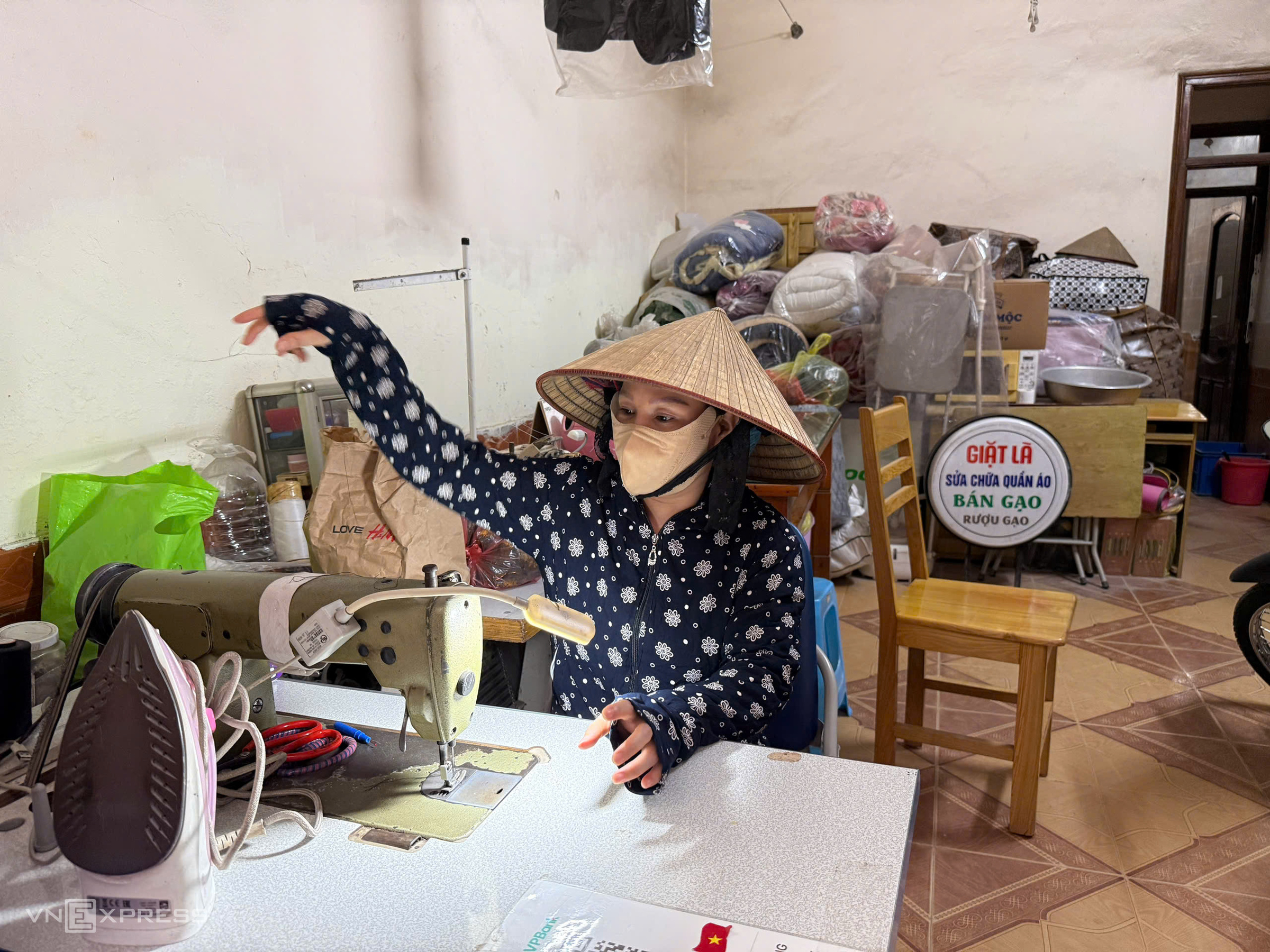
On the morning of 19/5, Vu Thi Phuong, 47, residing in Alley 12, Chinh Kinh Street, Thanh Xuan ward, meticulously wrapped her hair in a medical nylon cap, donned a conical hat, a sun-protective jacket, gloves, and a face mask to work inside her home.
"This entire area is shrouded in dust; if you leave your head uncovered for a moment, your hair becomes stiff, your face feels gritty with sand, and your eyes sting," Phuong said.
Her family's house was cleared for the Ring Road 2.5 project. She rented a three-story house just a few steps from her old residence to retain customers for her laundry and tailoring business.
 |
Vu Thi Phuong, 47, wears a medical cap, conical hat, sun-protective jacket, and face mask to shield from dust while mending clothes at her home in Alley 12, Chinh Kinh Street, Thanh Xuan ward, on the morning of 19/5. Photo: Nga Thanh
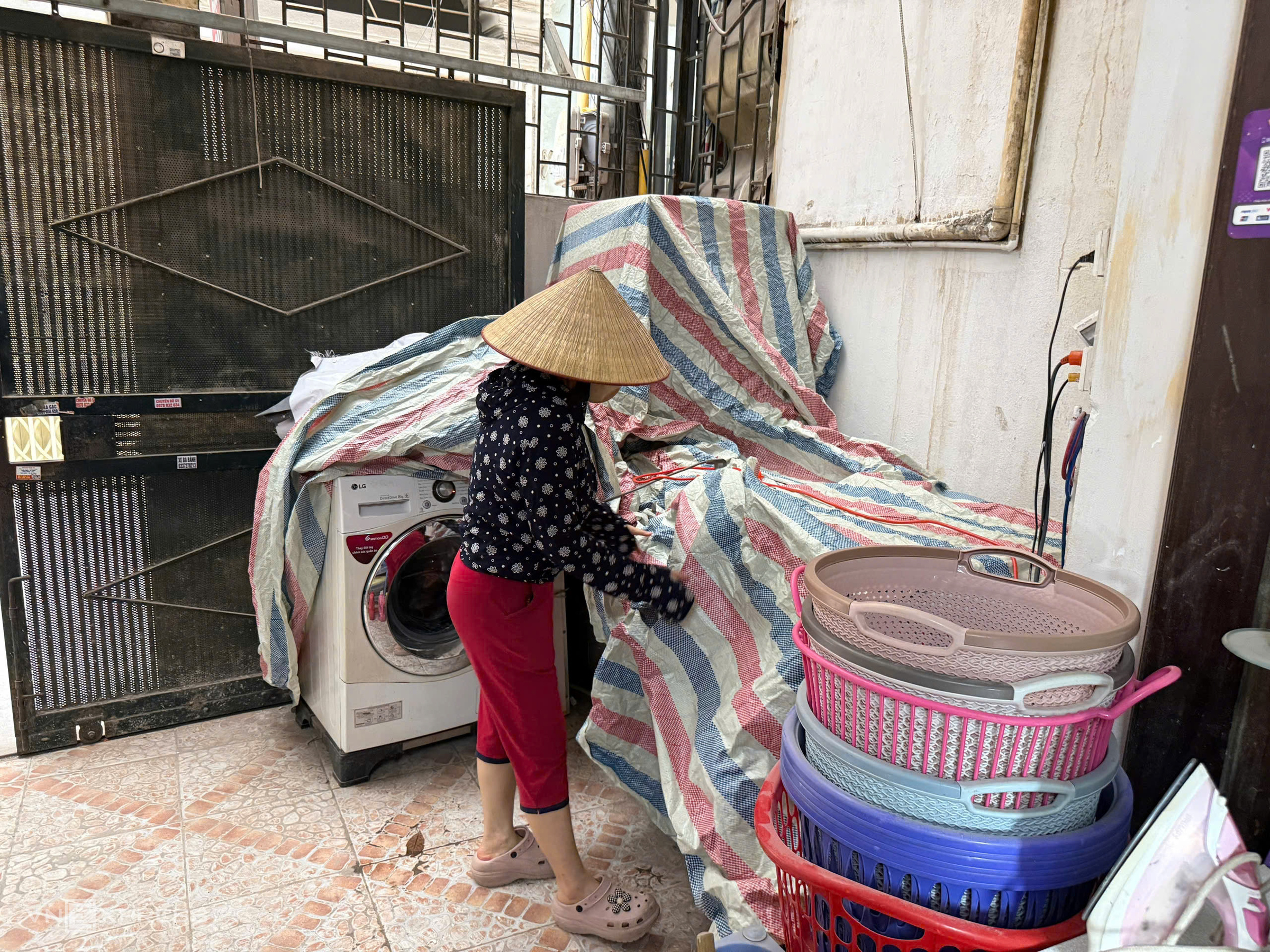
Many houses in Alley 12 have either covered their facades with tarps or sealed their glass doors, stuffing paper, rags, and foam into gaps to block dust. Phuong's house cannot do this as it operates a business. As a result, dust covers every corner. Every 30 minutes, she uses a wet cloth to wipe down tables and machinery. "Just going out for a few hours, and when I return, everything is covered in white dust," she noted. In her front yard, six washing and drying machines are covered with tarps to prevent dust from entering their motors. Periodically, she checks for fire hazards caused by overheating machines.
Despite being indoors and fully protected, Phuong still has to shower multiple times daily because the "itching is unbearable." Her entire family cannot eat in the living room due to the dust. Cooking must be timed around the construction site's breaks to avoid dirt and sand falling into their food.
"We support land clearance and urban redevelopment, but we hope authorities implement solutions to reduce pollution, so residents don't have to endlessly wait for rain to alleviate the dust," Phuong stated.
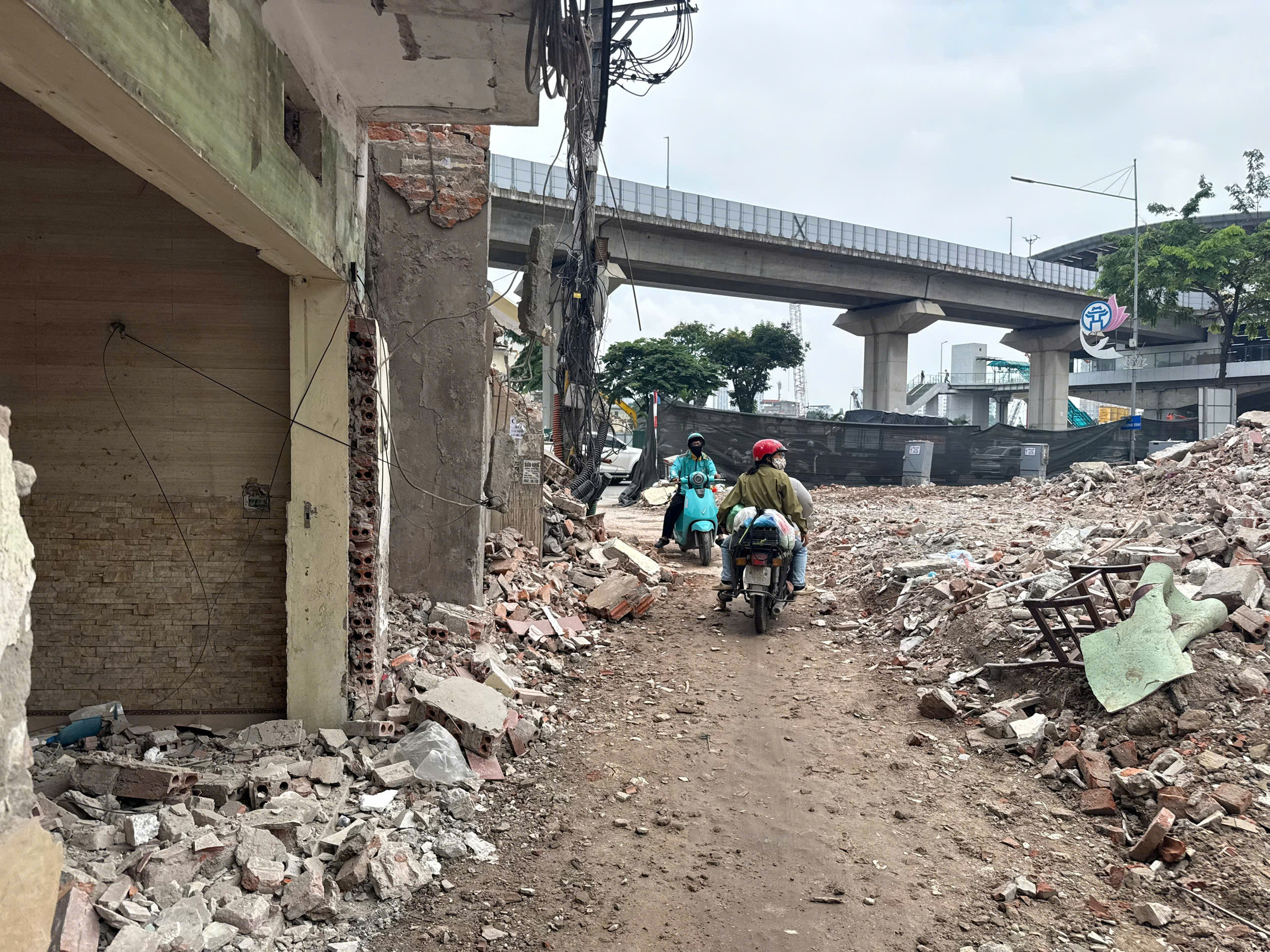
According to statistics, about 700 households along the Nguy Nhu Kon Tum - Chinh Kinh - Nguyen Trai road section are experiencing a dual impact from infrastructure projects in Thanh Xuan ward. In addition to the final demolition for Ring Road 2.5, for many weeks, a section of Nguyen Trai Street leading to Ha Dong has also been fenced off with corrugated iron for the construction of a drainage system to prevent flooding, causing dust.
Sharing a similar plight, Thanh Huong, 46, on Nguyen Trai Street, has kept her doors tightly shut for two weeks. She runs an air purifier and mops the floor four to five times daily. Clothes hung on the rooftop also have a layer of fine dust. "A single shake releases a cloud of white dust," Huong explained.
A representative of residential group 14, Thanh Xuan ward, reported that the group has over 500 households, including 61 families affected by the Ring Road 2.5 project. Residents have agreed to the city's policy and moved quickly. However, the demolition process lacked proper dust control measures, such as covering and spraying water, leading to severe pollution.
 |
Phuong uses a tarp to cover six washing and drying machines placed in her front yard at her home in Alley 12, Chinh Kinh Street, Thanh Xuan ward, on the morning of 19/5. Photo: Quynh Nguyen
 |
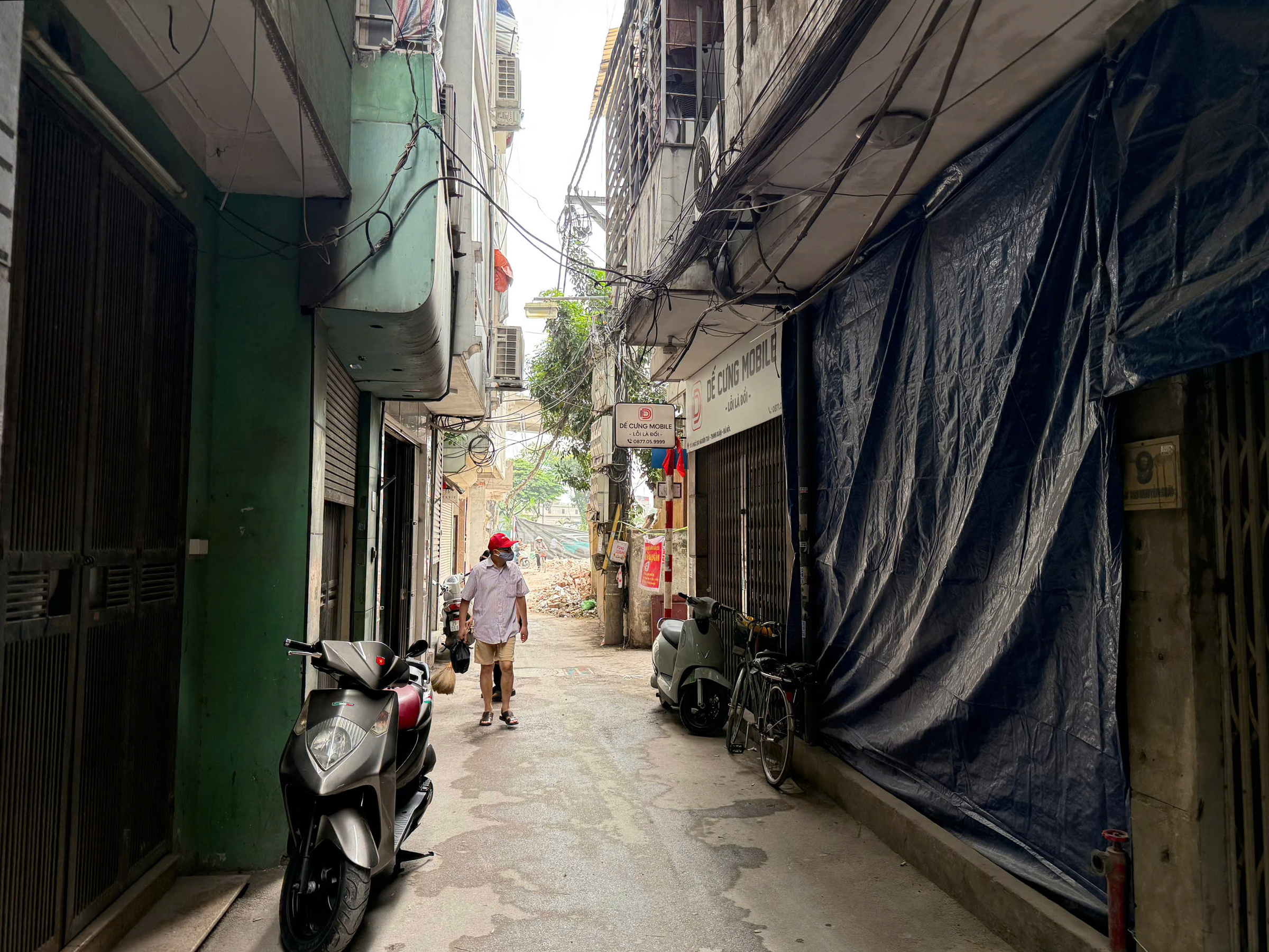
The entrance to Alley 190, Nguyen Trai Street, Thanh Xuan, during the clearance process.
 |
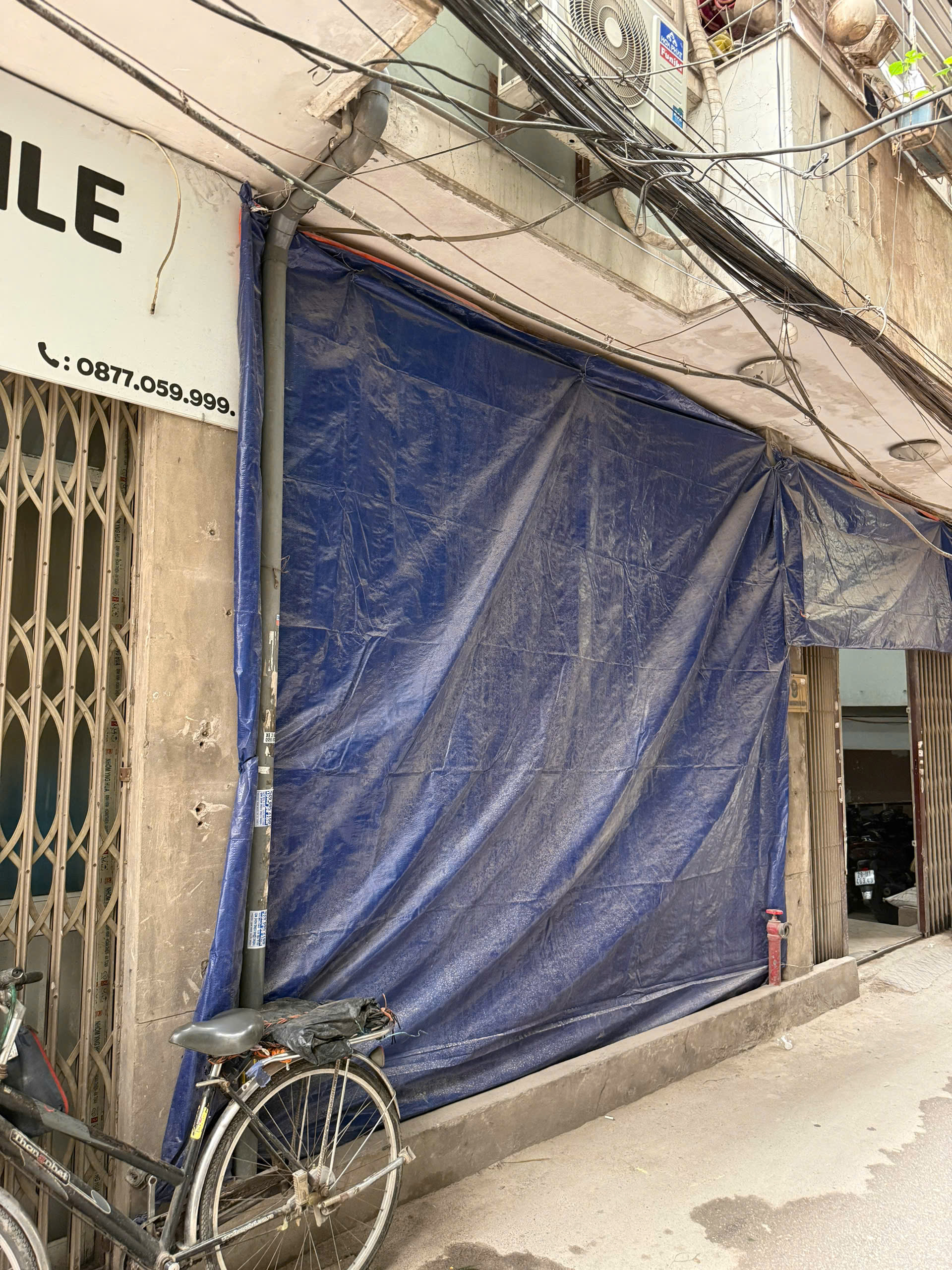
Some households in Alley 190, Nguyen Trai Street, Thanh Xuan, use tarps to cover their doors to avoid dust from the clearance area.
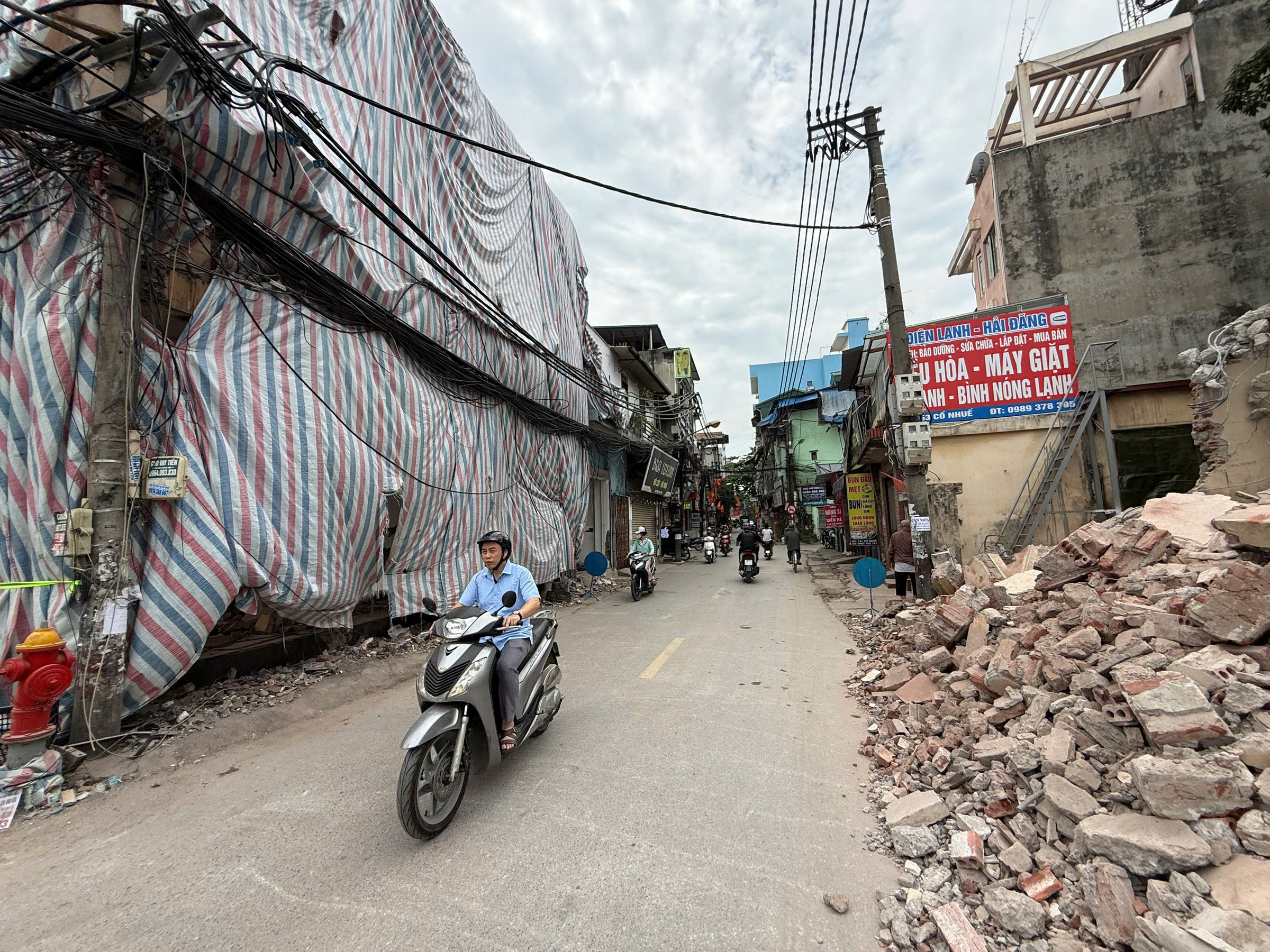 |
Dust covers a tarp sealing the door of a house in Alley 190, Nguyen Trai Street, Thanh Xuan.
 |
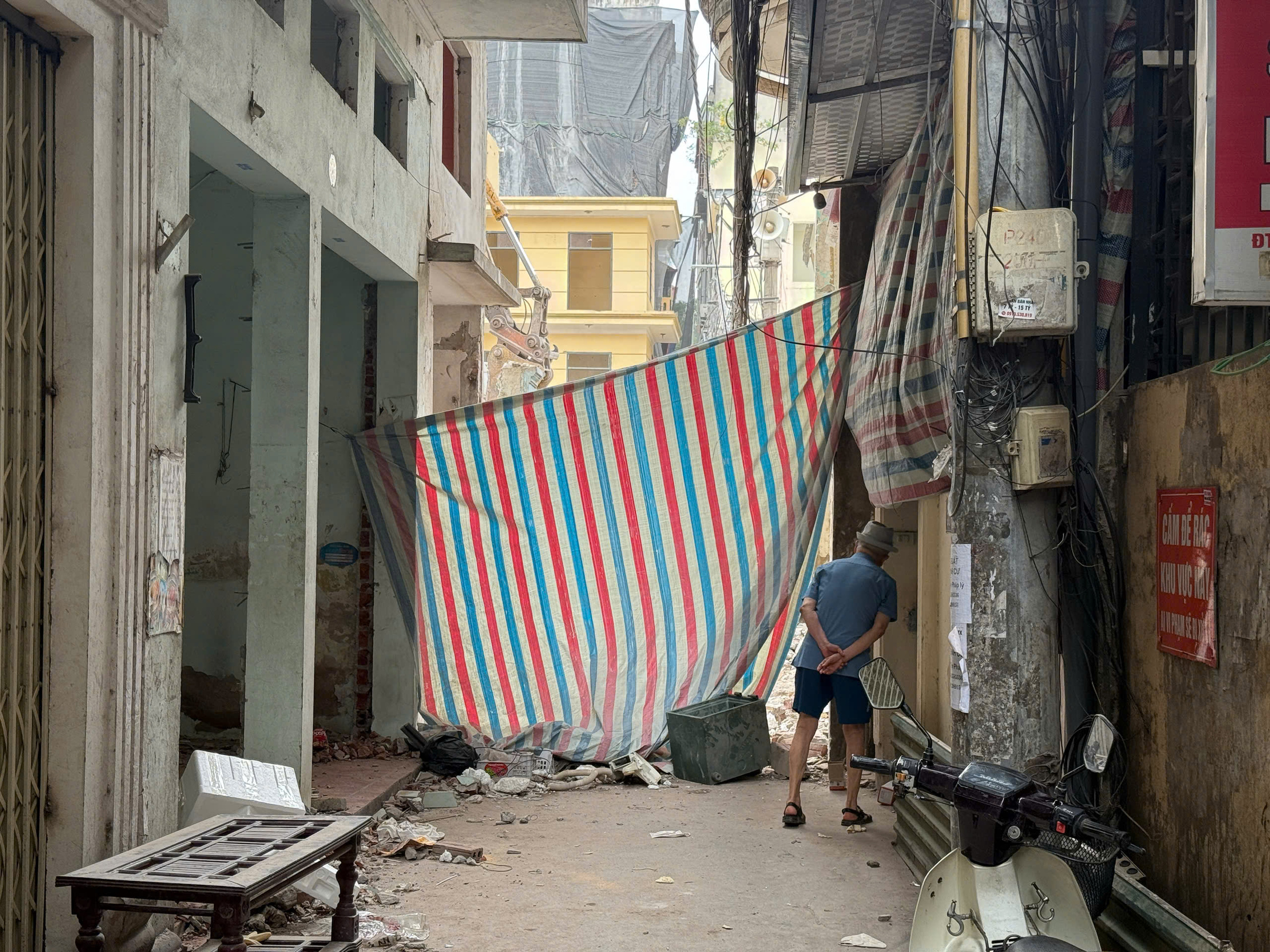
A makeshift tarp serves as a barrier between the cleared area and residents' homes in Alley 12, Chinh Kinh Street, Thanh Xuan.
 |
The Co Nhue 2 Street area, Dong Ngac ward, is undergoing clearance as part of the Tay Thang Long road project (with 10 lanes).
Hanoi is currently implementing land clearance for 1,428 projects, including new ring roads, Red River bridges, and urban areas. The goal is to complete land clearance by 30/6 for three Red River bridges (Tu Lien, Tran Hung Dao, Thuong Cat) and the remaining sections of Ring Road 2.5.
Directive 08 from the Hanoi People's Committee indicates that numerous large-scale infrastructure and traffic projects are being simultaneously deployed. However, uncoordinated and unscientific construction, coupled with delayed site restoration, has led to aesthetic degradation, dust, and noise pollution. Many investors and contractors have not fully met their environmental protection responsibilities, directly impacting the lives of residents and tourists.
To address this, the city's People's Committee has assigned the Department of Construction to enhance supervision and strictly penalize environmental sanitation violations and infrastructure restoration responsibilities. The Department of Agriculture and Environment is tasked with updating air quality information and issuing warnings in areas with high construction activity to proactively control dust. The City Police will increase patrols and use technology for automated penalties against vehicles transporting uncovered materials. Environmental sanitation units are instructed to intensify sweeping, use specialized vehicles for street cleaning, and suppress dust during off-peak hours, before 6 a.m. daily, to avoid traffic congestion.
A leader from a ward's Investment and Infrastructure Project Management Board in Hanoi (who requested anonymity) stated that the unit is urging contractors to accelerate progress and thoroughly address each item, such as covering, installing nets, arranging misting systems, and watering to suppress dust. All vehicles transporting materials and waste soil must clean their wheels and undercarriages before leaving the site, with strict prohibition against spilling mud onto public roads.
Dr. Hoang Duong Tung, President of the Vietnam Clean Air Network and former Deputy Director General of the Department of Environment, observed that many construction projects neglect environmental protection. Beyond coarse dust, the demolition of concrete releases significant amounts of PM2.5 fine dust, directly affecting the city's air quality and residents' health.
According to the expert, the city requires construction sites to implement strict dust control measures: waste must be covered, and projects exceeding one hectare must install dust monitoring systems and surveillance cameras. However, implementation has not been effective.
"We seem to be too focused on clearance progress, inadvertently overlooking the task of environmental protection," Tung remarked.
Quynh Nga