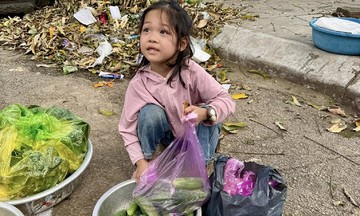
For many days, Maya Rani, 36, has taken her 6-month-old child to a gas distribution point in Delhi to queue, only to return empty-handed. When staff announced that gas would not be available for at least one more week, the young mother collapsed onto the pavement. Around her, hundreds of others also turned and left in disappointment.
Last week, Rani's family's 5 kg gas cylinder ran out. When her husband took it to be exchanged as usual, the distributor reported no stock. The family had to register for government-subsidized gas. Since her husband could not take time off work, Rani carried her child each morning to queue. Without fuel, the entire family eats only one meal out per day, and she has to ask neighbors to heat milk for her child.
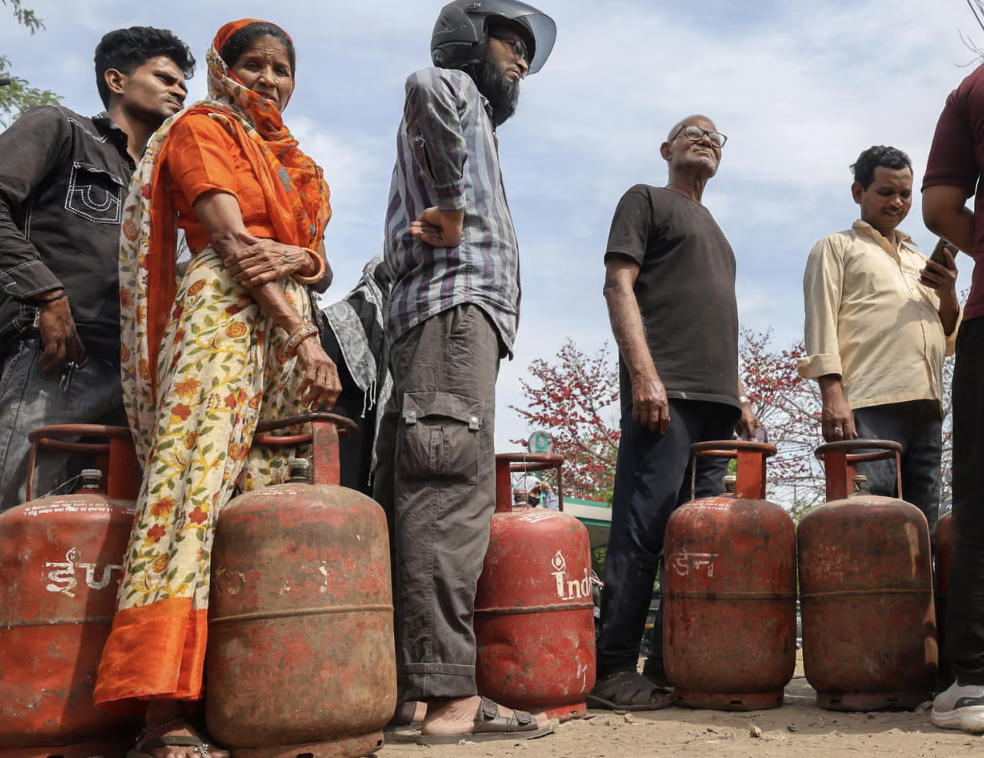 |
Residents queue for gas in New Delhi, India. Photo: Guardian |
The disruption in liquefied petroleum gas (LPG) supply, caused by the blockage of the Strait of Hormuz, is pushing South Asian countries into their most severe crisis in decades. This strait is a transit point for about one-fifth of global fuel, most of which heads to Asia. In nations like India, Pakistan, Bangladesh, Nepal, and Sri Lanka, where LPG is the primary cooking fuel, the consequences were immediate.
"This level of risk was anticipated. The Strait of Hormuz is a choke point; these risks have been studied and debated by us for years", stated Akhtar Malik from the Industrial and Economic Infrastructure Research Bureau in Delhi.
The global energy system typically maintains a 40-60 day reserve for critical fuels, but India only holds just over a 20-day supply. While the nation has strategic crude oil reserves, it has not created a buffer for LPG.
India currently imports about 60% of its LPG, with 90% of that passing through the Strait of Hormuz. Since the area closed, only two shipments have managed to pass through, meeting a very small fraction of the demand. Alternative supplies from the US would take weeks to arrive and come at a significantly higher cost. The Indian government has been forced to prioritize domestic reserves for households, hospitals, and schools, leaving businesses to fend for themselves.
Currently, restaurants and hotels are the most severely affected. In Mumbai, about one-fifth of eateries have closed or scaled back operations. Shawaya House, a popular barbecue restaurant in Delhi’s Muslim-majority Zakir Nagar area, has had to reduce its menu from 30 dishes to just 6, switching to coal for cooking. Sharply declining revenue puts service staff at risk of losing their jobs.
Workers are also experiencing immediate impacts. Shahidul Alam, 46, is waiting for a train to return to his hometown in West Bengal after the factory where he worked closed due to the gas shortage. He explained that the factory ceased operations and stopped paying wages, while the high cost of living made it impossible for him to stay.
As the scarcity persists, tension is spreading. Many arguments have erupted at distribution centers, and even LPG trucks have become targets of theft. Affluent families are rushing to buy induction cooktops, leading to a tenfold increase in sales of these appliances at some Delhi stores.
For poor workers like Ajay Mandal, 30, life is being pushed into a dead end. A 900 rupee gas cylinder is now being sold for 4,000 rupees on the black market, while street food prices have doubled.
"If this situation continues, poor people like us will have no choice but to eat grass", Mandal lamented after having to collect firewood to cook for his family of six.
Ngoc Ngan (According to Guardian)