The island is known as one of the most densely populated places on Earth. Shacks cling to the rock face, forming a network of narrow alleys just wide enough for two people to squeeze through. Every inch of land is utilized for homes or businesses.
Residents flock to this island for its abundant fish resources. The deep waters surrounding Migingo teem with Nile perch. Living on the island saves fishermen fuel and provides direct access to buyers. Each morning, over 100 boats dock to deliver their catch. According to Islands, Nile perch fillets can fetch export prices of up to 300 USD for about 0.9 kg in international markets.
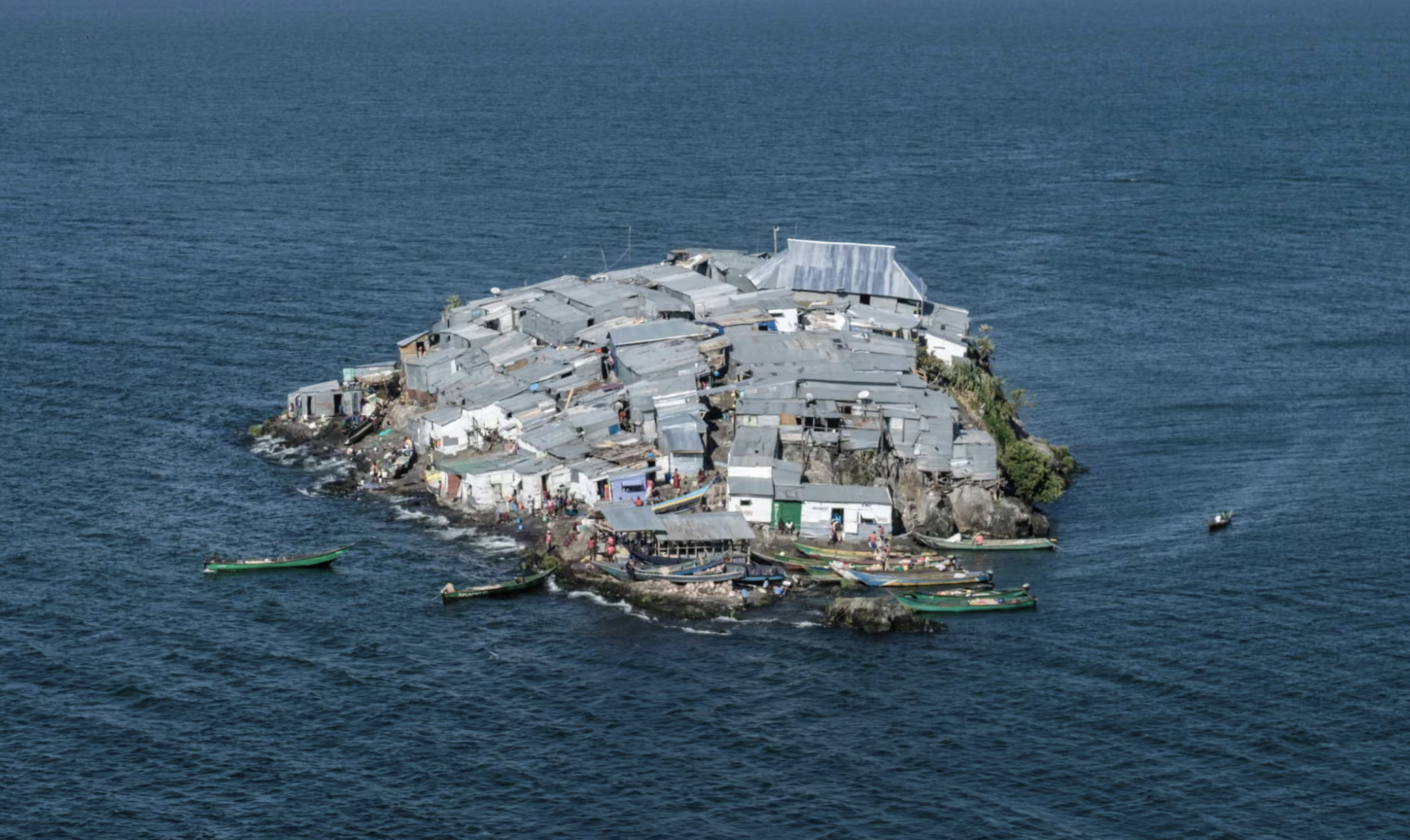 |
Migingo Island, located in Lake Victoria on the border between Kenya and Uganda, measures less than 2,000 square meters. Photo: Yasuyoshi Chiba/AFP |
Migingo Island, located in Lake Victoria on the border between Kenya and Uganda, measures less than 2,000 square meters. Photo: Yasuyoshi Chiba/AFP
Migingo operates like a miniature city, featuring restaurants, bars, pharmacies, beauty salons, and outdoor casinos. For healthcare, the island has a clinic managed by a nurse, treating minor injuries and testing for malaria. Severe cases are transferred to mainland Kenya. However, sanitation conditions are poor, with residents discharging waste and sewage directly into the lake.
Migingo's residents come from Kenya, Uganda, and Tanzania, with Kenyans accounting for approximately 80%. The primary language spoken is Swahili.
Daniel Obadha, a Kenyan electrician, explained that he chose Migingo because the high volume of cross-border traffic ensures brisk business and higher income than on the mainland. Ugandan fisherman Eddison Ouma stated he persists in fishing here due to a lack of other employment options, visiting his family only two times a year.
According to a report by Amusing Planet, a team of fishermen can earn up to 300 USD a day from catching Nile perch during peak season. Individual fishermen or small households can also make 30-35 USD daily, equivalent to the average monthly income (or even two to three months' income) for many laborers in rural mainland Kenya or Uganda.
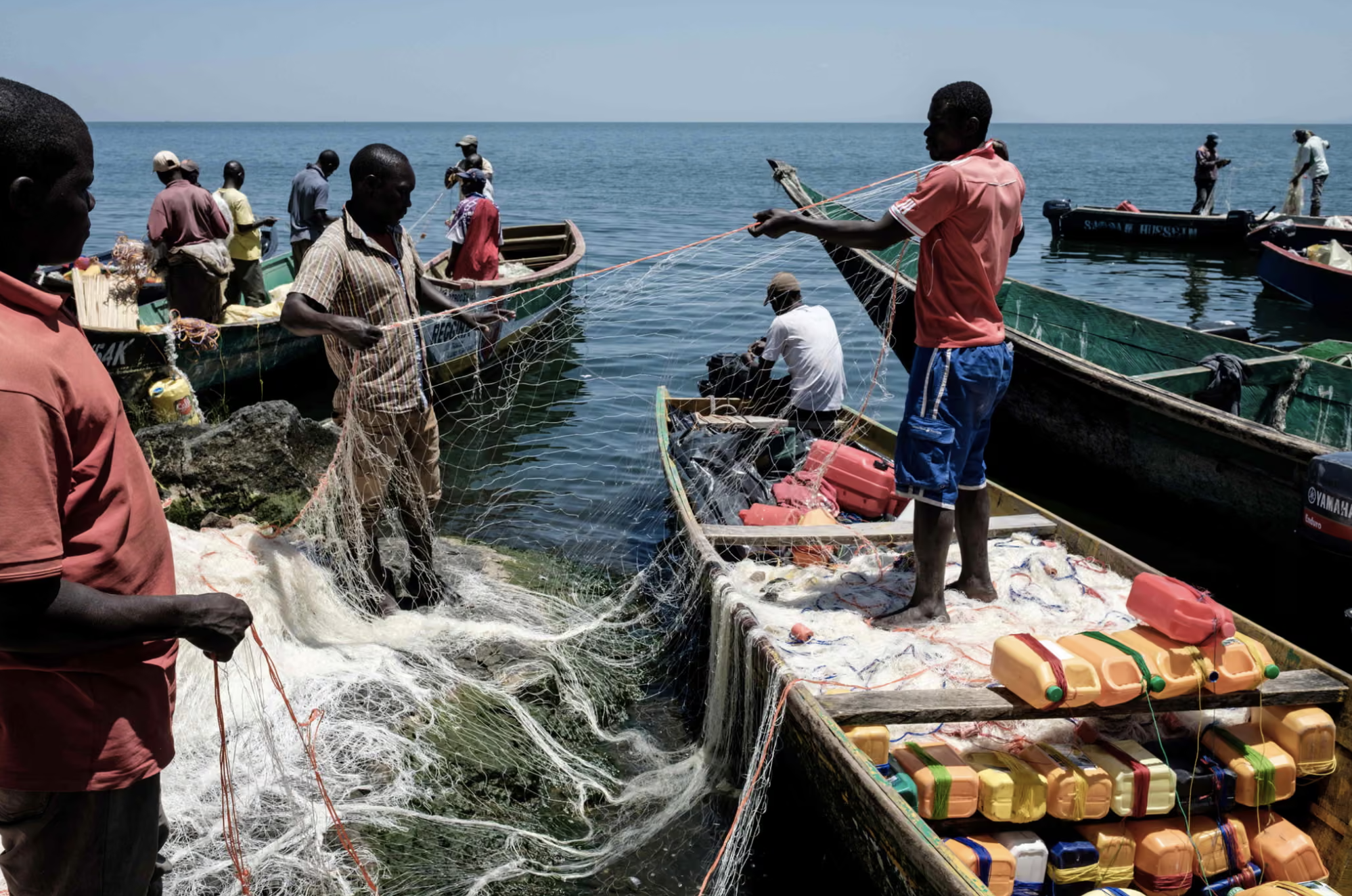 |
Fishermen on Migingo Island prepare nets to catch Nile perch, a high-value fish. Photo: Yasuyoshi Chiba/AFP |
Fishermen on Migingo Island prepare nets to catch Nile perch, a high-value fish. Photo: Yasuyoshi Chiba/AFP
The history of Migingo is marked by disputes. Before the 1990s, this rocky outcrop was submerged beneath Lake Victoria. When the water receded in 1991, two Kenyan fishermen claimed ownership, but Uganda asserted that its citizens were the first to settle there. In 2016, the two nations established a joint committee to demarcate the border, but it yielded no conclusive results.
Currently, Kenya and Uganda jointly manage the island. Police forces from both countries are stationed on the 2,000 square meter area. Residents frequently see both police forces patrolling together. While they occasionally point weapons at each other, on peaceful days, security forces from both sides and fishermen share beers and socialize in the bars.
Beyond sovereignty disputes, fishermen on Migingo Island also contend with pirates who steal fish and boat engines, and the challenge of overfishing.
By Minh Phuong (Sources: News, Aljazeera, Diario AS)