According to Business Insider, Raymond Zeng moved from Dallas to the San Francisco Bay Area, California, eight months ago. Although his lifestyle is described as austere, the engineer stated this was a carefully calculated decision.
"My lifestyle is intentional. I can afford to buy furniture or spend more, but I prioritize investments, travel, and personal hobbies," Zeng said.
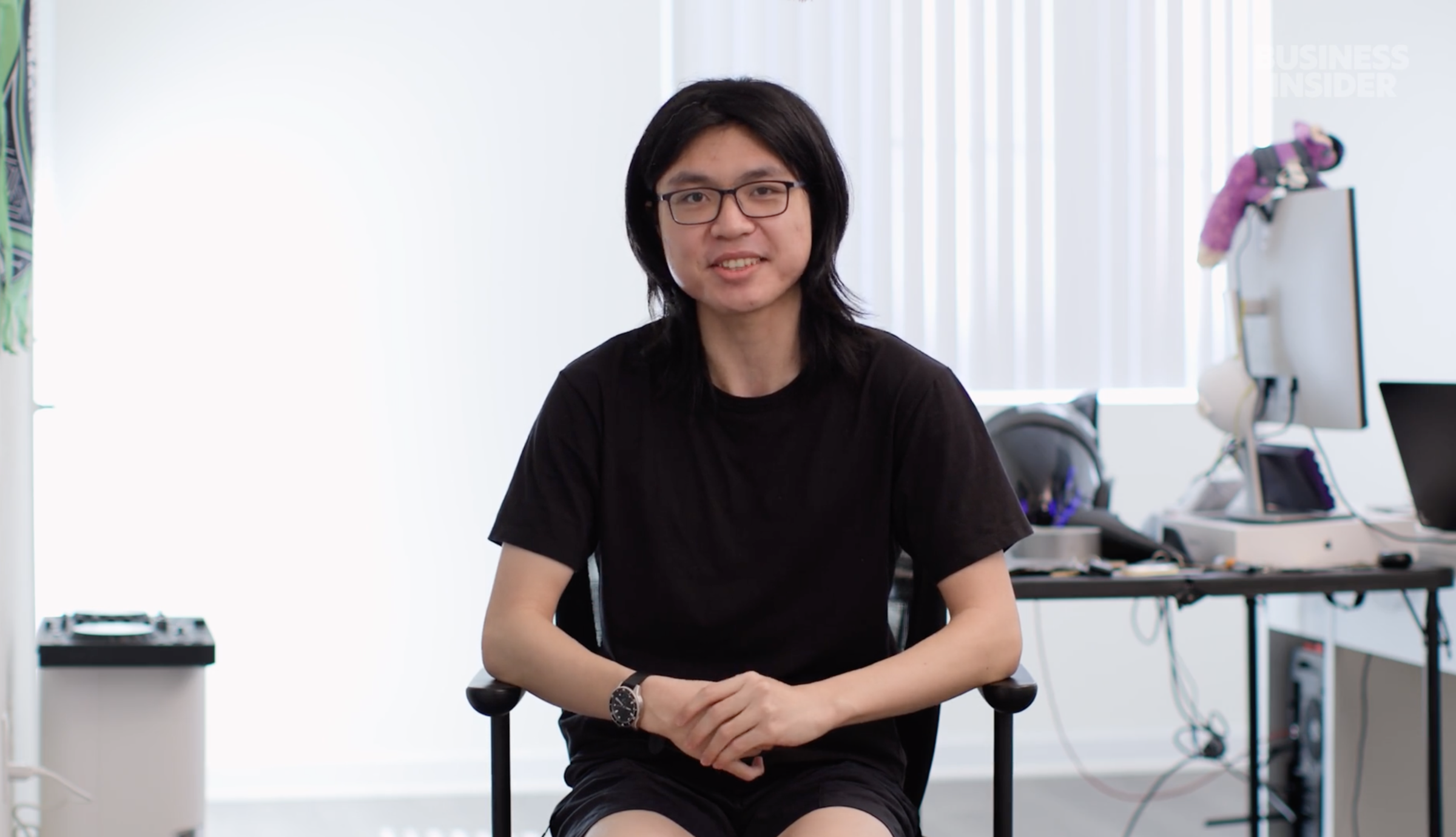 |
Zeng in his 2,600 USD rented apartment in the San Francisco Bay Area. Photo: BI |
**Cutting back on material possessions**
Zeng's annual income at Meta includes a base salary of 185,000 USD, 93,000 USD in stock, and bonuses. Depending on when he receives bonuses and stock, he saves from 5,000 to 20,000 USD each month.
To achieve his goal, Zeng eliminates expenses that do not add value. He rents a one-bedroom apartment for 2,600 USD monthly. The living room contains only a work computer, devoid of a TV or sofa. His bedroom features only a bed, blankets, pillows, and a filing cabinet that doubles as a desk.
Zeng does not own a car, preferring to walk, use the company bus, or public transit, costing him less than 30 USD each month. Food expenses are capped at 300 USD for home-cooked meals and 75 USD for dining out. Thanks to company-provided breakfast and lunch, actual costs are often below budget. In his free time, instead of visiting restaurants or bars, he frequently socializes with friends via virtual reality (VR) at home.
Despite saving money on furniture and transportation, Zeng spends freely on personal experiences. He allocates 400-500 USD monthly for travel and pays a 1,000 USD annual fee for a credit card to redeem business class flight tickets. "I only spend money on items that truly enhance my quality of life," Zeng stated.
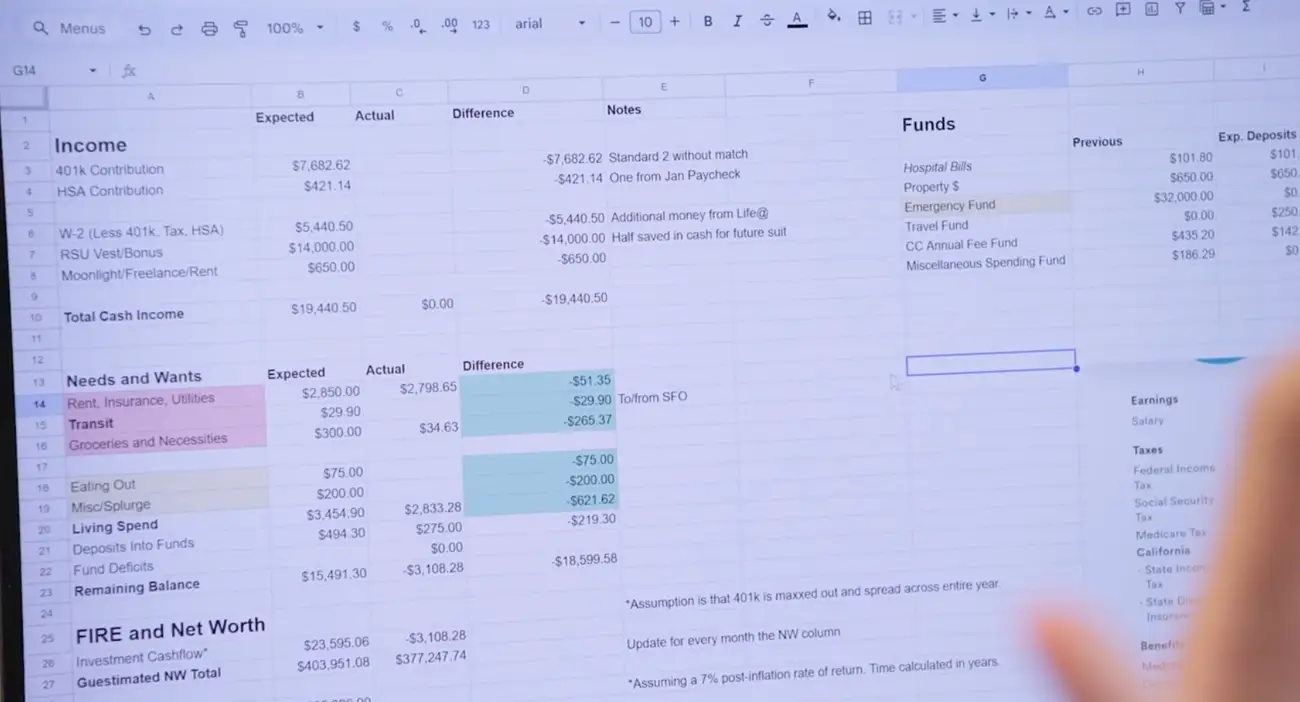 |
One of Zeng's detailed spreadsheets for tracking finances. Photo: BI |
**Investment strategy**
To grow his wealth, Zeng utilizes U.S. tax-advantaged accounts. Annually, he contributes the maximum amount to his employer-sponsored 401(k) retirement plan. Next, he transfers funds into a Roth IRA (where contributions are after-tax, so all capital and earnings are tax-free upon withdrawal) and a health savings account (HSA). Any surplus funds are invested in the stock market.
Zeng designed his own spreadsheets to track cash flow and his investment portfolio. According to his plan, he needs to reach 1,6 million USD to retire at age 30.
The engineer stated he does not force himself into blind frugality. "The biggest lesson I've learned from the financial independence community is to design the life you want, then create a savings plan," he said.
(Source: BI)