Simmering beans often takes considerable time. To expedite the softening process, many cooks commonly add baking soda.
Chef Vu Nhat Thong from Eric Vu Cooking Class, however, identifies this practice as flawed. Baking soda, an alkaline substance, increases pH upon dissolution, rapidly breaking down the pectin structure in bean cell walls. This accelerated softening comes with several significant drawbacks.
A primary concern is the significant loss of vitamins. An alkaline environment is detrimental to B vitamins, particularly vitamin B1 and vitamin C. Even a small quantity of baking soda can deplete up to 90% of the vitamin B1 present in beans.
Furthermore, baking soda can alter both the flavor and color of the dish. Excess alkali often imparts a soapy taste and a faint fishy odor to the broth. This reaction also dulls the beans, preventing them from retaining their natural vibrancy.
Overuse also risks mushy food. Exceeding the recommended dosage can completely destroy the bean's structure, resulting in a soft, unappetizing texture.
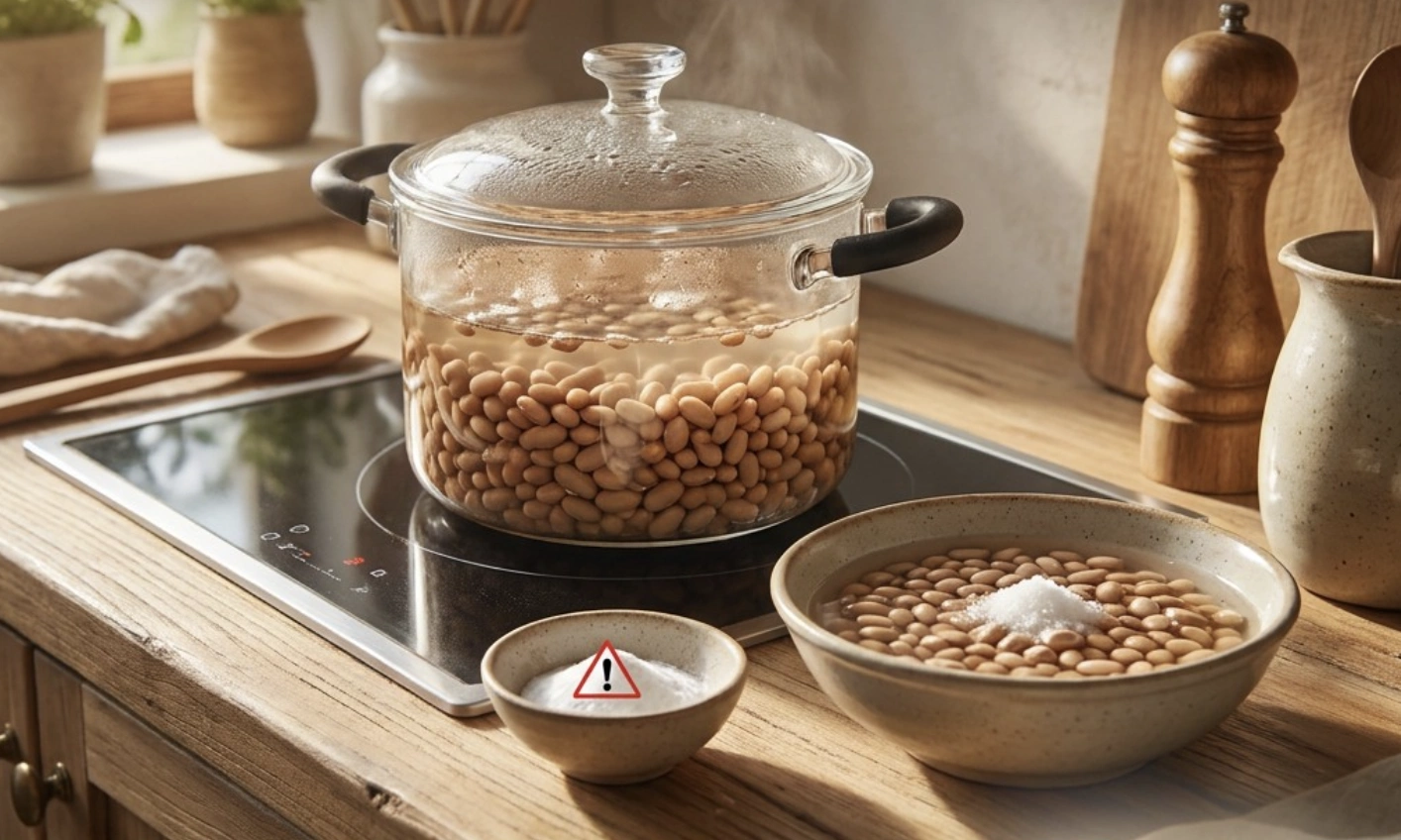 |
Adding baking soda to beans shortens cooking time but inadvertently causes nutrient loss and flavor changes. *Illustration created by AI*. |
To prepare quickly softened bean dishes while preserving their nutritional value, home cooks should opt for natural methods. The simplest and safest approach involves soaking beans in cold water for 8 to 12 hours. This process allows the beans to fully hydrate and soften naturally before cooking.
For enhanced results during soaking, add salt at a ratio of approximately 5 g of salt per 1,000 ml of water. The sodium ions in the salt displace calcium within the pectin, allowing the bean skins to soften while retaining their structural integrity during simmering. For optimal effectiveness, incorporate the salt at the beginning of the soaking process.
Should it be absolutely necessary to minimize cooking time, Chef Vu Nhat Thong advises using no more than one gram of baking soda per 1,000 ml of water.
Bao Nhien