Chef Vu Nhat Thong from Eric Cooking Class Center, TP HCM, explains that the notion of salt being solely for savory flavors is only partially accurate. In culinary applications, salt serves as a crucial flavor modulator.
The mechanism of sweetness amplification
When a small amount of salt is sprinkled on fruits such as watermelon, pineapple, or mango, the fruit's sugar content remains unchanged, yet tasters perceive an enhanced sweetness. This phenomenon occurs due to the activity of taste receptors on the tongue. Sodium ions from the salt interact with these receptors, increasing their sensitivity to sugar molecules. As a result, the brain registers a more distinct sweet sensation. The combination of salt with watermelon also aligns with Eastern culinary philosophy: watermelon, considered "cooling" (tinh han), when paired with "warming" (tinh am) salt, helps create balance within the body.
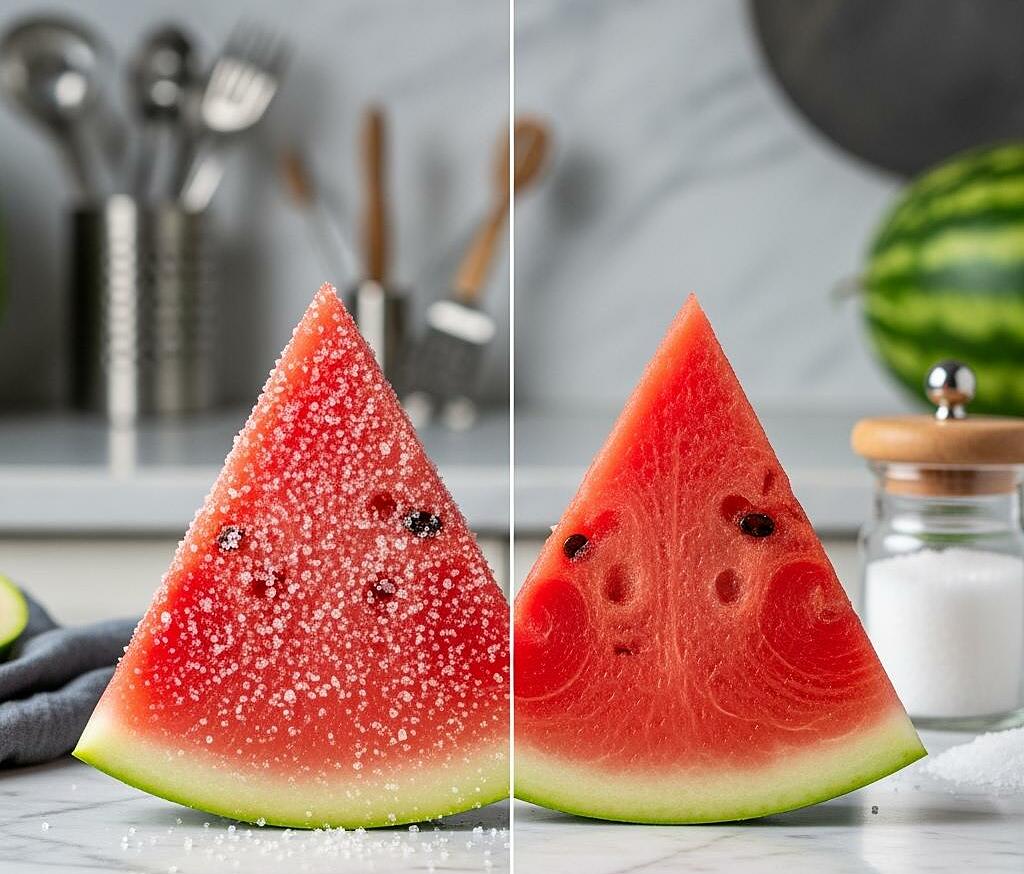 |
A pinch of salt on watermelon enhances sweetness. *Illustration: AI* |
The ability to inhibit bitterness
Beyond amplifying sweetness, salt also effectively reduces bitterness. Typically, bitter compounds found in coffee, bitter melon, or dark chocolate bind to specific bitter taste receptors on the tongue, sending signals to the brain. When salt is present, sodium ions preferentially bind to these receptors, thereby diminishing their capacity to receive bitter compounds. This reduction in signal transmission to the brain results in a less harsh bitter taste in the food.
According to chef Nhat Thong, to leverage salt's flavor-enhancing properties without making a dish overly salty, precise dosage control is essential. For fresh fruits, individuals should sprinkle only a few grains of salt immediately before consumption. In desserts, approximately 0,5 g of salt can be used per batch of cake or sauce to mitigate excessive sweetness. Using too much salt will inevitably overpower the food's original flavor.
Bao Nhien