Kacie Barrett, 26, a project manager earning 120,000 USD annually, recently downgraded her internet plan from 120 USD to 40 USD per month to cut costs with her roommate. The slower connection significantly hinders her two work-from-home days each week.
Over the past two years, the surge in artificial intelligence (AI) investment has driven up San Francisco's living expenses. Barrett moved from a 2,000 USD private apartment in Russian Hill to a shared room costing 1,850 USD in Nob Hill. She cooks her own meals, uses a budget gym, limits social outings to once a month, and does not own a personal car.
"I feel like I am living more like a student than an adult", Barrett said.
After six months of fruitless house hunting, she faced three choices: continue living frugally in an expensive studio apartment, move to the suburbs and commute long distances to the city center, or return to the tech industry for a higher income.
"It is difficult to enjoy life in San Francisco unless you work in tech", she stated.
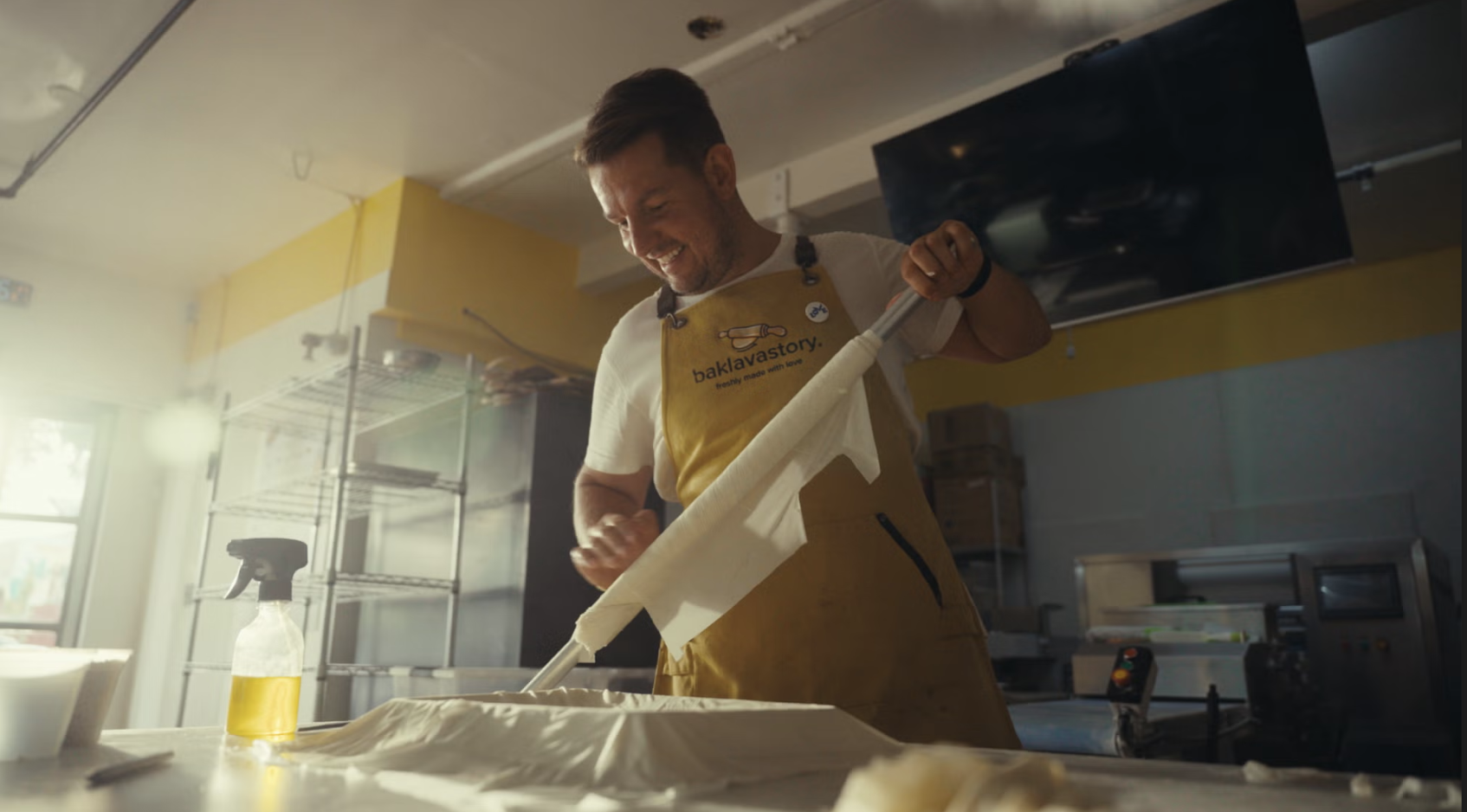 |
Tolgay Karabulut, a small business owner, works 12 hours daily at his BaklavaStory bakery in San Francisco. Photo: Tolgay Karabulut |
Small business owners face survival pressure
Tolgay Karabulut, 43, who has owned the BaklavaStory bakery in San Francisco since 2022, shares the burden of escalating housing costs. Despite some days reaching 2,600 USD in revenue from selling 68 trays of pastries, he only pays himself 40,000 USD annually, reinvesting most profits back into the business.
Karabulut rents a shared room for 1,300 USD per month. The room lacks a closet, forcing him to store his belongings in a four-drawer dresser and rotate between four pairs of pants and 20 shirts.
"I just hope the bakery gets a larger kitchen and I can afford to rent my own apartment", he said.
The emergence of artificial intelligence corporations like OpenAI, Anthropic, and Databricks has concentrated significant wealth in San Francisco. Financial inequality is expected to surge when these companies launch initial public offerings (IPO), potentially turning many employees into overnight millionaires.
This disparity has fueled the concept of a "perpetual underclass" on online forums, referring to those outside AI labs who face the risk of financial decline. While many tech leaders deny this growing divide, small business owners and non-tech workers feel the city is becoming unaffordable for them.
Many food businesses see good revenue from customers working in AI, yet struggle with recruitment because candidates cannot afford housing. Nasir Armar and Alexander Hong, co-owners of Parachute Bakery, consistently receive anxious feedback from workers. In one week, three candidates accepted job offers but later rescinded them, fearing they could not afford to live in the city.
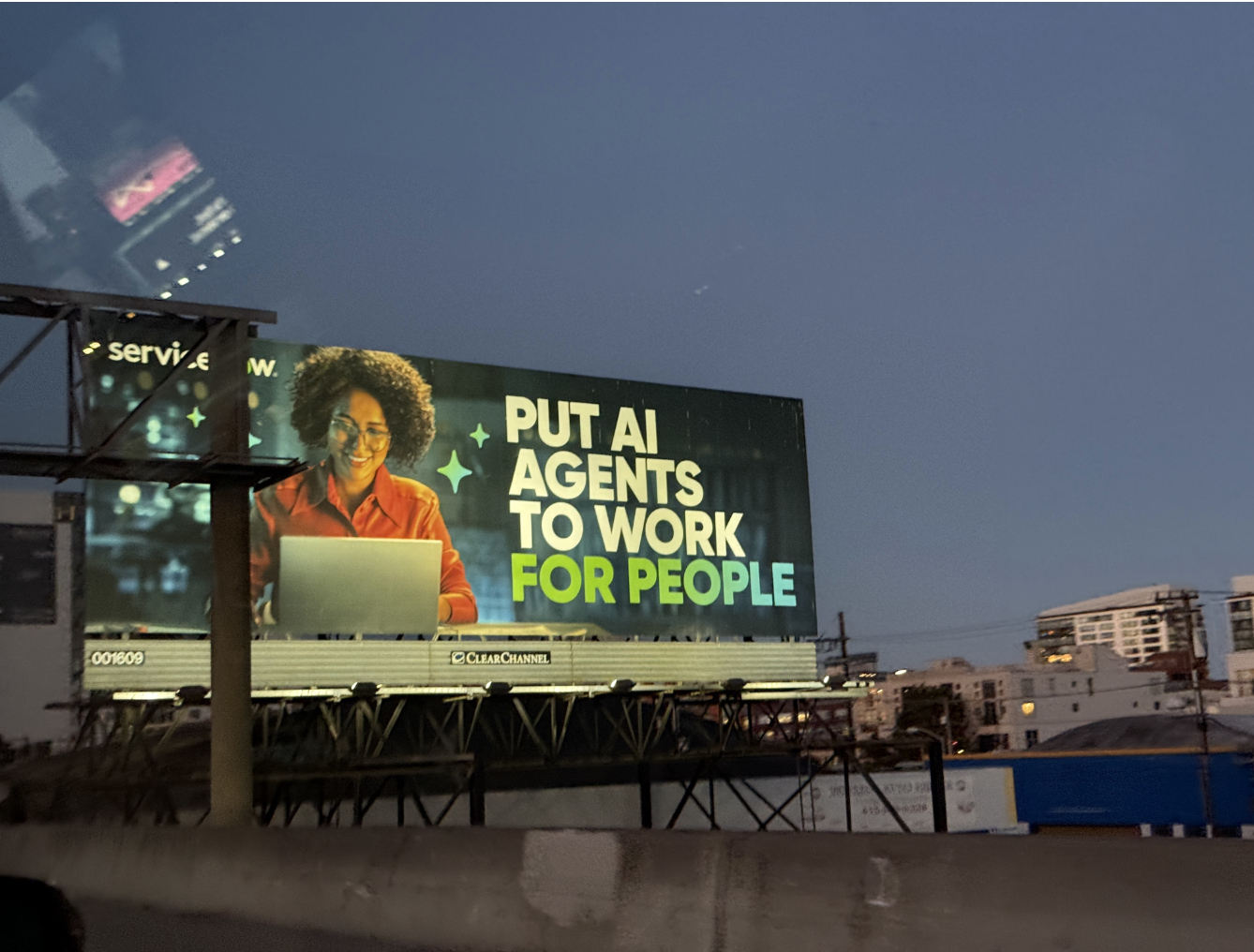 |
Numerous advertisements for artificial intelligence (AI) are placed from the airport into downtown San Francisco, 8/2025. Photo: Aaron Parecki |
To retain staff, Karabulut provides free lunches and accepts a reduction in his take-home profit. "I want my employees to have stable incomes and not struggle", Karabulut said.
Alexandra Killewald, Director of the Stone Center for Research on Socioeconomic Inequality at the University of Michigan, noted that the inability to own a home will have long-term consequences for the middle class, as real estate is often the largest accumulated asset for Americans.
Spending pressure also extends to tech workers outside the AI sector. Grace Ling, 29, a UX designer, shares a home with six other people. She feels constrained by her demanding work schedule, yet still cannot afford to buy property.
For individuals like Barrett and Karabulut, life in San Francisco is increasingly suffocating, forcing them to constantly tighten their belts or consider leaving the city.
Minh Phuong (According to Insider)