Thousands of residents and tourists gathered at Quang Trung Museum in Tay Son commune on the morning of 10/9 to attend the commemoration ceremony for Emperor Quang Trung. Attendees brought incense, flowers, banh chung (sticky rice cakes), and other offerings, performing rituals to honor the commoner hero. A key tradition of the death anniversary is drinking from the ancient well within the museum grounds, which is a remaining vestige from the old garden of the Tay Son family.
According to local folklore, the well water holds spiritual significance, deeply tied to the life of the Tay Son family. Consequently, on the death anniversary, many people lined up to collect well water to drink, wash their faces, or take some home. Their actions reflect a desire for peace and good fortune. After the commemorative rituals concluded, organizers invited attendees to dine in a designated food area.
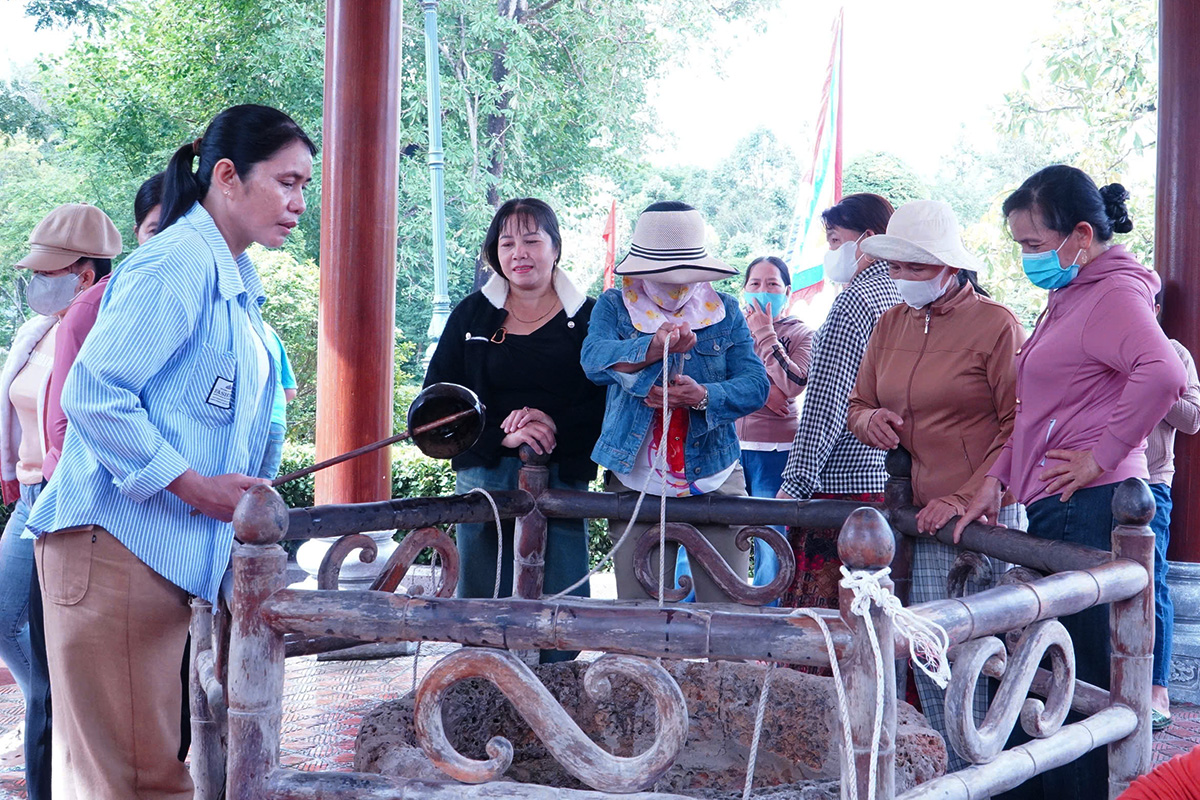 |
Residents draw water from the ancient well to drink for good fortune on Emperor Quang Trung’s death anniversary. *Photo: Kim Thi*. |
The Tay Son peasant uprising, which erupted in the latter half of the 18th century, is intrinsically linked to the endeavors of the three brothers Nguyen Nhac, Nguyen Hue, and Nguyen Lu. Emperor Quang Trung, also known as Nguyen Hue, distinguished himself as a talented general, achieving victory in every battle. He transformed the Tay Son forces from a peasant rebellion into a powerful movement for national liberation, ultimately unifying the country after over 200 years of division.
Born in 1753 in Kien My village (formerly Tay Son district, Binh Dinh province), Quang Trung - Nguyen Hue dedicated his short life of 39 years to the cause of national liberation. He passed away on the 29th day of the seventh lunar month in 1792.
Tran Hoa