The Xindian residential area in Hongkou District features an old apartment complex built in 2000, known for its high population density. Recently, life in building number 4 was completely disrupted when a business leased the ground floor to open an electric vehicle battery swapping station.
Within a mere 10 square meters, the business installed numerous multi-story charging cabinets, containing 186 battery slots from eight different brands. The remaining space was so cramped that only one person could squeeze through.
Surveillance cameras reveal intense activity at the station. In 30 minutes, over 30 people entered and exited, continuously swapping batteries. "They constantly insert hot batteries for charging and remove fully charged ones. We feel like we are sleeping on a ticking time bomb," said Ms. Lu, a resident of the building, to reporters from Xinwenfang.
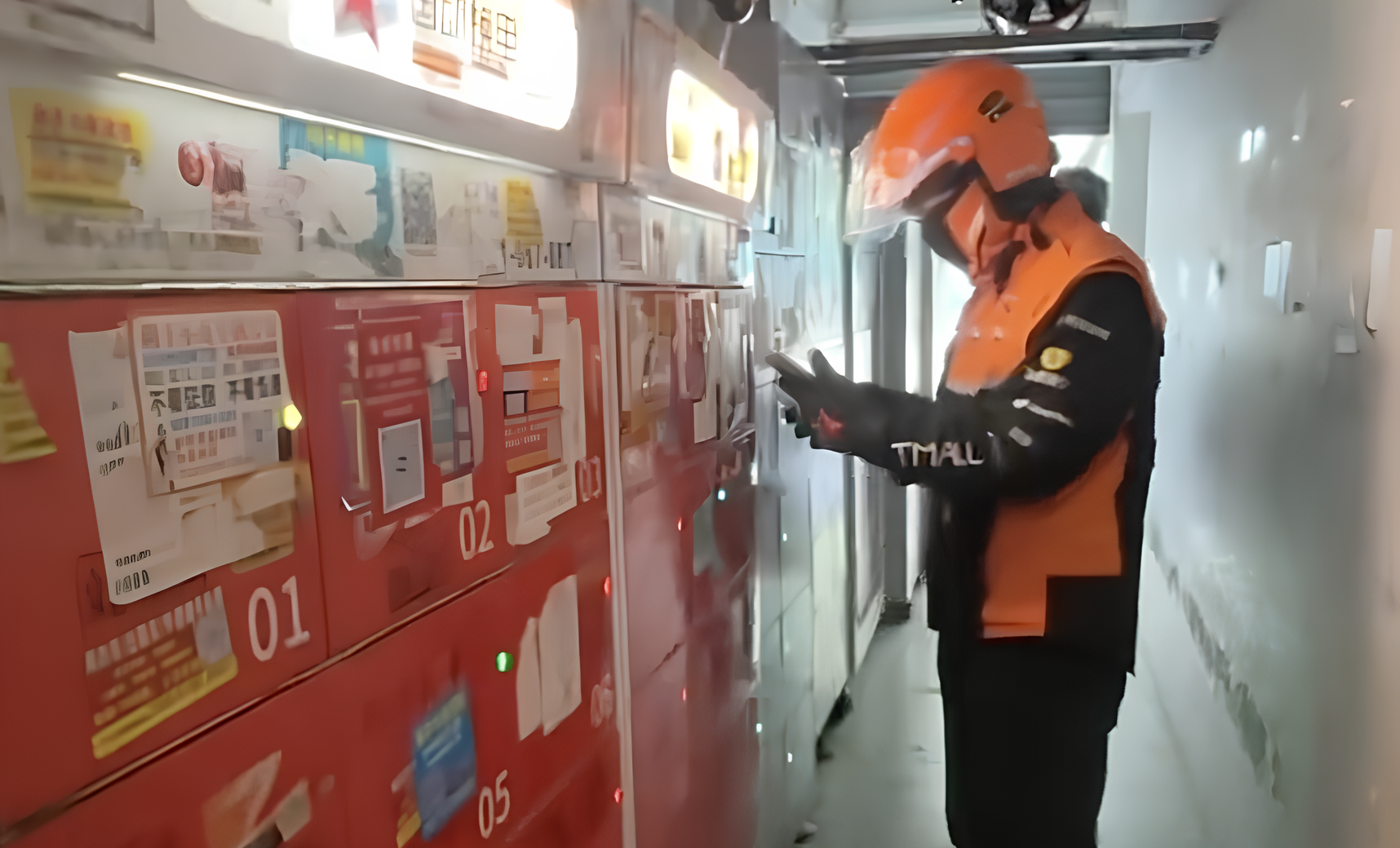 |
The cramped space of the Xindian charging station in Hongkou District, Shanghai, where 186 charging slots are located directly beneath thousands of residents. Kankan News |
The cramped space of the Xindian charging station in Hongkou District, Shanghai, where 186 charging slots are located directly beneath thousands of residents. Kankan News
Residents' fears were further substantiated by the station's location, sandwiched between a gas appliance store and a restaurant – both inherently high-risk for fires. Meanwhile, the station's safety equipment consisted of only four dry powder fire extinguishers, completely lacking an automatic sprinkler system or standard ventilation.
Facing this constant threat, 90% of households in the building signed a collective petition demanding the relocation of the charging station.
In response to the opposition, Mr. Zhang, the station operator, explained that the facility had a business license from 2023 and complied with regulations at that time. "The battery brands also have remote temperature monitoring systems," he stated.
However, Ms. Shao, an official from the Hongkou District Fire Department, highlighted a legal loophole: Previously, the installation of these cabinets did not require separate fire safety approval, only a regular business license. "Legal does not mean reasonable or safe," Ms. Shao emphasized.
Mr. Yu Xin, the neighborhood Party secretary, concurred: "Placing a high-risk facility directly at the base of a densely populated building is unacceptable. If a fire occurs, it would be an inescapable disaster."
The deadlock was only broken when Shanghai's new local standard for fire safety in electric vehicle charging cabinets officially took effect on 1/11/2025. This regulation mandates that charging stations prioritize outdoor placement. If located indoors, stations must have fire-resistant walls, a fire alarm system, an automatic sprinkler system, and separate ventilation.
In accordance with the new regulations, Hongkou District authorities re-inspected the Xindian charging station earlier this month. Engineer Fan Xinguo, an expert with the City Fire Protection Association, listed a series of violations: The charging density was double the standard, the operating space was too narrow, and ventilation was inadequate. Notably, five devices from three brands were not connected to the common safety data monitoring platform.
Immediately following the inspection, local authorities ordered the facility to cease operations and mandated its relocation from the residential area, restoring peace of mind to the residents.
The incident in Xindian serves as a wake-up call for energy safety management in megacities. The Shanghai government announced it would use this as a precedent to review all similar charging points, aiming to build 5,000 standardized outdoor charging stations by the end of 2026.
Bao Nhien (According to Xinwenfang, Kankan News)