Cindy Woody, 58, vividly recalls the demanding period when she earned her master's degree at 41 and her doctorate at 47. The Texas University associate professor sacrificed personal pursuits, writing her thesis between 3 a.m. and 6 a.m. daily, all while working full-time and relying on family for household support. "I consider this the most worthwhile investment of my life," Woody stated.
The number of individuals like Cindy Woody returning to higher education later in life is growing. Data from the US National Center for Education Statistics reveals that over one million people in their 40s are currently enrolled in undergraduate or postgraduate programs. Their primary motivations include seeking higher salaries and greater career stability, even as younger generations express skepticism about the long-term value of traditional degrees.
 |
Illustration: WSJ |
Beyond traditional university programs, short-term vocational courses, typically costing around 3,000 USD annually, are also experiencing a surge in popularity. In Pennsylvania, 25% of students enrolled in carpentry, construction, and healthcare training are over 40.
Victoria Miner, 48, a livestock farmer, enrolled in a four-year butchery vocational program. This certification offers more than manual work; it serves as a pathway for her to become an inspector for the US Department of Agriculture (USDA). "At this age, I need to use my mind for work rather than relying solely on physical strength, as I did before," she explained.
Similarly, Kevin Korenthal, 53, understood that competence alone was insufficient for career advancement without a formal degree. He returned to school at 40 to earn his bachelor's. Today, he has achieved his goal, serving as the Chief Executive Officer of a national park fund association.
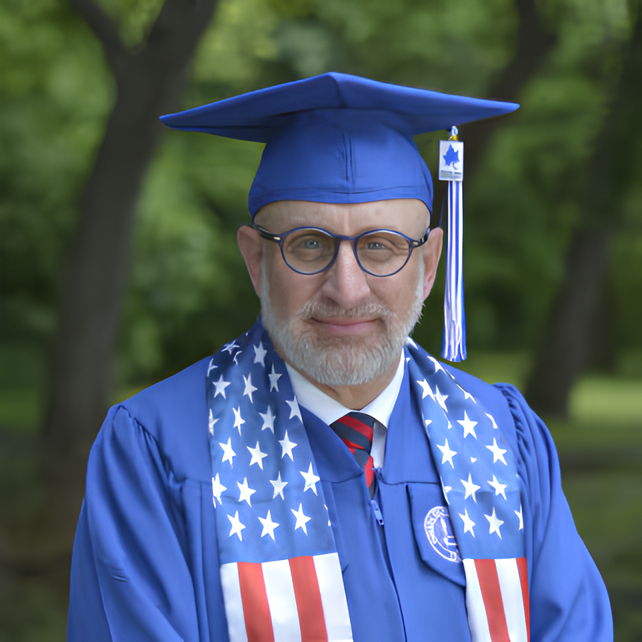 |
Kevin Korenthal needed a degree to secure a top job at a nonprofit organization. Kevin Korenthal |
However, this path is not without its challenges. These older students often juggle work, family responsibilities, and academic demands. They also take on new debt precisely during what would typically be their peak earning years. The average annual cost for a public university in the US is around 30,000 USD, with private institutions costing significantly more.
For Melissa Harkin, 45, the pursuit of education also entailed significant family sacrifices. To complete her programs at Birmingham University and Harvard, she remained confined to her apartment for two months, missing several of her son's developmental milestones.
Despite these challenges, many view such sacrifices as necessary. LaToya Hall, 40, a single mother, sold her car and borrowed 40,000 USD to study software after years of demanding work in kitchens. "My efforts allowed me to transition into digital content for the American Automobile Association," Hall stated.
As life expectancies and career spans lengthen, higher education is no longer solely the domain of the young. Instead, it has become a lifeline for those in their 40s seeking to reshape their careers and gain control over their professional futures.
She stated, "I will return to school at some point to earn a bachelor's degree."
Nhat Minh (According to WSJ)