In late November, a video featuring 65-year-old Shi Naiyin went viral across Chinese social media. The clip shows the Dong ethnic woman, dressed in traditional attire, smiling gently. She is the original model for the young woman depicted on the left side of the one-yuan banknote, part of the fourth series issued in 1988.
Despite being known nationwide as the 'one-yuan girl', Shi lives a simple life as a farmer in Congjiang county, Guizhou province.
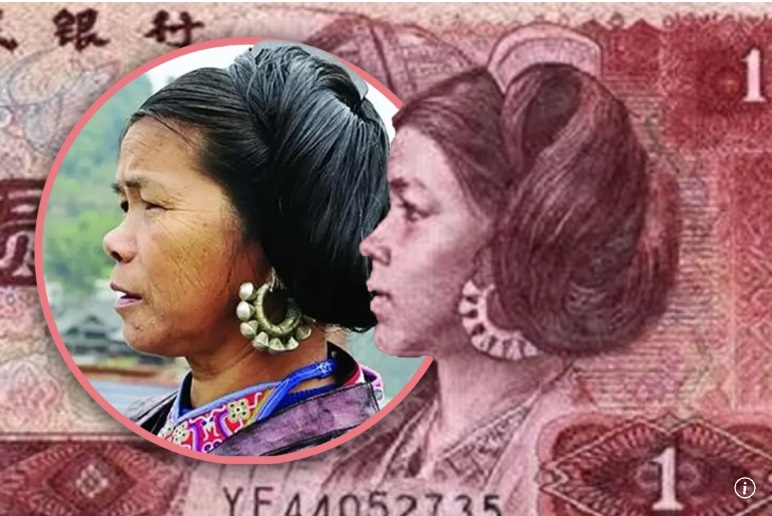 |
Shi now and her 16-year-old image on the Chinese banknote. *Photo: SCMP* |
Her story began 49 years ago, when a 16-year-old Shi Naiyin stood out at a local market. Her striking appearance included jet-black hair, traditional dress, and sparkling silver earrings.
While engrossed in selecting embroidery needles, Shi was approached by a stranger who gently took her hand, signaling her to stand still and turn her face for a sketch. The artist was Hou Yimin, then spending three years traversing southwest China to find faces representing the cultural beauty of ethnic minorities. After the sketch, Shi quickly forgot the chance encounter.
In 1988, when the new banknote featuring two women—one Dong, one Yao—was released, villagers began discussing the striking resemblance to Shi. However, it was not until 2010 that local officials identified Shi Naiyin as the 'one-yuan girl' based on her distinguishing features.
In her youth, Shi was known as 'the flower of the village'. At 23, she married and had two children, both of whom now work away from home.
After her identity was confirmed, this unexpected fame brought her considerable trouble. Many sent letters requesting money, mistakenly believing she had grown wealthy from her appearance on the currency. Shi maintains she has never exploited her recognition for subsidies or personal gain.
'We still have to live life as normal,' Shi calmly stated when asked about her fame.
Today, even with China circulating its fifth series of banknotes, the image of a 16-year-old Shi Naiyin remains a cherished cultural memory for many across the country.
By Nhat Minh (Source: SCMP/Sina)