A communications professional who has lived in the capital for over half her life, Wang admits it is difficult to build strong relationships. "I fear society forgetting me, losing my voice, and becoming invisible," the 54-year-old said.
Wang's fear became palpable after an accident three years ago. She fell at home and had to crawl across the floor to the door to use the intercom system to call security. From that incident, she realized the life-or-death risks of living alone.
In hospitals in China, regulations mandate that full anesthesia procedures require an accompanying person to sign a consent form. This individual serves as both a legal witness and an emergency contact. The patient's own signature is not accepted.
This regulation poses a significant barrier for single individuals like Wang. She has struggled multiple times when needing endoscopies or surgeries. On one occasion, her cousin arrived late, leaving her exhausted after a 24-hour fast. Another time, for a thyroid biopsy, Wang had to hire a stranger on Taobao for 200 yuan (approximately 700,000 dong). This person's actual task was simply to watch her belongings while she underwent the procedure.
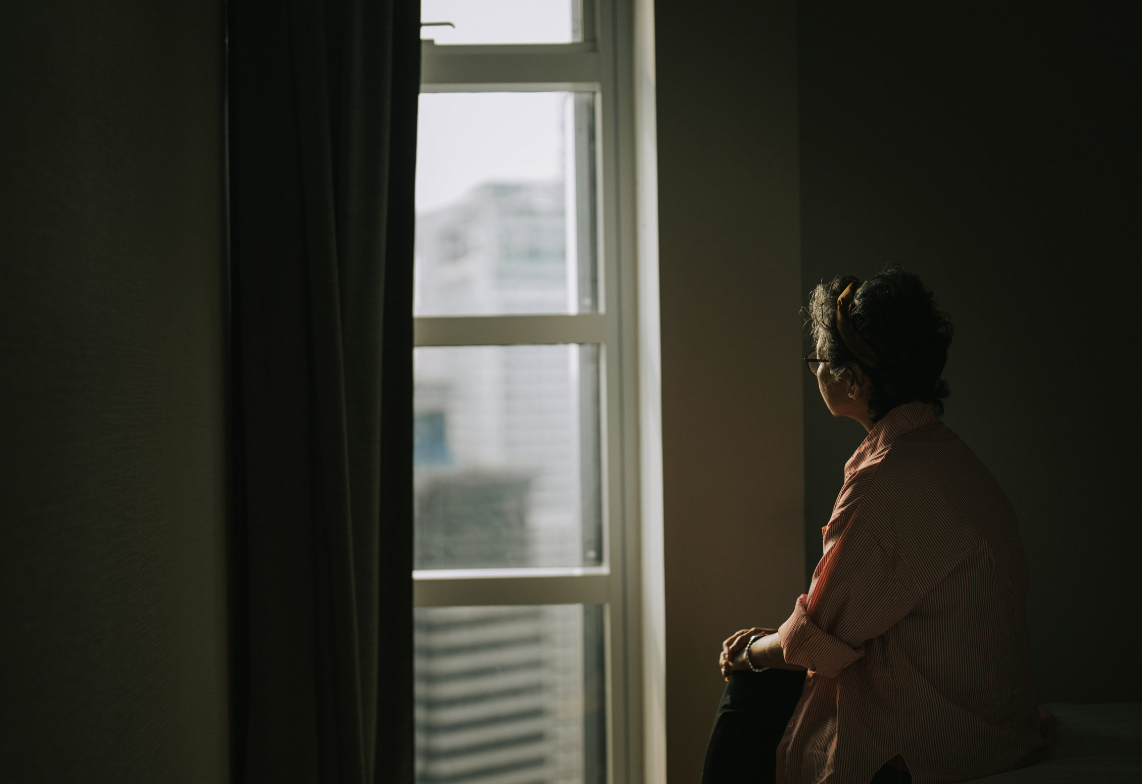 |
Illustration: Sixth Tone |
Wang is one of 125 million people living alone in China. On social media, this community shares experiences of freedom, but also a common anxiety: dying without anyone knowing.
Tapping into this sentiment, in january, an app called Sileme (Have You Died Yet?) unexpectedly topped the download charts in China.
The app's mechanism is that if a user does not press a button to confirm their existence within a set timeframe, the system automatically sends distress messages to emergency contacts. Data indicates that nearly 90% of users are single women aged 25-35 in major cities.
On online forums, the fear of being forgotten emerges through small details like a winter without a warm coat, eating dinner alone, or feeling like there is no one to notify when seriously ill. Beneath each post are hundreds of "me too" comments, a way for them to acknowledge each other's existence.
"Many people live alone due to circumstances, not by choice," Wang stated. Young individuals are single because they work far from home, while middle-aged and older people are often single due to divorce or the loss of a spouse.
Wang's father, 89, lives alone in Dalian, Liaoning province. Although Wang visits frequently and hires a housekeeper to cook breakfast, he spends most of his time by himself. His home is cluttered because he no longer has the strength to clean or care for himself. "For elderly single people, every daily activity becomes a challenge," she remarked.
In China, technological and social solutions aim to mitigate risks rather than eliminate loneliness. In suburban Shanghai, smart monitoring systems help detect "unusual silence" among the elderly, allowing management to intervene promptly.
However, for Wang and millions of other single individuals, what they seek is not necessarily 24/7 care. They need a "spiritual anchor"—a sense of security that if the worst happens, they will not be left to decay in their own homes.
Ngoc Ngan (According to Sixth Tone)