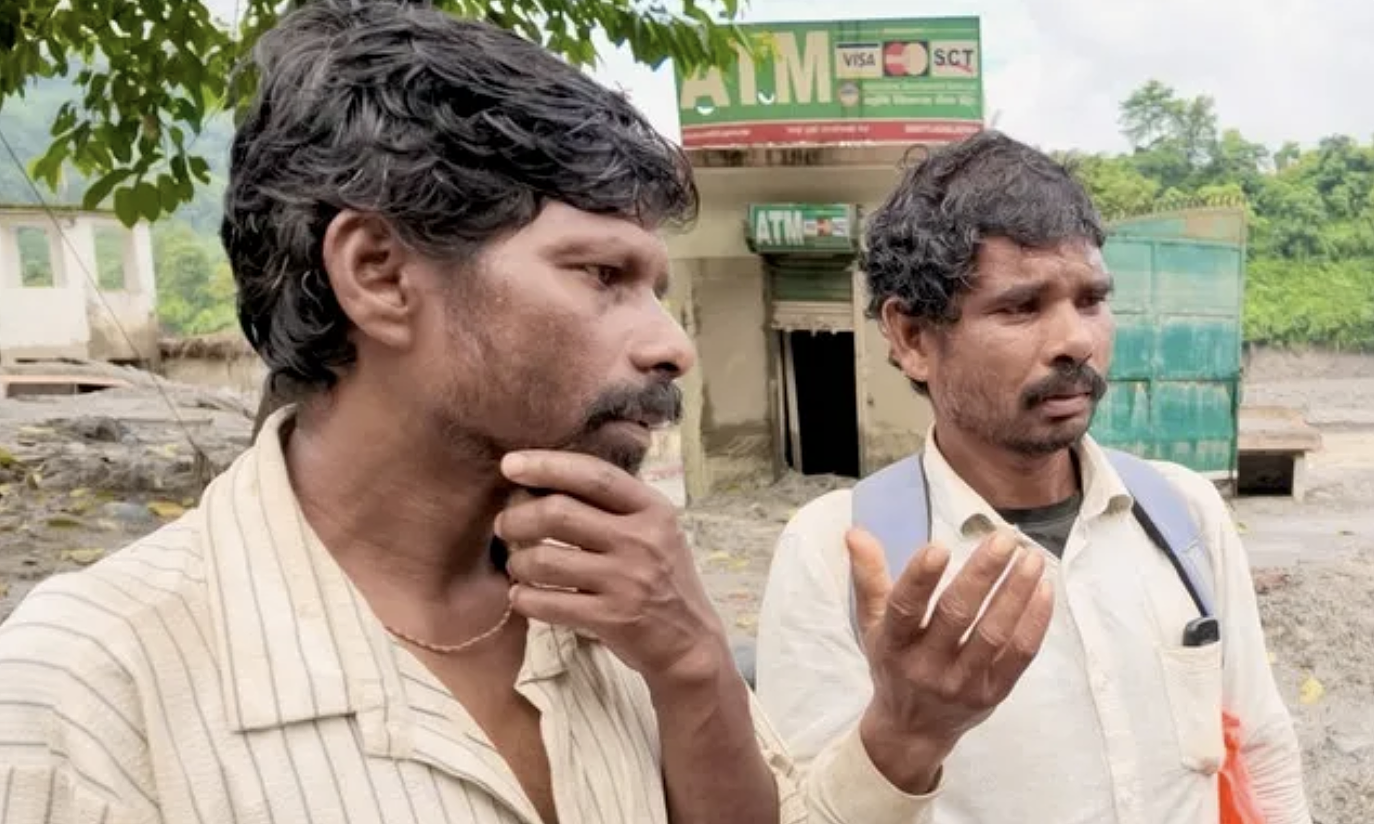
On 16/12/2012, Shanichara Bote's parents were fatally attacked by Dhurbe, a wild male elephant from Chitwan National Park, at the Baruwa market in Madi. After the incident, Shanichara sold all his assets, moving his family across the Reu and Rapti rivers to Jagatpur, nearly 370 km from their previous home, to escape the animal.
On the afternoon of 5/7, he again reported to the Chitwan district police station that Dhurbe had damaged his house and attacked his family.
Shanichara's family of 9 lived in a mud-walled house with a tin roof. In the middle of the night on 4/7, he awoke to crashing sounds as the wild elephant broke into their home. His daughter-in-law, Ashika Bote (25), carrying her son Bharat (4), ran outside but was blocked by the animal and fatally attacked.
Inside, Mangali, Shanichara's wife, lit the porch on fire to scare the animal away. The house burned down, but the remaining 7 family members escaped.
"We moved far away to seek refuge, but after all these years, the elephant still appeared and took my daughter-in-law and grandson," Shanichara recounted.
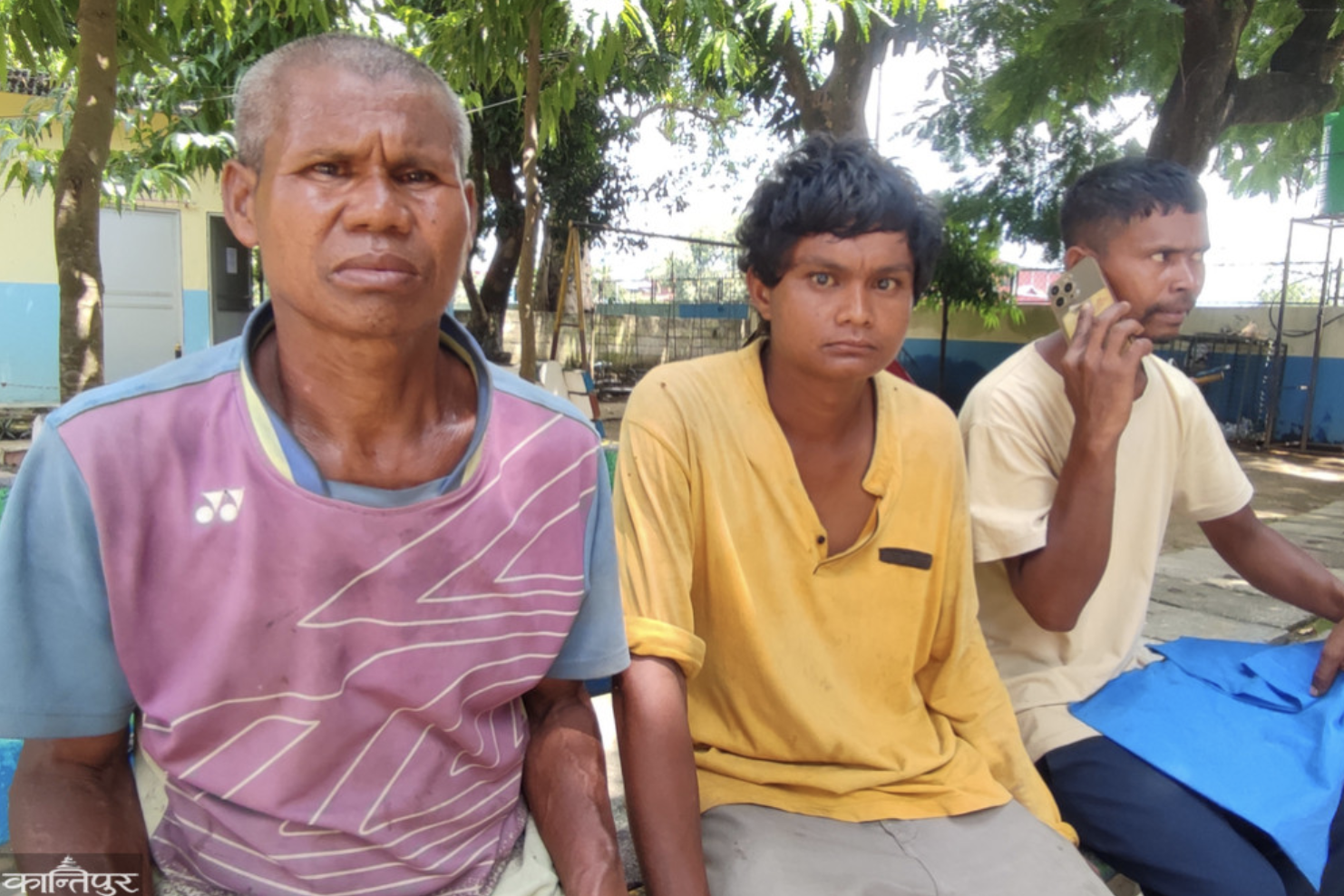 |
Shanichara Bote (left) and his two sons outside the Chitwan District Police Office to report the incident, on 5/7. *Ramesh Kumar Paudel/TKP* |
Chitwan National Park records indicate that Dhurbe was expelled from its herd during its maturation. Its solitary lifestyle often led it into residential areas to forage. Since 2010, the animal has killed 25 people, including two soldiers protecting the national park.
According to a wildlife expert quoted in The Kathmandu Post, although Shanichara's family crossed rivers to move to the Jagatpur area for safety, this region is still along the buffer zone of Chitwan National Park. Rogue male elephants like Dhurbe tend to expand their range by hundreds of kilometers in search of food. The family's settlement there coincidentally lay on Dhurbe's new "patrol route" during the crop harvest season.
Abinash Thapa Magar, a Chitwan National Park conservation officer, confirmed that coordinates from Dhurbe's satellite collar matched Shanichara's home location on the night of 4/7.
In late 2012, after Shanichara's parents died, authorities shot and injured the elephant, costing the budget over 1,6 million rupees (nearly 17,000 USD). Dhurbe hid in the forest and was presumed dead until it reappeared in the winter of 2016.
By 2023, authorities fitted Dhurbe with a third satellite collar to transmit location data once every hour. The ranger team and the Nepal army were tasked with pushing the elephant deeper into the forest if it headed towards residential areas.
However, community representative Lal Bahadur Dawadi stated that the monitoring system had flaws. The elephant had lingered around the forest edge for 10 days before the attack.
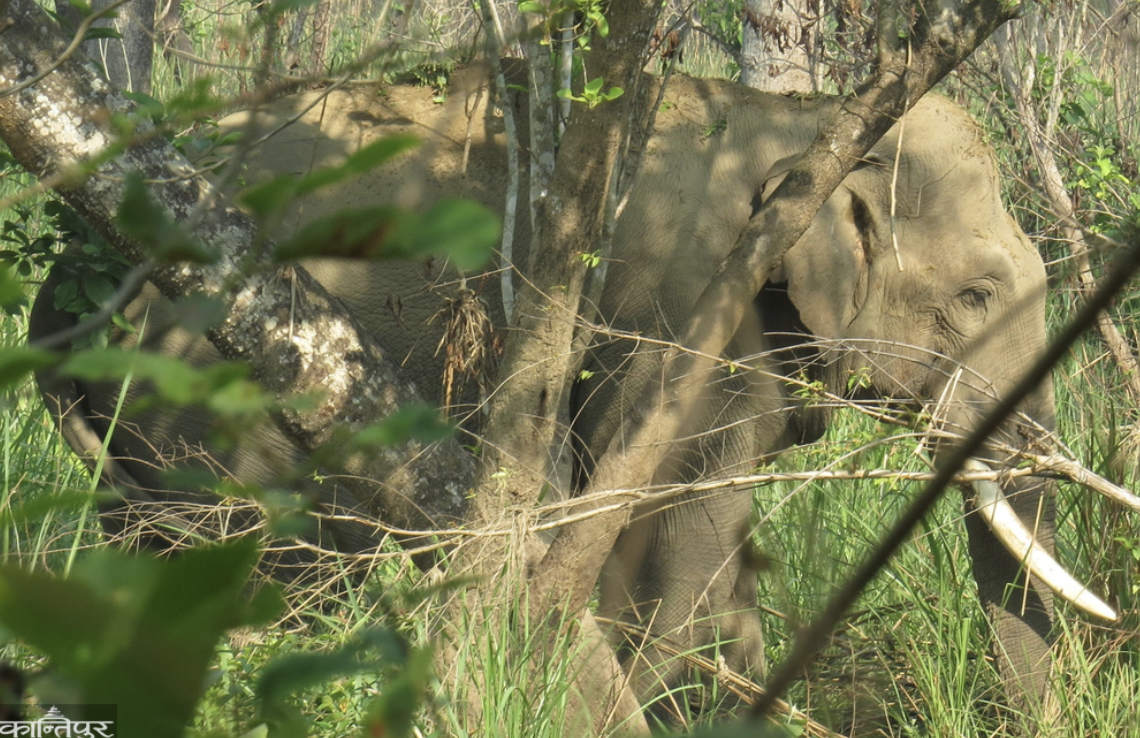 |
A photograph of the male elephant Dhurbe taken at Chitwan National Park, Nepal. *Ekantipur* |
Keshav Lamichhane, 72, a local resident, noted that elephants often appear during rice and corn harvests. A few years ago, the animal entered homes to take freshly harvested rice, but this was its first attack on people in this residential area.
Following the incident, local residents blocked the Rapti bridge to protest the national park management. Officials committed to permanently containing Dhurbe in the Sukhibhar deep forest area and upgrading the satellite tracking system to prevent similar incidents.
Conservation experts explained that the animal finding its target after 14 years was a tragic series of coincidences combined with the exceptional memory of elephants.
This animal possesses a brain capable of remembering olfactory cues for more than a decade. Coupled with the psychological trauma of being shot and severely injured by the army immediately after the 2012 incident, the elephant likely recognized familiar scents and was provoked into its brutal attack.
Minh Phuong (Source: The Kathmandu Post)