


Meat is primarily composed of water, around 70%, with the remainder being protein and fat. When meat is boiled or roasted, the protein in its muscle fibers denatures and contracts due to heat, pushing water and juices towards the center of the cut.
The exterior of the meat heats up faster than the interior, creating a temperature and pressure differential. Slicing the meat immediately, before this pressure equalizes, allows the flavorful juices to escape through the knife cuts. This results in significant moisture loss, leaving the meat dry and less tender.
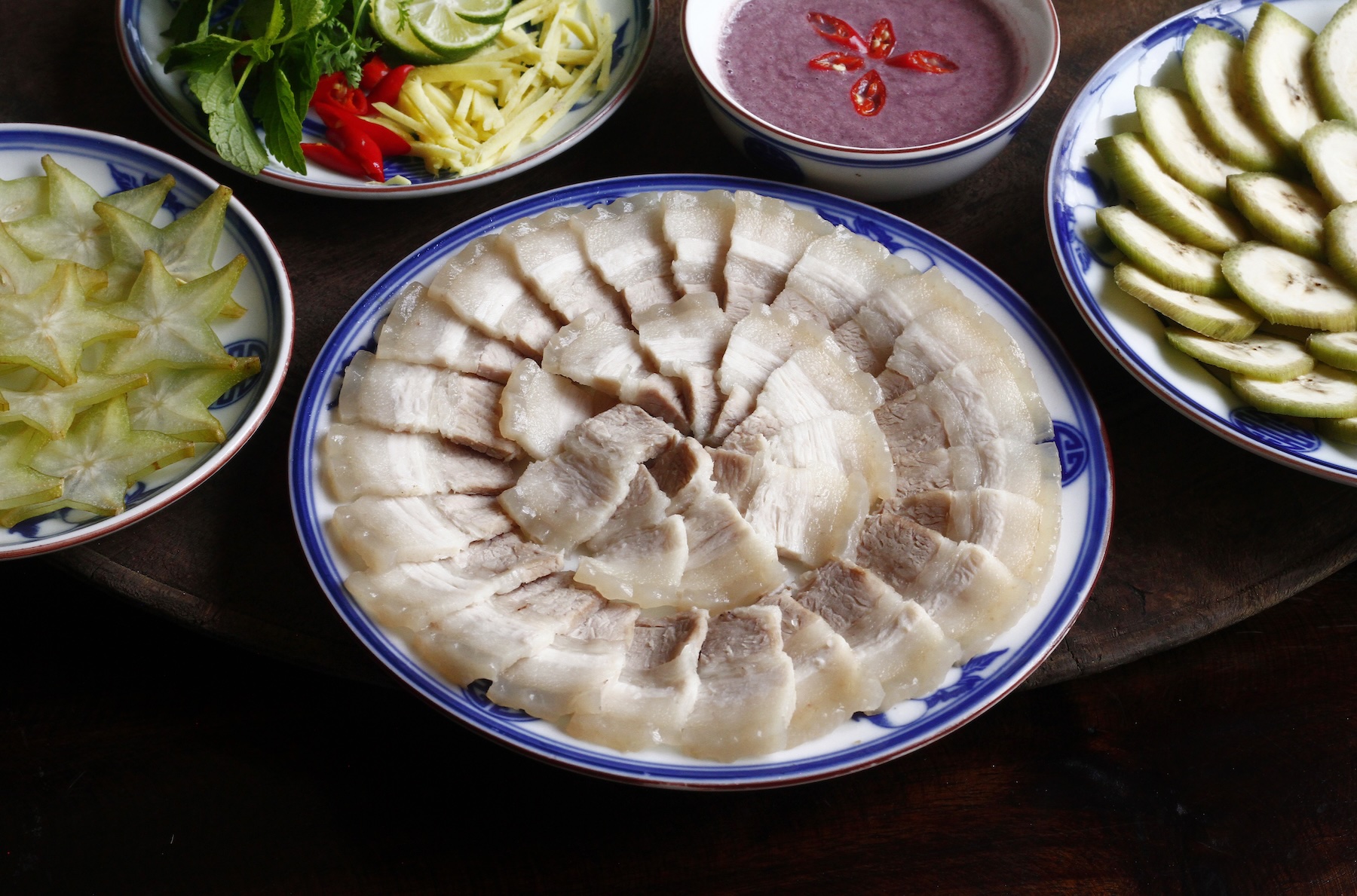 |
Illustration: Bui Thuy |
Resting meat after boiling or roasting allows the heat conduction process to continue, promoting a more even temperature distribution throughout. The pressure within the muscle tissue gradually decreases, the protein fibers relax, and the meat juices have time to redistribute within the fibrous structure.
Consequently, when the meat is sliced, less moisture escapes, and the flavorful juices are retained, resulting in a more tender and moist piece of meat. This also helps maintain the dish's appealing structure. For a whole boiled chicken, resting also allows the skin to crisp up, reducing tearing when carved and yielding more uniform, attractive pieces.
The resting time for meat depends on its size. A boiled meat portion weighing 300-500 g should rest for 5-10 minutes. A whole roasted cut of meat may require 10-15 minutes for its structure to stabilize. A whole boiled chicken needs a longer rest, approximately 20-30 minutes.
During this period, place the meat on a rack or a dry cutting board, avoiding tight coverings to prevent steam from softening the surface. Many restaurants commonly hang boiled chicken, duck, or goose after removing them from the pot.
In fact, during the resting period, the internal temperature of the meat remains sufficiently high, and "carry-over cooking" continues gently, especially for roasted meats. This process helps stabilize the meat's doneness rather than allowing it to cool abruptly.
Therefore, resting meat is considered a small but crucial culinary technique. Waiting just a few extra minutes before slicing will ensure the meat retains its flavorful juices, becomes more tender, and presents better, all without requiring any additional seasonings or elaborate steps.
Bui Thuy


