 |
 |
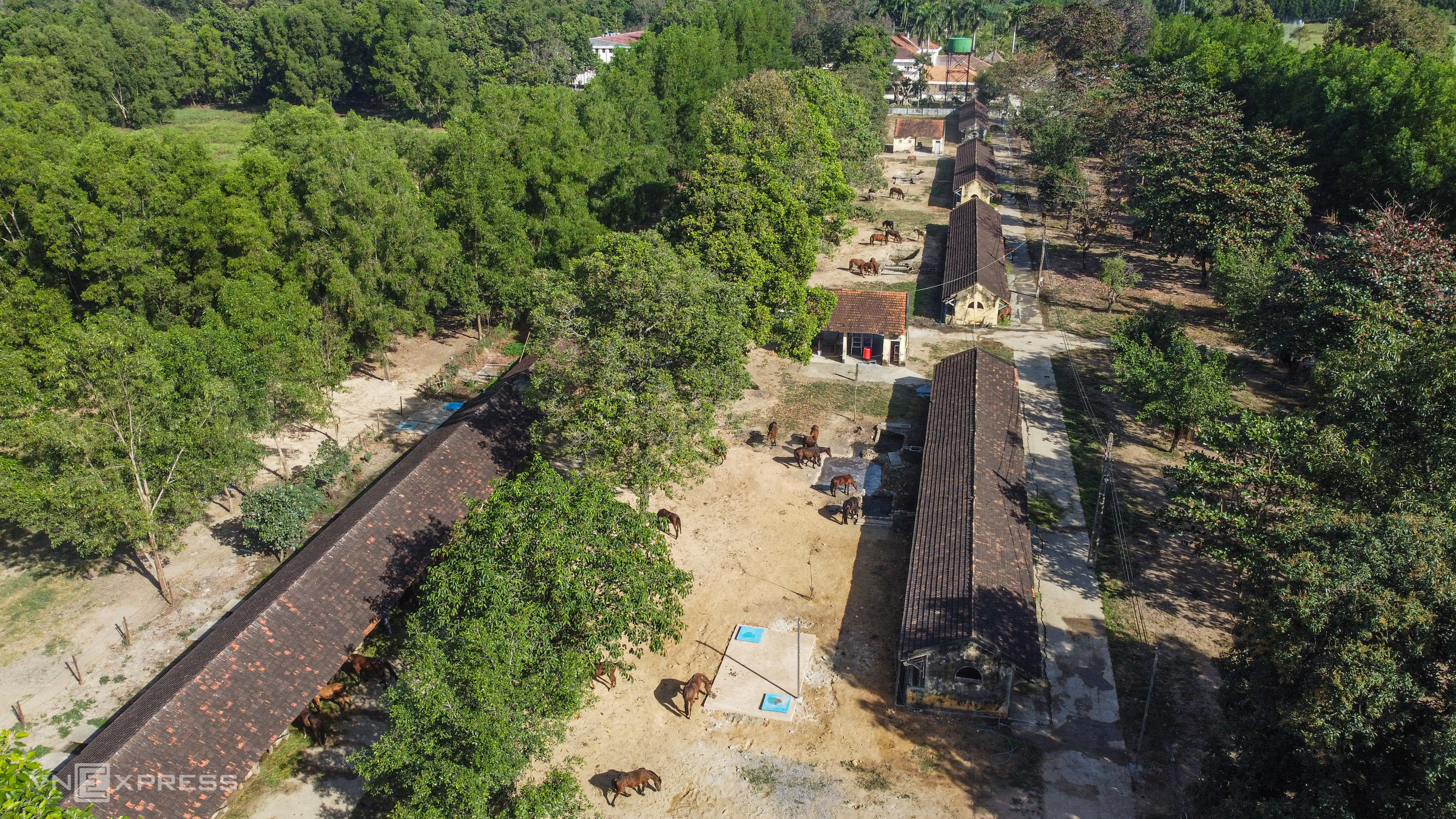
Located 20 km from Nha Trang in the Cam Lam area, the 125-hectare Suoi Dau livestock farm is managed by the Institute of Vaccines and Medical Biologicals (IVAC) under the Ministry of Health. This facility serves as a crucial logistical hub, supplying horses, various laboratory animals, and essential raw materials for the research and production of vaccines and medical biological products.
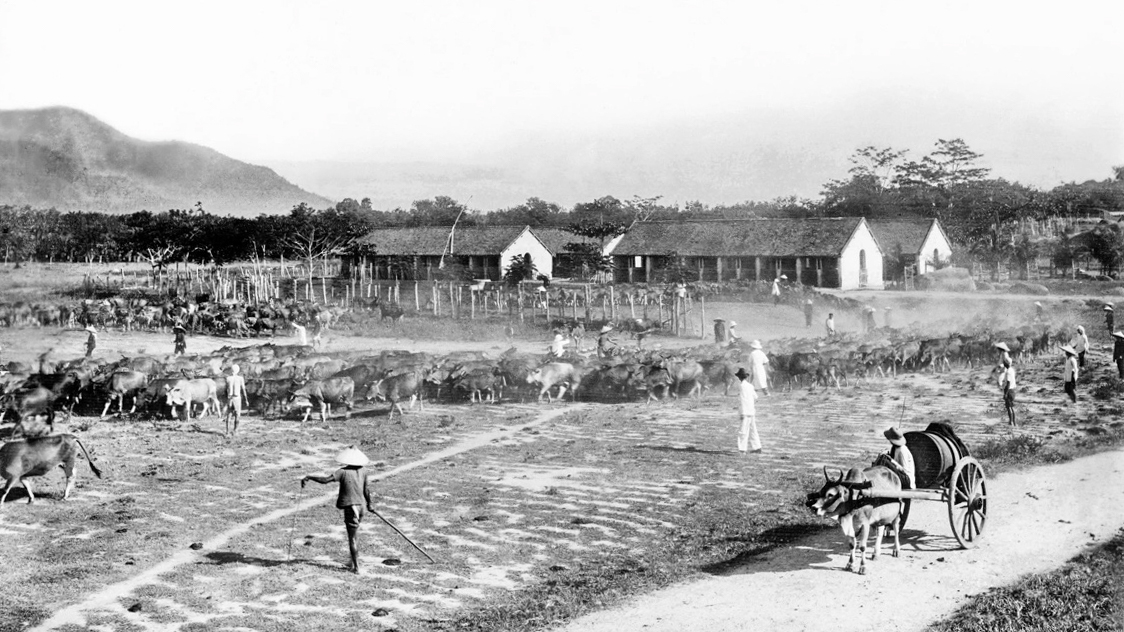
The farm's origins are deeply intertwined with doctor Alexandre Yersin, a Swiss-French physician. In 1896, Yersin, with limited funds and the support of colleagues Roux and Calmette, began developing the site. What was once dense jungle was gradually transformed into agricultural land, yielding fields of rice, corn, and tobacco, alongside growing herds of horses, goats, cattle, and sheep.
The farm houses nearly 400 carefully selected horses, meeting standards of 4-6 years old, weighing over 230 kg, free from defects or diseases, and achieving required hematological and biochemical indices. The herd is raised and cared for according to standard procedures to ensure their health and the quality of serum raw materials.
 |
The farm arranges grazing areas for horses to exercise and play. Many staff members state that this "also contributes to improving the horses' morale."
Pham Anh Hung, Head of Livestock Team 1, believes horses are intelligent and emotional animals, each with a distinct personality. Horse care staff are trained according to the agency's standard procedures, including: hygiene, bathing, leading horses, trimming manes, and hoof care, which minimizes difficulties during work.
 |
"Many newly acquired horses can be timid. After spending time with the herd and interacting with caregivers, the horses become tamer and more approachable," a horse care staff member stated.
 |
Master Nguyen Van Minh, Head of Suoi Dau livestock farm, explained that horses are chosen for serum production due to their capacity to produce high, stable antibody levels when immunized with appropriate antigens or vaccines. Their large blood volume allows for the collection of plasma in the necessary quantities without compromising their health, thus meeting the demands of large-scale serum manufacturing.
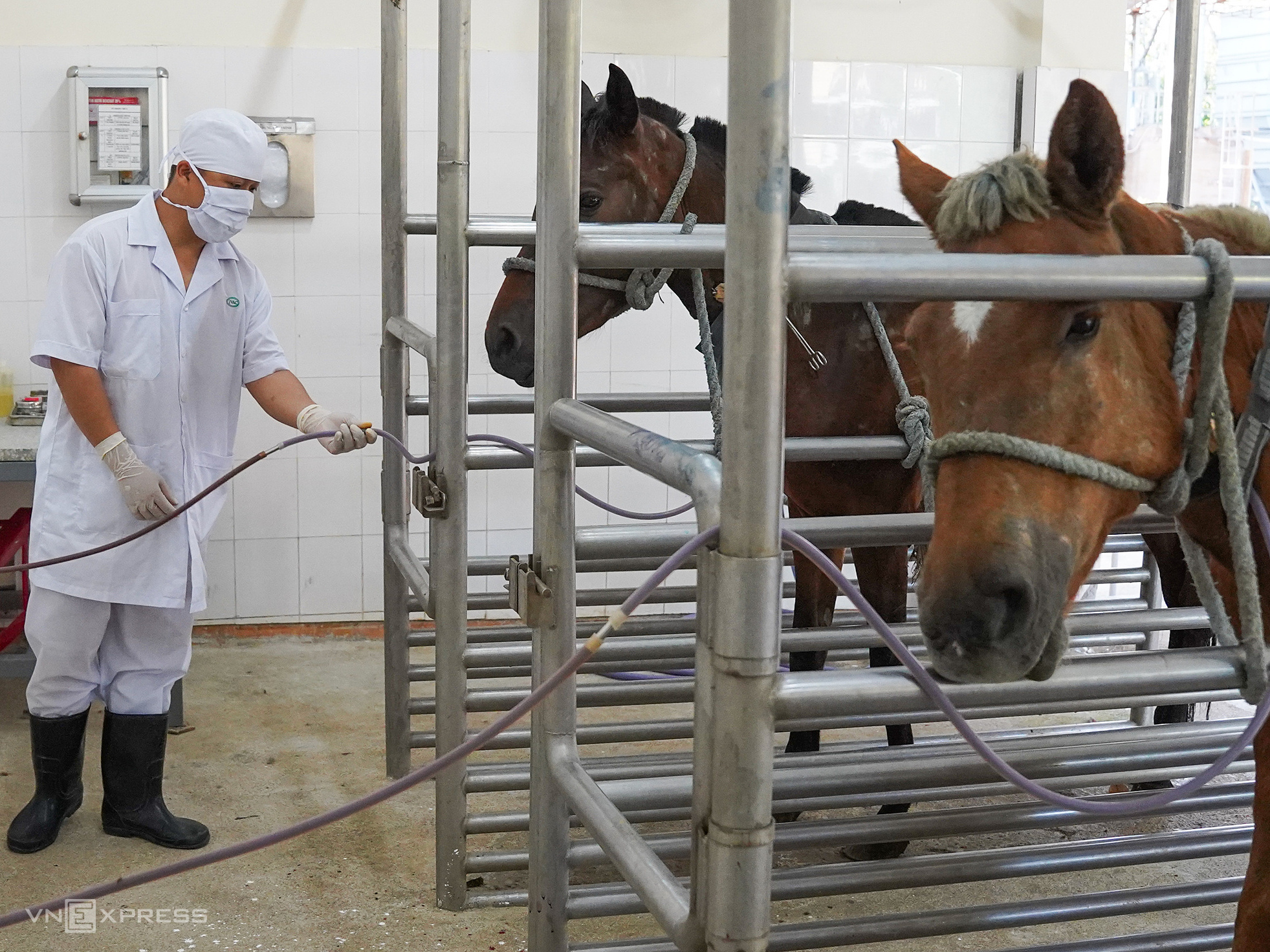
Over one year, horses undergo 9 blood collection cycles, each spaced 30-45 days apart. When a horse's blood contains sufficient antibodies for serum purification, staff collect blood at a rate of 1,5% of the horse's body weight. This process adheres to established technical procedures, ensuring safety, humane treatment, and no adverse effects on the horses' health. On average, each horse is utilized for serum extraction for 3-5 years. After collection, staff separate plasma following controlled procedures, obtaining the specific antibody fraction that meets quality requirements. The Suoi Dau farm's current herd provides over 12.000 liters of raw serum annually to IVAC for subsequent production.
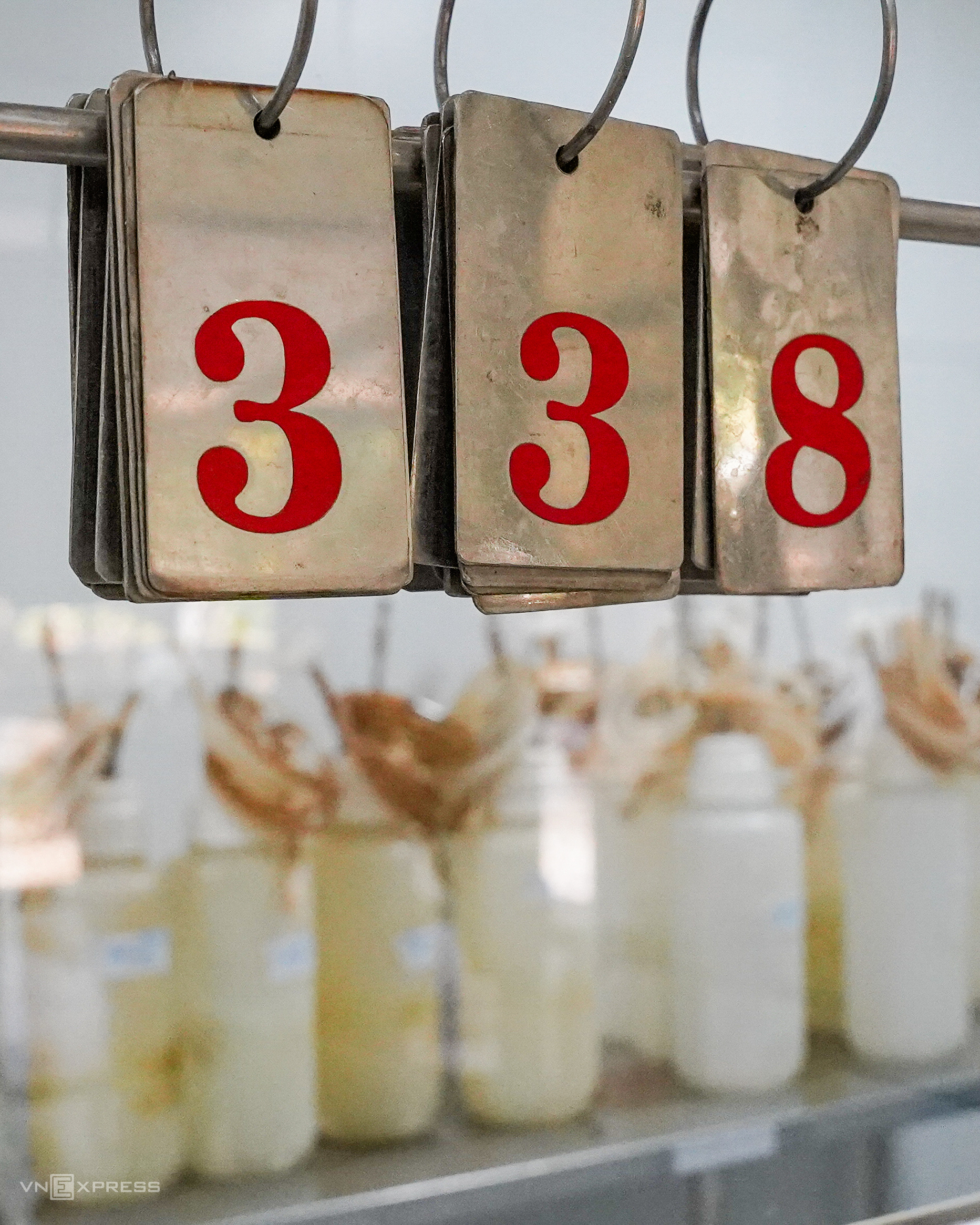
Each horse eligible for blood collection at the farm has a unique identification number. The horse herd is selected and cared for according to strict ISO/GMP standards, with records and files maintained as required. Each horse has its own health monitoring record.
From this raw serum source, millions of finished serum products are refined and distributed to medical facilities nationwide. Annually, approximately 2 million vials of tetanus antitoxin, over 350.000 vials of rabies antitoxin, and tens of thousands of vials of snake venom antitoxin are put into use, saving countless lives across the country.
 |
Horses are bathed, groomed, and have their hooves cared for according to a schedule to ensure hygiene and mobility. Their nutritional regimen is carefully controlled, with each horse receiving 18–22 kg of fresh grass and 2,5-3 kg of concentrate feed daily, delivered on time and in precise quantities. The health status of each horse is continuously monitored.
 |
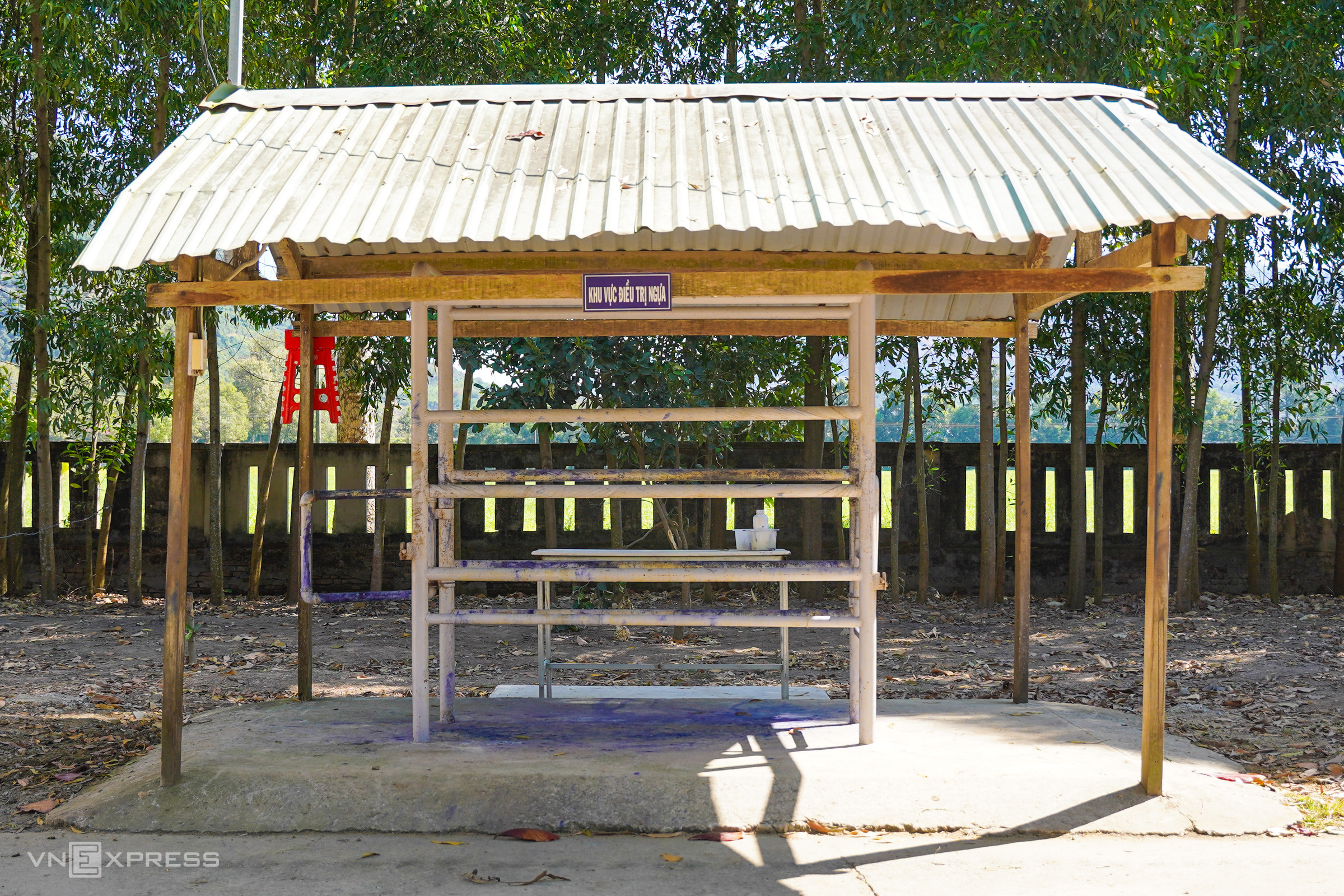
Treatment area for horses in case of illness. All stables are regularly cleaned and disinfected to ensure ventilation, cleanliness, and biosafety.
 |
At the farm, grasslands are specifically planned, utilizing suitable varieties for horses, ensuring appropriate soil, water, and biosafety conditions. Equipped with an automatic irrigation system, the grass is cultivated according to technical procedures without chemicals. Staff consistently monitor grass growth, harvesting it at the correct age, and ensuring proper transport and storage in clean areas.
Bui Toan