 |
Ong Pagoda (Quang Trieu Assembly Hall) was constructed in 1894, with completion taking two years, covering an area of over 533 square meters.
According to Huynh Huy, most of the building materials were imported from Guangdong, China. The wooden pillars and beams remain sturdy to this day. The structure, established by Chinese immigrants from Guangzhou and Zhaoqing, serves as a place of worship, gathering, and mutual business support. It is currently managed by the Can Tho Chinese Association.
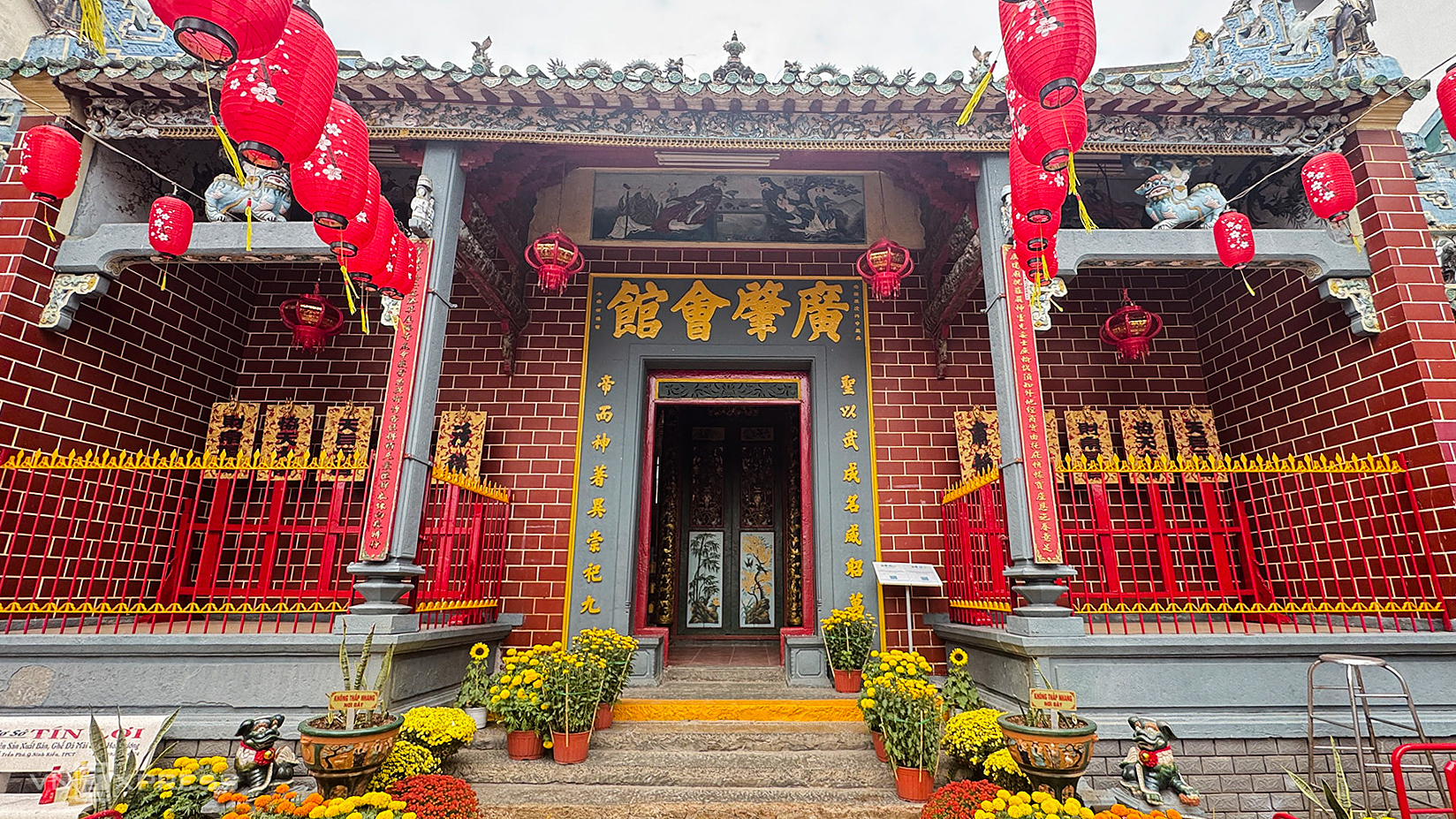 |
The pagoda features a layout resembling the Chinese character "國" (Quoc), with a yin-yang tiled roof. The rafters and beams are carved with classical patterns, painted in vermilion and gilded. The roof edges are adorned with green glazed ceramic tiles, covered in moss, creating an antique appearance.
This is one of the few pagodas that has preserved its architectural integrity, artistic value, and religious significance almost entirely through various changes.
In 2010, the entire structure of the pagoda was raised by over one meter to prevent flooding during high tides in Can Tho.
{"caption_all":"The pagoda's roof is decorated with two dragons vying for a pearl, flanked by two fish-transforming-into-dragon figures arranged in opposition. Below are colorful ceramic miniature sculptures depicting a blend of celestial and earthly scenes... all preserved intact.","caption_items":"["",""]"}
 |
The "Hiep Thien Cung" ceremonial gate is positioned directly behind the main entrance of Ong Pagoda. Beyond this gate is the sacred worship space for revered deities and enlightened figures worshipped by the community.
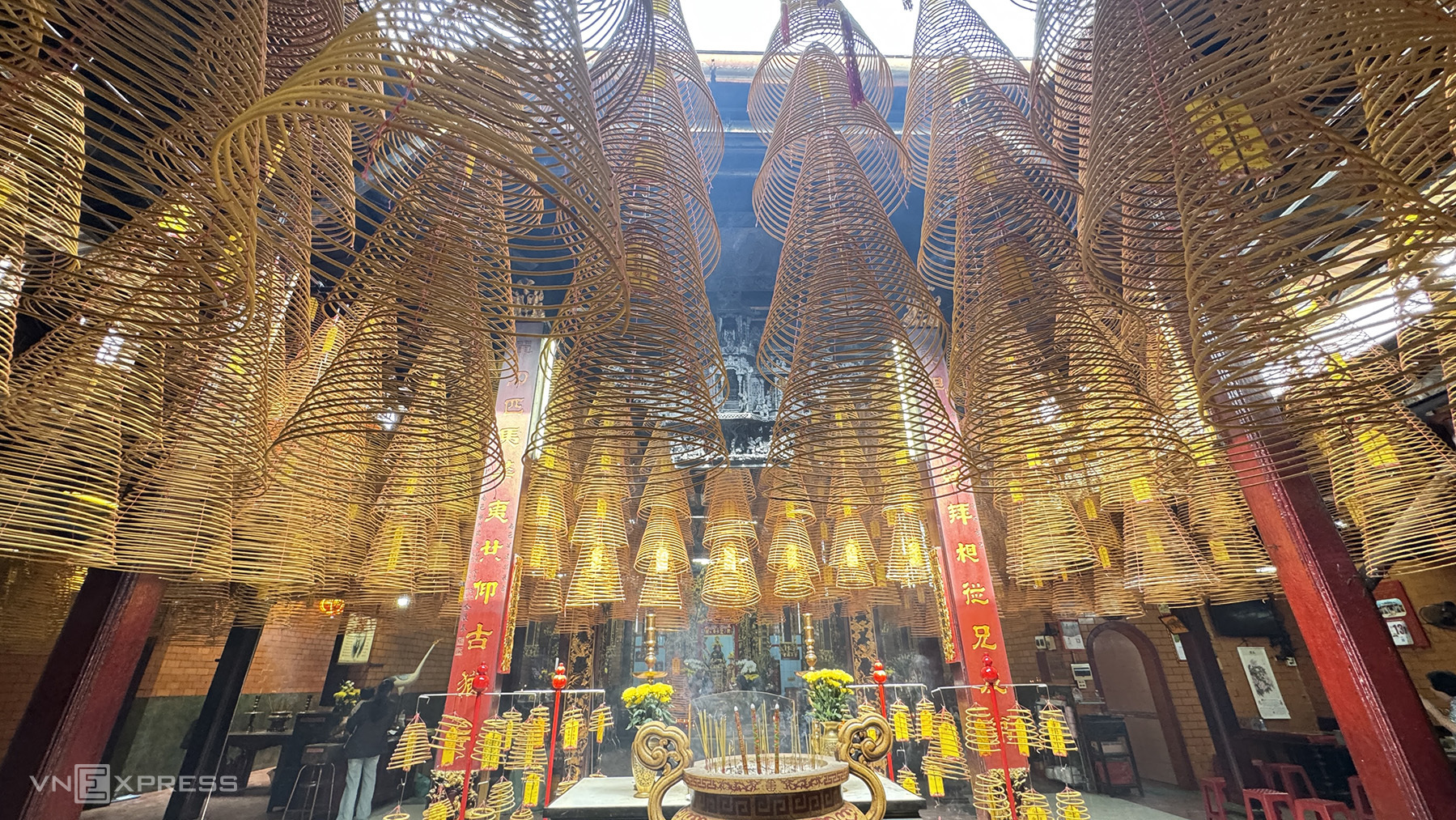 |
The most common form of praying for peace and fortune at Ong Pagoda involves offering coil incense. Visitors write the name of the person seeking blessings on paper tags, using either Vietnamese or Chinese script depending on the individual, and then attach them to the incense coils.
To provide light and ventilation for the interior, Ong Pagoda was designed with a "skywell". This also serves as a smoke vent for the hundreds of incense coils burning day and night.
{"caption_all":"When unfurled, the incense coils resemble conical hats and are hung intertwined at a maximum height of about 4 meters. "Each incense coil, once lit, burns for two weeks; within the main hall of the pagoda, up to about 800 incense coils can be hung simultaneously," said Huynh Huy, adding that normally 400-500 coils burn continuously day and night.","caption_items":"["",""]"}
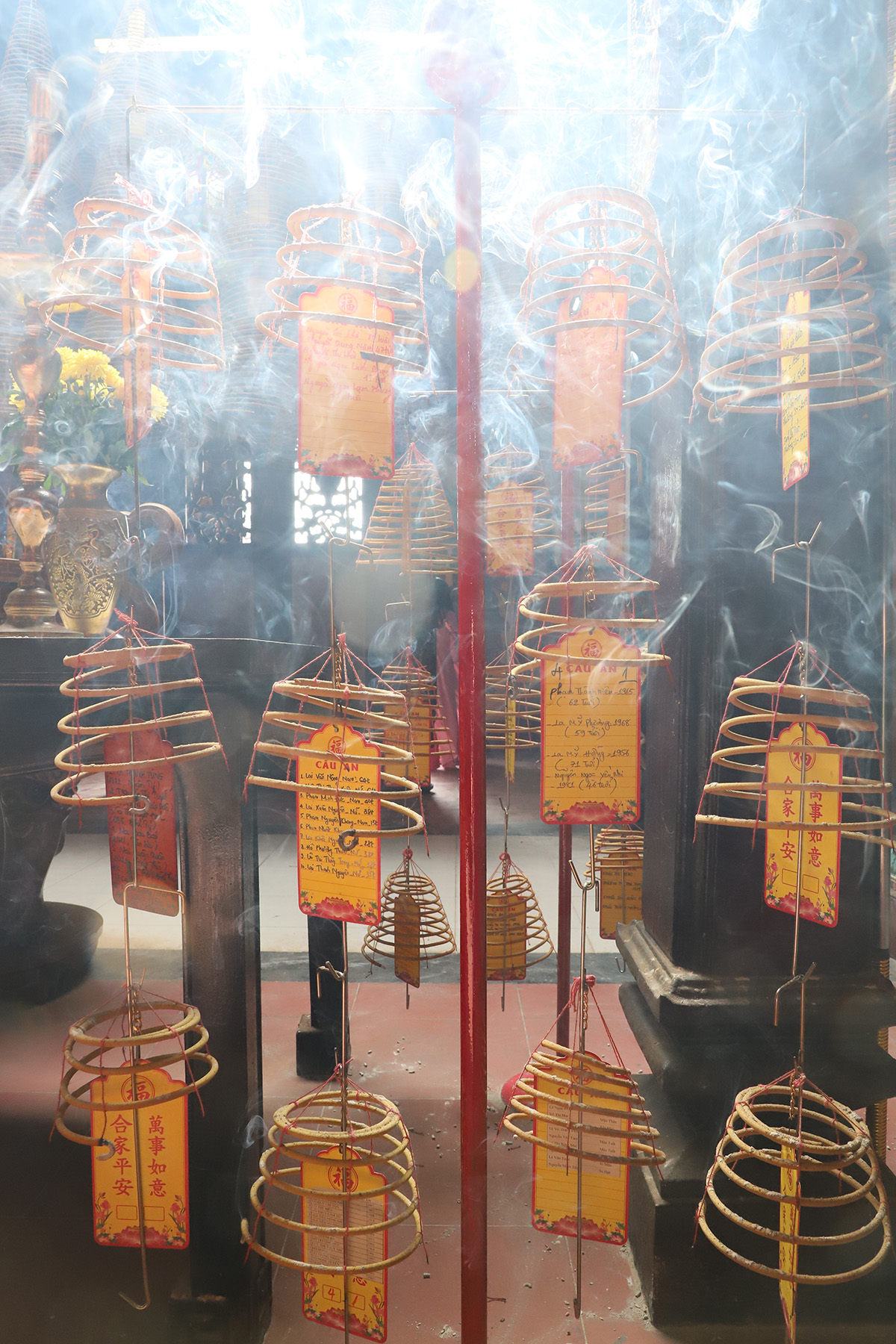 |
After people and visitors bring their incense coils and attach the written tags, Huynh Huy assists in lighting and hanging them, ensuring they burn continuously and safely.
After nearly two weeks, the nearly burned-out incense coils are lowered.
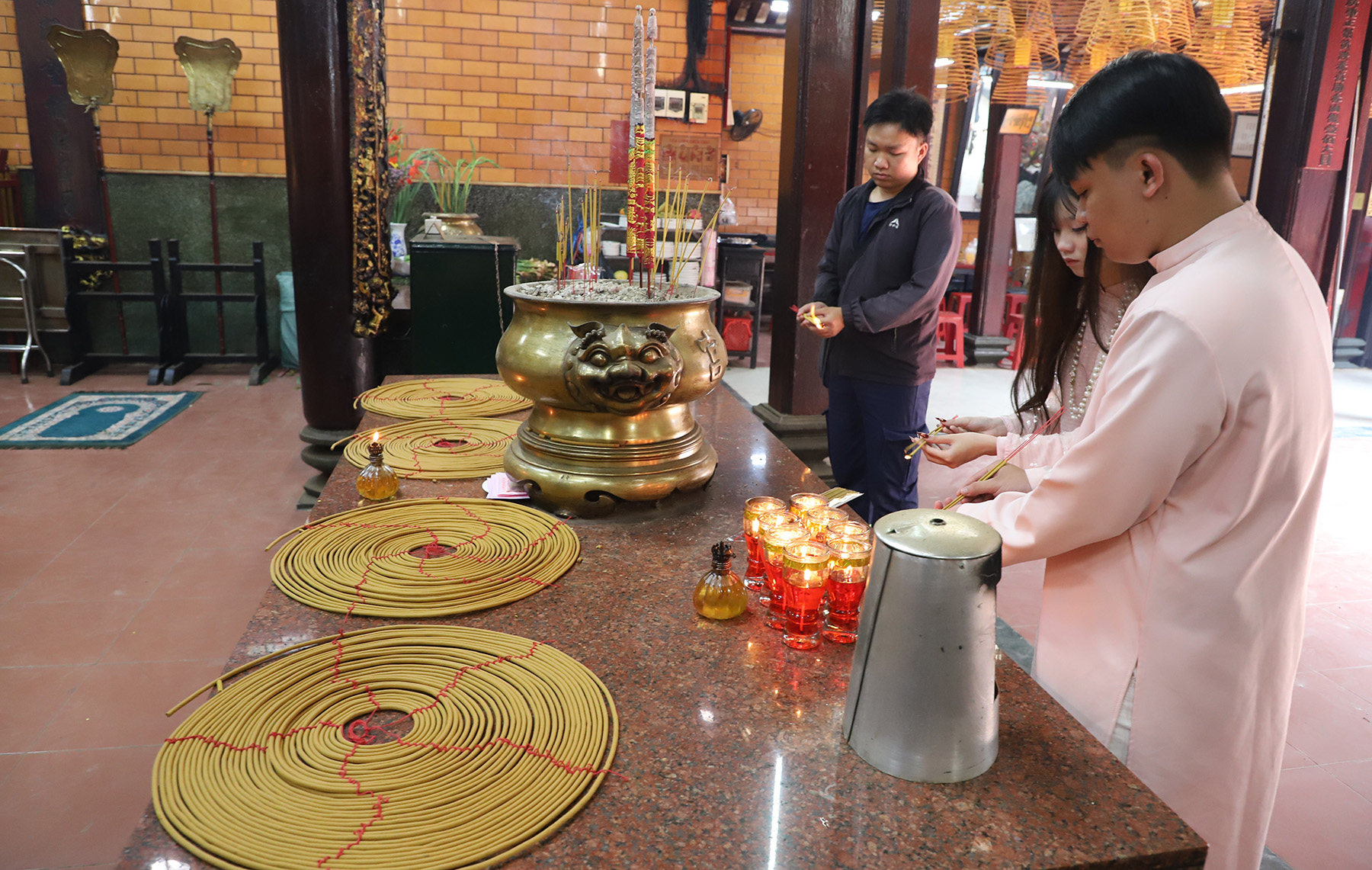 |
Along with offering coil incense, locals and tourists can light lamps and stick incense to pray for peace and good fortune at Ong Pagoda.
In Can Tho, people traditionally visit Ong Pagoda from New Year's Eve until the morning of the first day of Tet, hoping for a new year filled with good opportunities for themselves and their families.
{"caption_all":"The main hall worships Guan Yu, a figure from the Three Kingdoms period revered by the Chinese for his loyalty and righteousness. Annually, on the 24th day of the 6th lunar month, a vegetarian offering ceremony with flowers and fruits takes place. To the right is the altar for Thien Hau, the goddess revered as the protector of seafarers. To the left is the altar for Dong Vinh, a character from "The Twenty-four Filial Exemplars". The only bodhisattva worshipped is Guan Yin Bodhisattva, symbolizing compassion and salvation for all beings.","caption_items":"["",""]"}
 |
A bas-relief and the national historical-cultural relic recognition certificate from 1993 are displayed on the right wall in the courtyard of Ong Pagoda.
According to elder Chinese residents in Can Tho, the decorative bas-reliefs at Ong Pagoda were brought from Guangdong, clearly showcasing the ceramic handicraft artistry of Chinese artisans from the Qing dynasty.
An Binh