 |
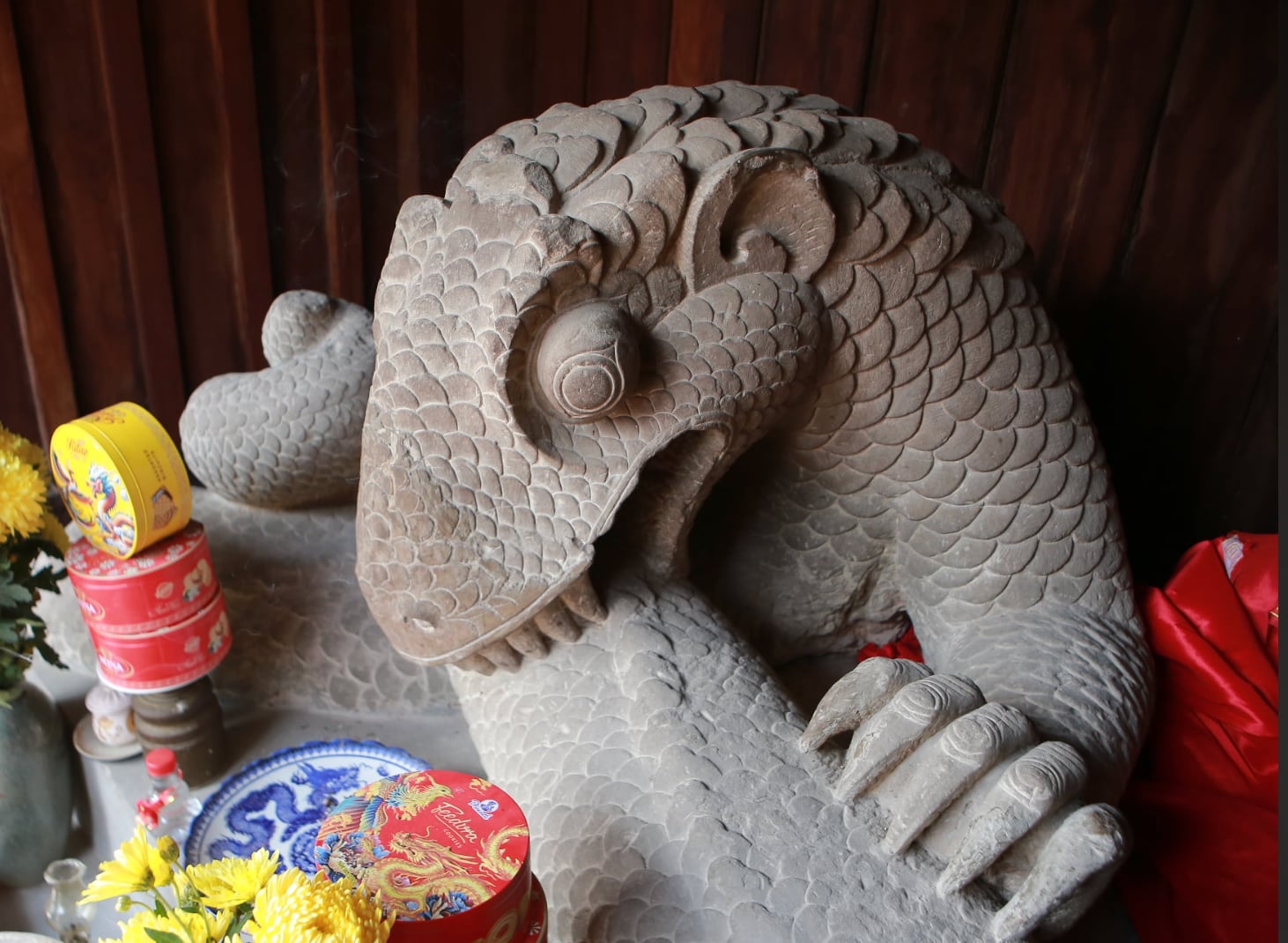
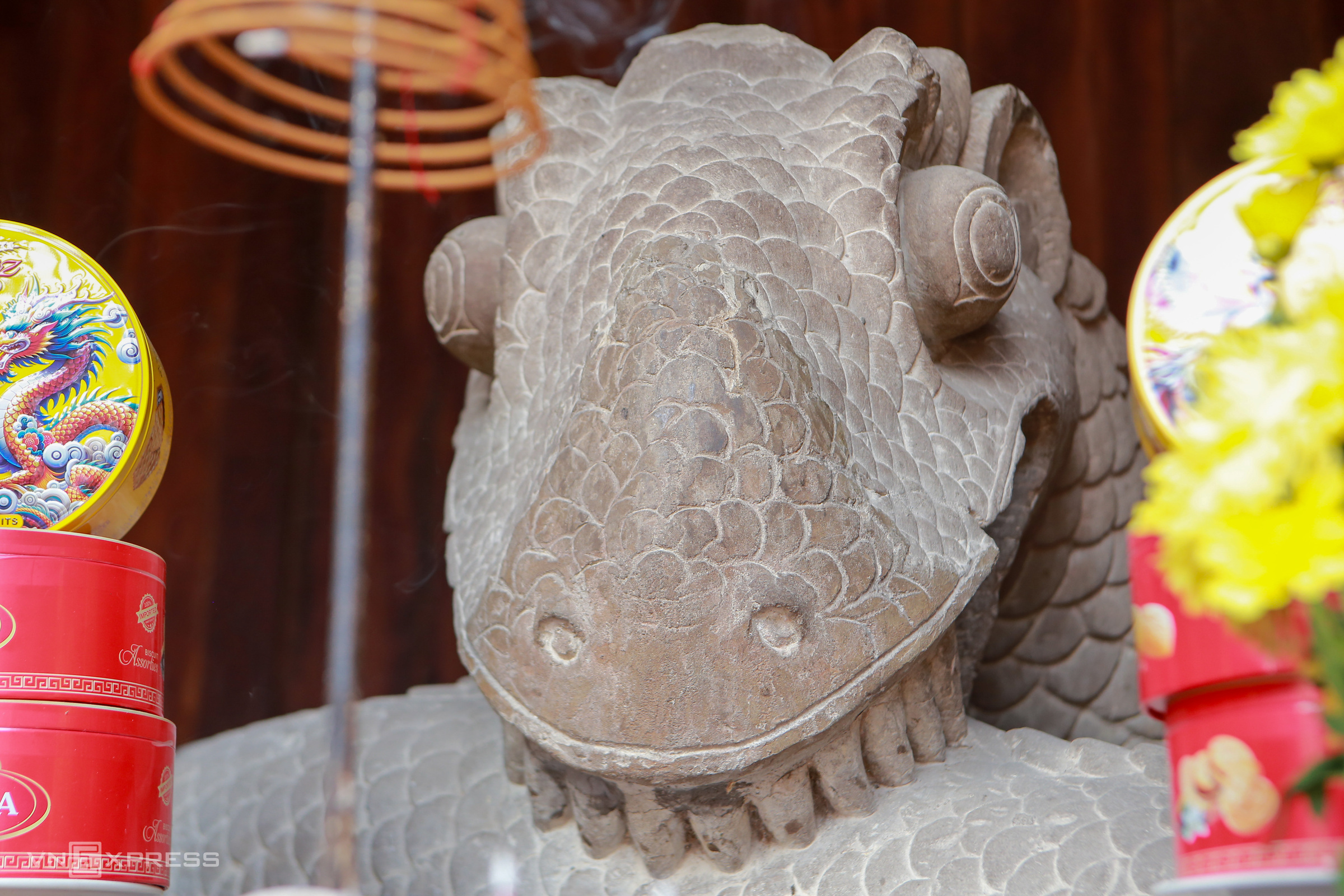
Carved from a grayish-blue sandstone block, the snake god stands 79 cm tall, measures 136 cm wide and 103 cm long, and weighs approximately 3 tons. Its circular body is not continuous but divided into two interwoven, coiled sections, forming a balanced shape. |
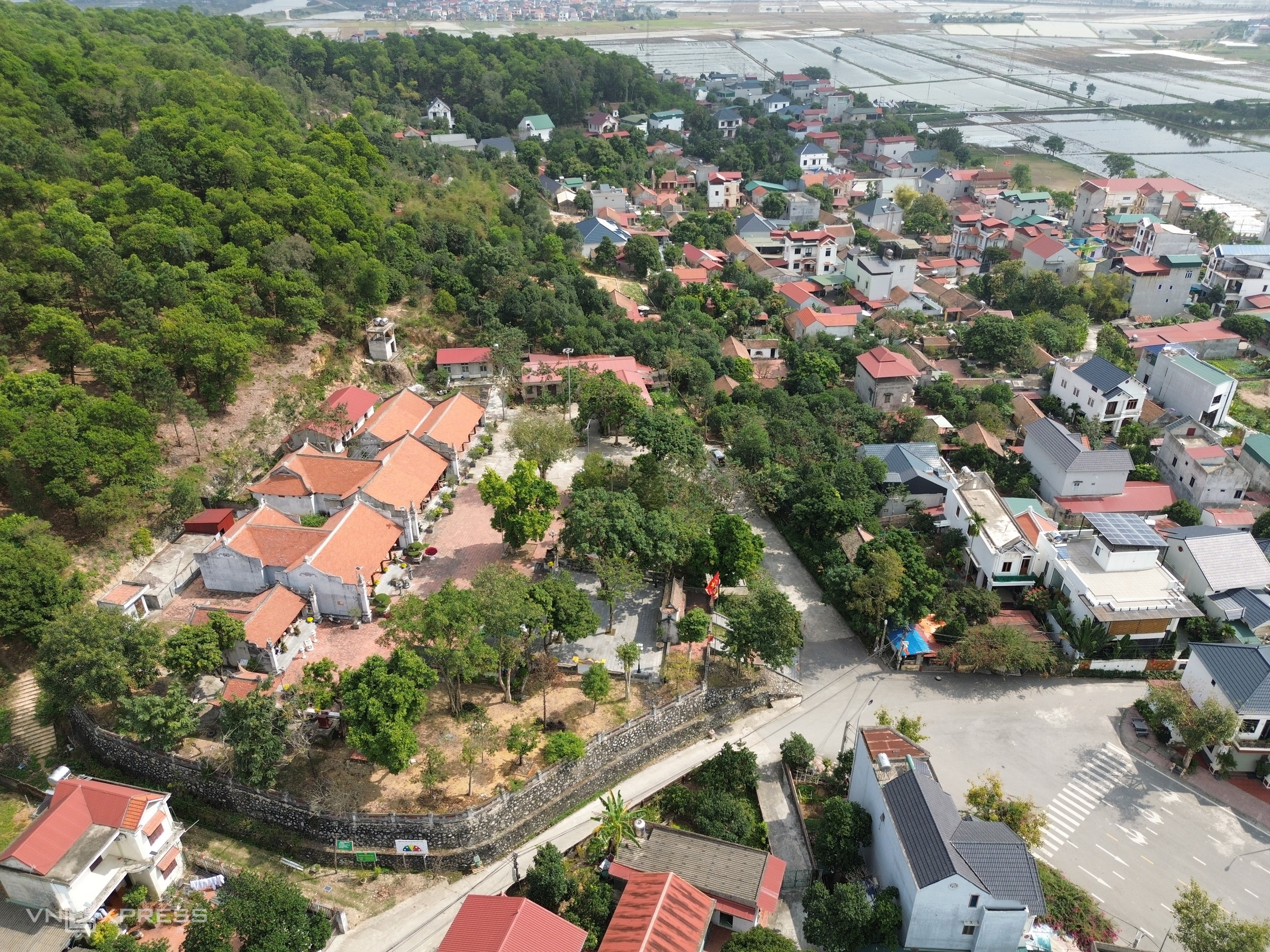
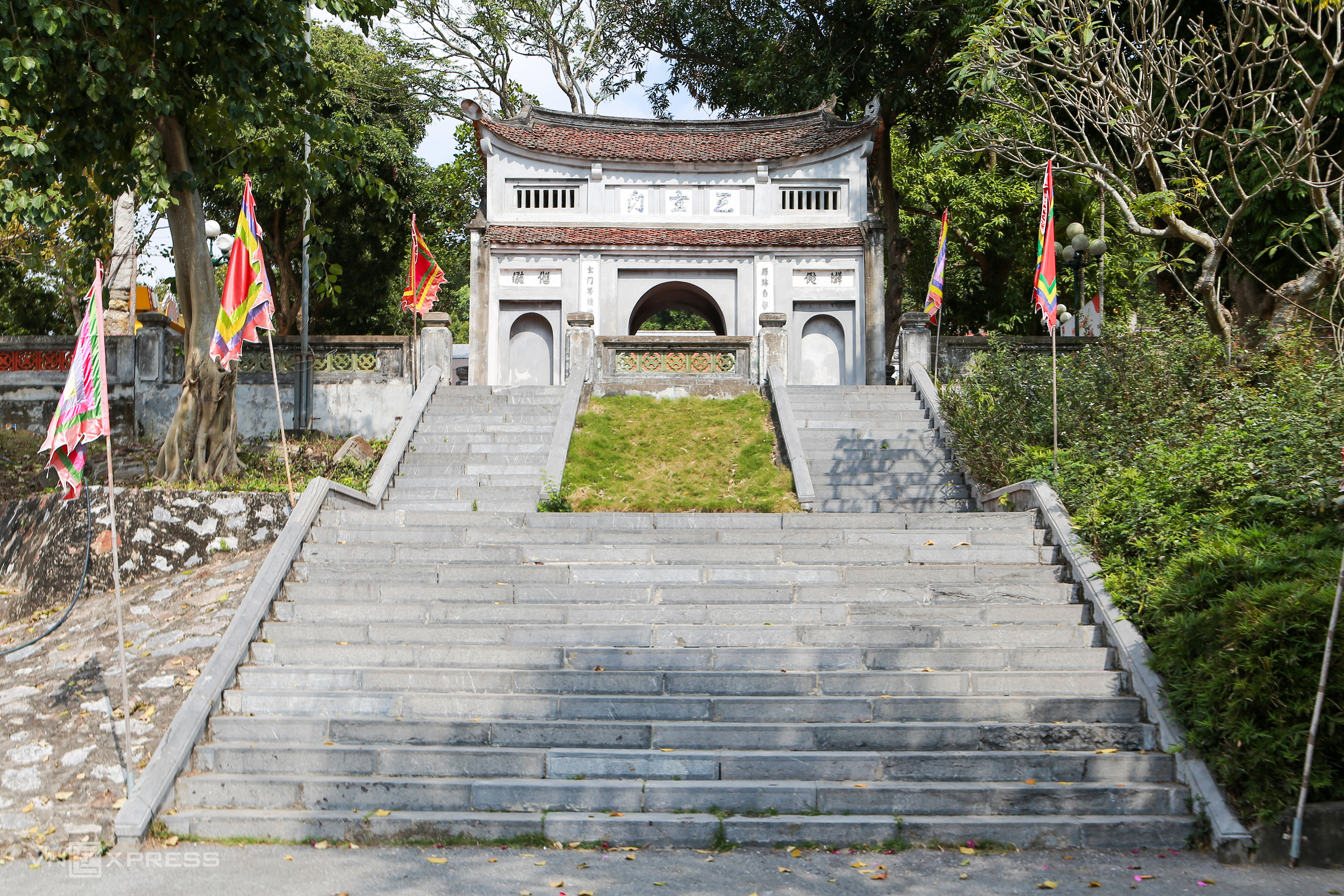
The temple dedicated to Grand Tutor Le Van Thinh is located south of Thien Thai mountain, in Bao Thap village, Dong Cuu commune, Bac Ninh province. Born in 1050, the Grand Tutor topped the Minh Kinh Bac Hoc examination in 1075, which was the first imperial examination held at Van Mieu Quoc Tu Giam (Temple of Literature).
In 1084, King Ly Nhan Tong dispatched him to Vinh Binh camp, on the Vietnam-China border (present-day Cao Bang), to resolve a territorial dispute between the two nations. Through his excellent diplomatic skills, the Song dynasty was compelled to return all occupied territories.
 |
The snake god's head is proportionally balanced with its body, lacking a beard, mane, or comb. It features small nostrils, two swollen gills, and a wide-open mouth with 12 long, sharp teeth. Its round eyes protrude, and two ear rims rise on either side of the head, above the gills. |
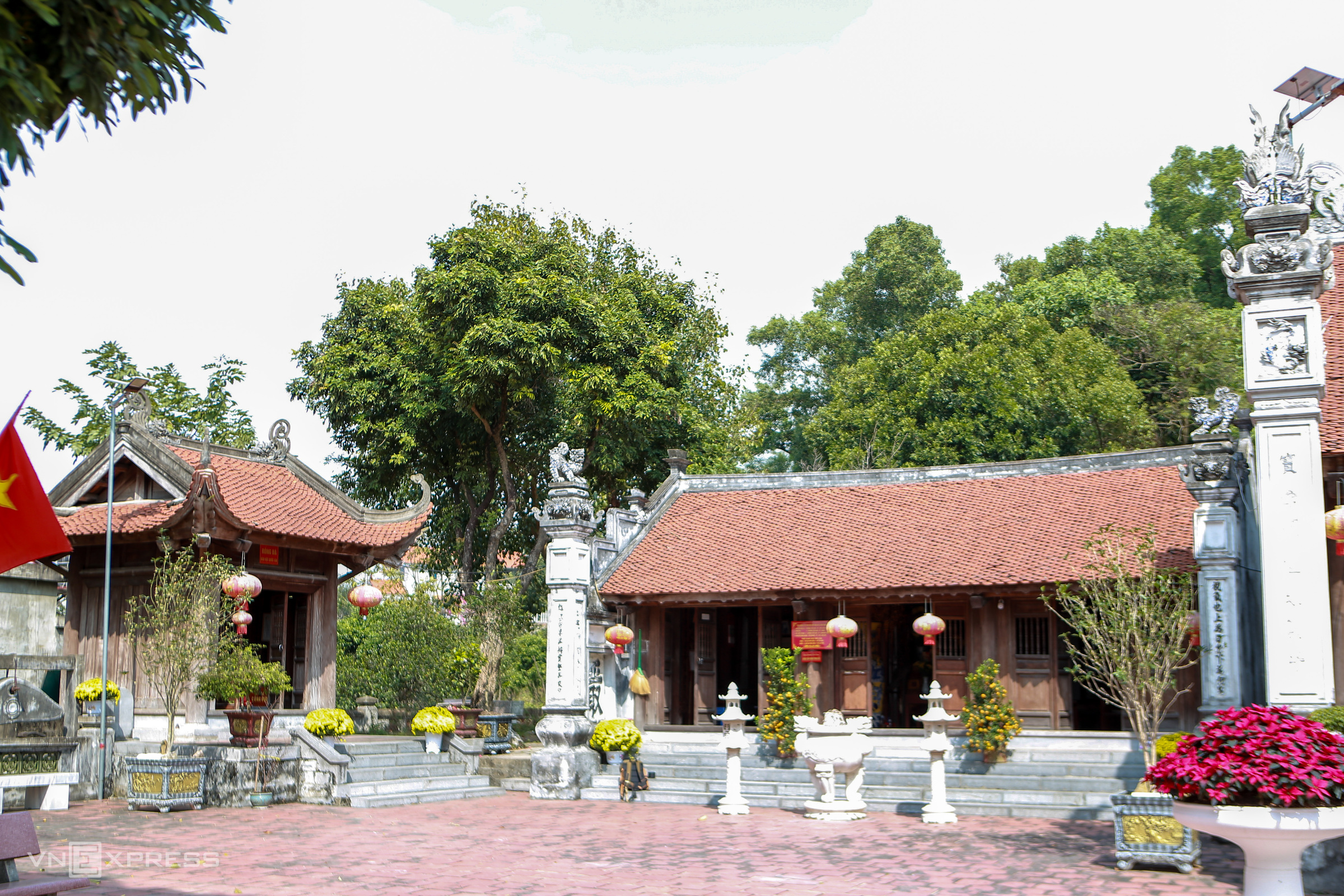
In 1994, the temple was recognized as a national architectural and artistic relic. Originally the Grand Tutor's family residence, it was later converted into a place of worship for Buddha and Grand Tutor Le Van Thinh.
The temple's current architecture features a three-bay, two-wing building constructed in the 'ke truyen con chong ke dau' style, forming a 'Dinh' shape (T-shaped layout). It has wooden panel doors and 18 wooden columns. This traditional Vietnamese wooden architecture style involves stacking wooden components to support the roof and adorn the structure. The roof is covered with traditional Vietnamese tiles, and the walls are built with stone and brick.
 |
The snake god's legs splay widely to the sides, featuring sharp, sinewy claws, with each foot spreading five toes firmly gripping the tail section of its body. |
Nguyen Dinh Can, 70, head of the local elderly association, recounted that in 1991, villagers discovered the stone dragon statue while clearing earth and stones to renovate the path leading to the temple. Weighing over 3 tons, the statue required young men from the surrounding area to move it to its current location next to Grand Tutor Le Van Thinh's temple.
According to historical records, Le Van Thinh was talented, incorruptible, and held innovative ideas, which led to envious courtiers plotting against him. In 1096, he was falsely accused of "transforming into a tiger to kill the king" and was exiled. In his old age, he returned to Dinh To commune, where he passed away. Subsequently, he was venerated as the tutelary god of many villages.
 |
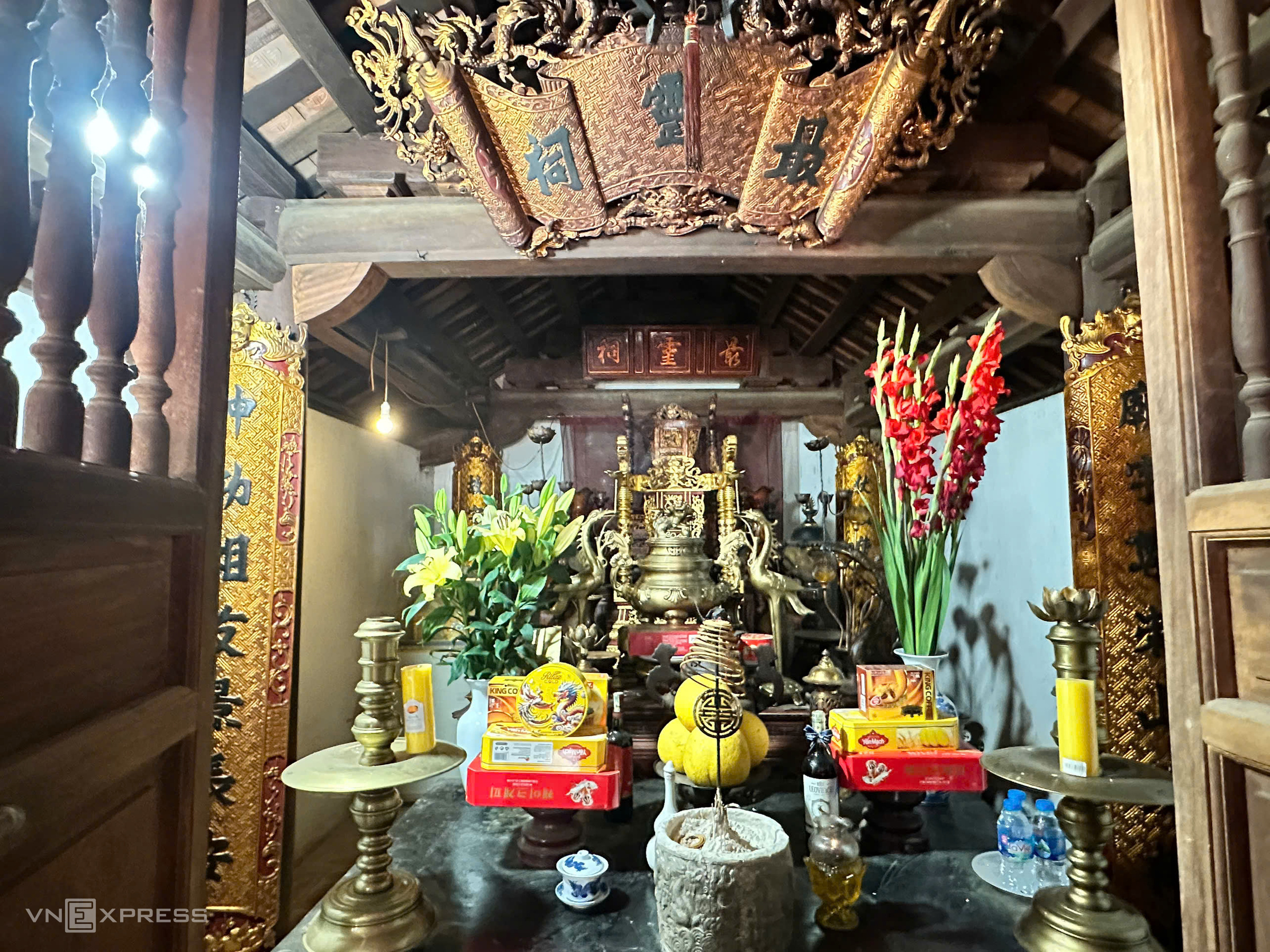
Inside the temple complex is a three-bay house, with the sanctuary serving as the place of worship for Grand Tutor Le Van Thinh. |
Villagers then built a small shrine for the statue and referred to it as "Mr. Dragon". In 2013, the stone dragon statue, also known as the snake god (xa than), was recognized as a national treasure. The Department of Cultural Heritage states that the snake god statue exhibits characteristics of 12th-century Ly dynasty art, including: sandstone material, robust form, and delicate, refined lines.
 |
Also preserved here are 5 royal decrees from various dynasties. The oldest is a decree from King Canh Hung during the Later Le dynasty in the mid-18th century, followed by three decrees from King Tu Duc in 1849, 1850, and 1853, and King Quang Tu in 1878. |
 |
 |
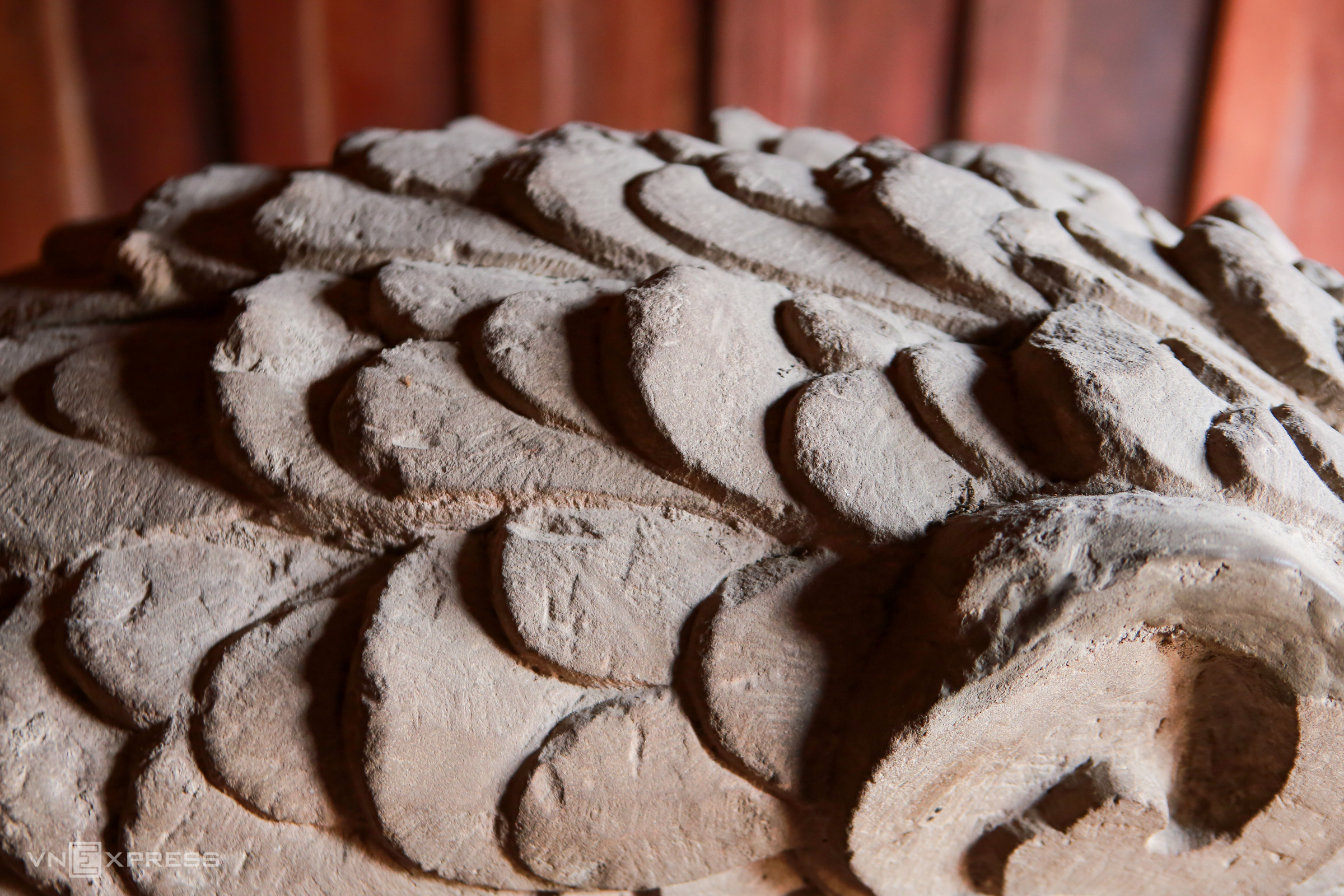 |
The tail section has a row of large fins running along its back. The end of the tail curves into a spiral, as if exerting force to bend it forward and firmly grasp the lower head section of the body. The Department of Cultural Heritage notes that while not as complex as a dragon, the artistry of its creation still displays exquisite technique, robust form, and a vibrant posture and appearance for the snake god. Archaeologists regard this as a unique, original artifact unprecedented in the art history of Vietnam and other Southeast Asian countries.
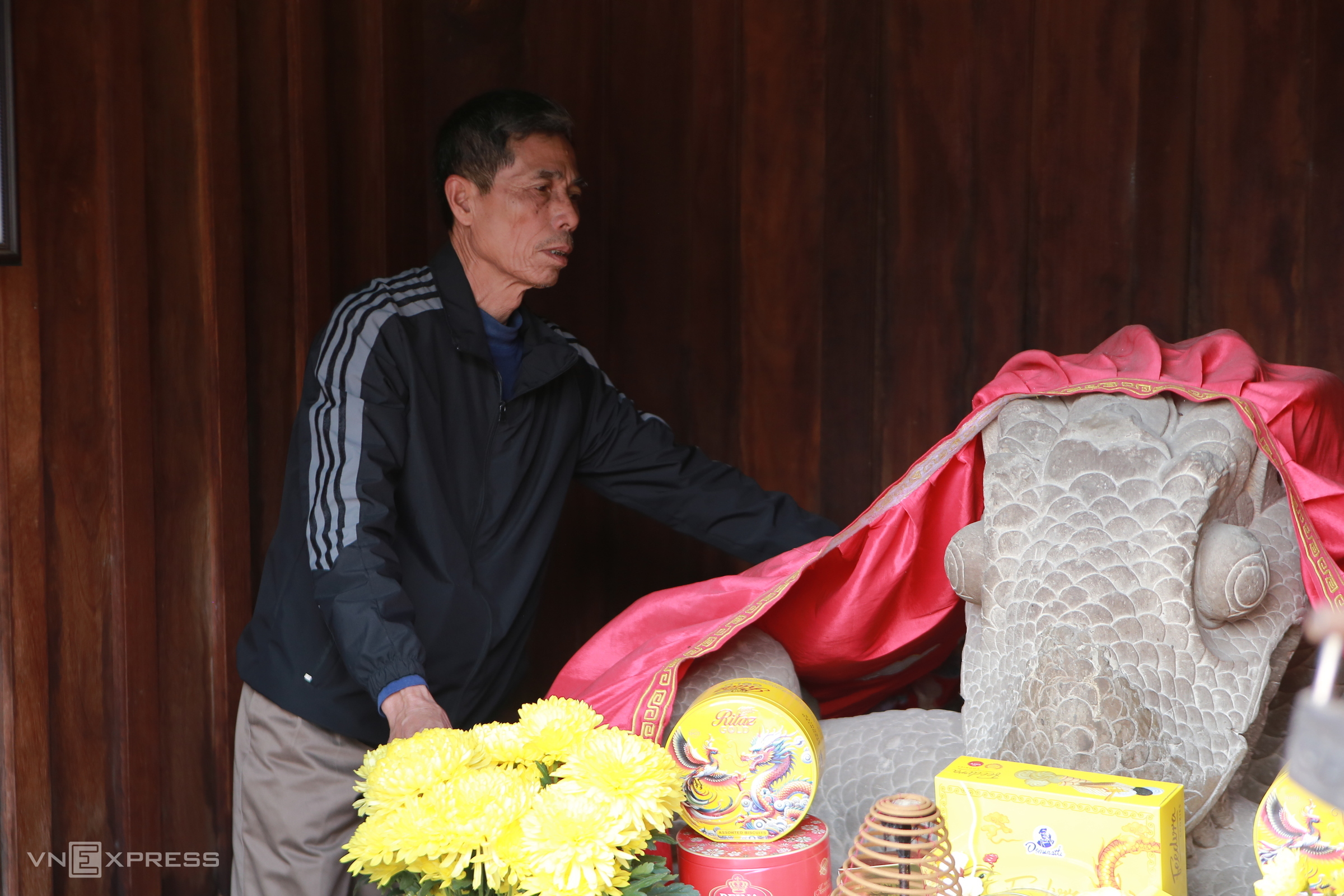 |
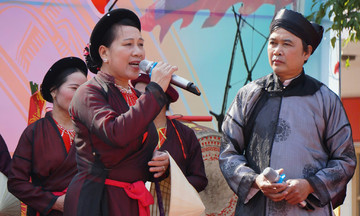
"The statue, biting its own body and tearing itself with its feet, symbolizes the unjust life of the scholar who had no one to confide in," said Mr. Can, adding that he, like many locals, knows the tragic story of Dong Cuu's son by heart. The Thap Dinh festival, held once every four years at the beginning of the 2nd lunar month, involves 10 villages around Thien Thai mountain and along the Duong River. It commemorates the contributions of Grand Tutor Le Van Thinh and Mr. Doan Cong, who is traditionally believed to have been a general of the Trung Sisters. People carry palanquins to gather at Dinh Ca communal house in Bao Thap village, Dong Cuu commune, to offer incense, perform rituals, and organize cultural activities.
 |
 |
Gia Chinh - Hong Chieu