 |
 |
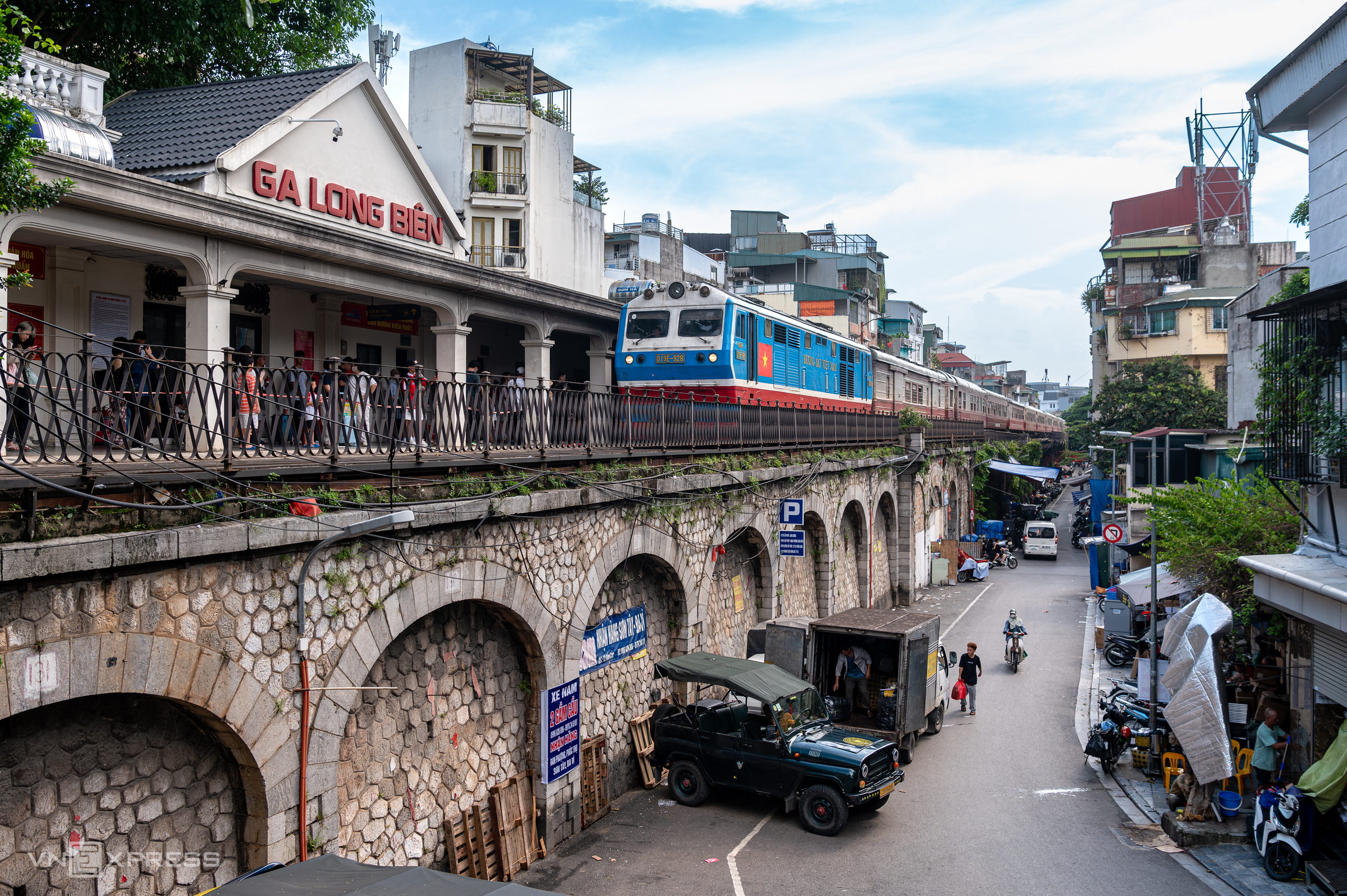
The stone railway arches, extending from Phung Hung street to Gam Cau street, were built by the French over one century ago to serve the railway line through central Hanoi. The Hoan Kiem Ward People's Committee is preparing a 1/500 urban design plan for this area, covering about 10 hectares. This initiative combines clearing encroachments with refurbishing the urban space, preserving heritage, and fostering cultural, commercial, and service activities.
According to the proposed plan, the archway section from Long Bien station to the Tran Phu - Ngo Tram intersection will be divided into six distinct segments: A, A1, B, C, D, and E. Each segment will serve a specific function, such as a community cultural and art space, a culinary zone, a traditional market, or a public park.
Segment E, stretching from Nguyen Thiep street to Long Bien station, is designated as a public park. It will integrate the preservation of the old Long Bien station, creating a green space that connects to the pedestrian route along the arch system.
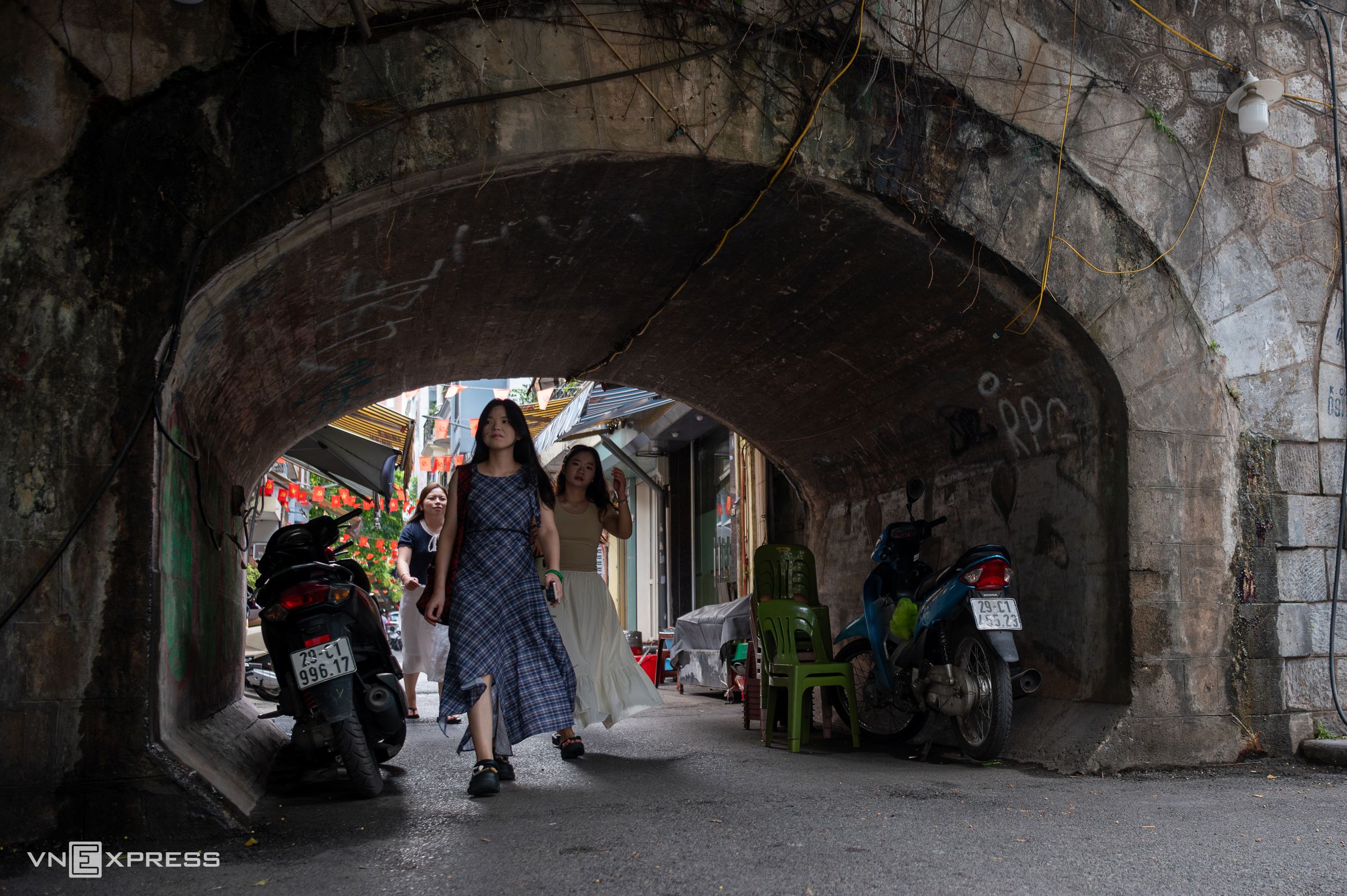 |
Arch number 9, connecting Hang Huong alley with Phung Hung street, stands over 2 m high and retains the distinctive stone arch architecture of the original structure.
Under the design plan, segment A, from Cua Dong street to Le Van Linh street, will be developed into a handicraft space. The arches will house shops, creative workshops, and traditional craft experience areas. Concurrently, the landscape will be improved, sidewalks widened, and green spaces expanded.
Near Phung Hung street, heading towards Hang Cot, nearly 20 arches are adorned with artworks from the Phung Hung mural street project. Vietnamese and Korean artists implemented this project from late 2017, completing it in early 2018. After several years, some artworks and elements have deteriorated and require repair. This section is segment B, from Le Van Linh street to Hang Cot street, designated as a community cultural and art space. The arches will feature cafes, shops showcasing Vietnamese products, art galleries, and creative spaces, all integrated with tourism promotion.
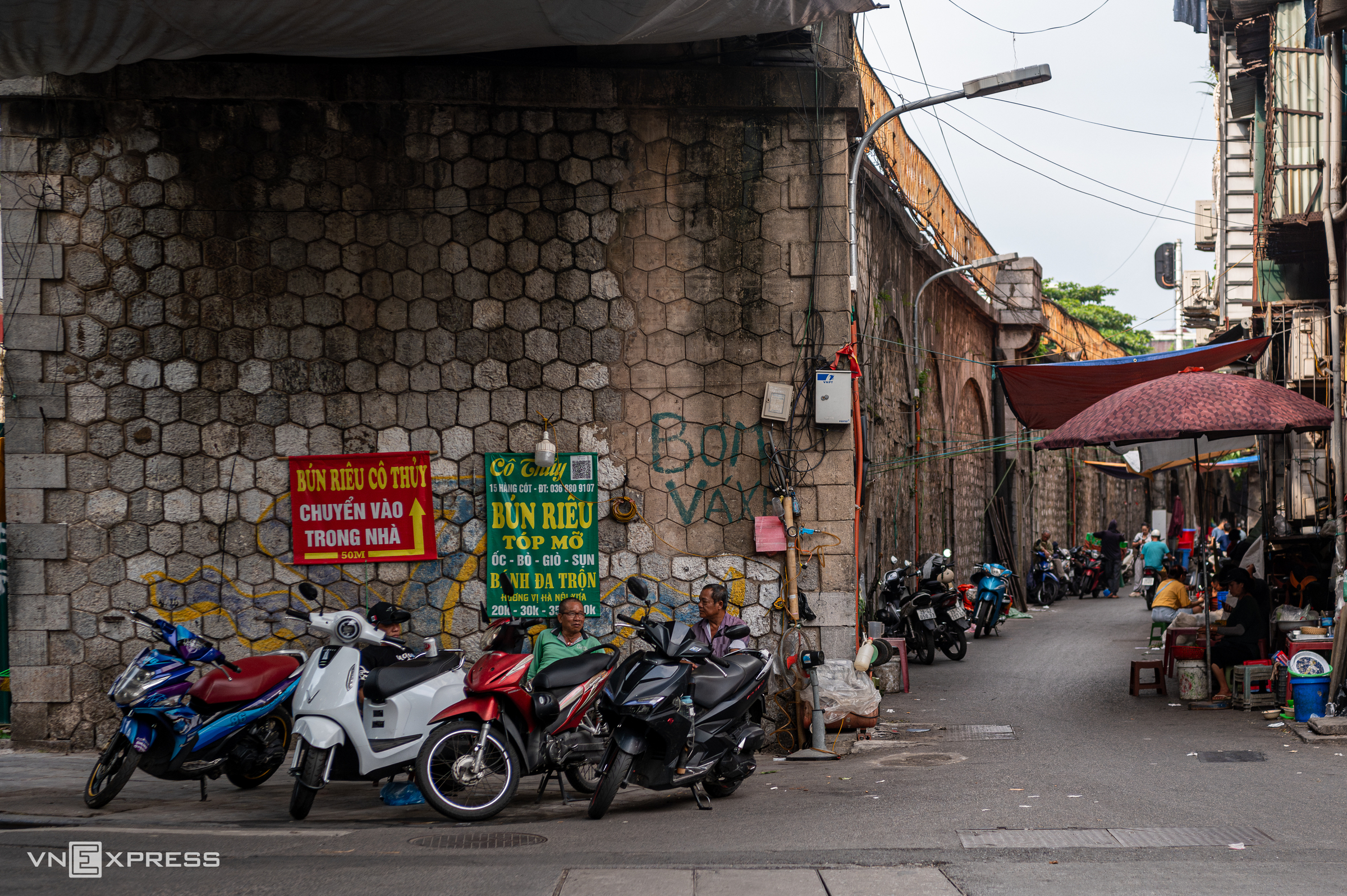 |
Segment C, from Hang Cot street to Hang Giay street, will be developed as a culinary space, highlighting traditional Hanoi dishes. The arches will accommodate restaurants, cafes, specialty shops, and visitor services.
 |
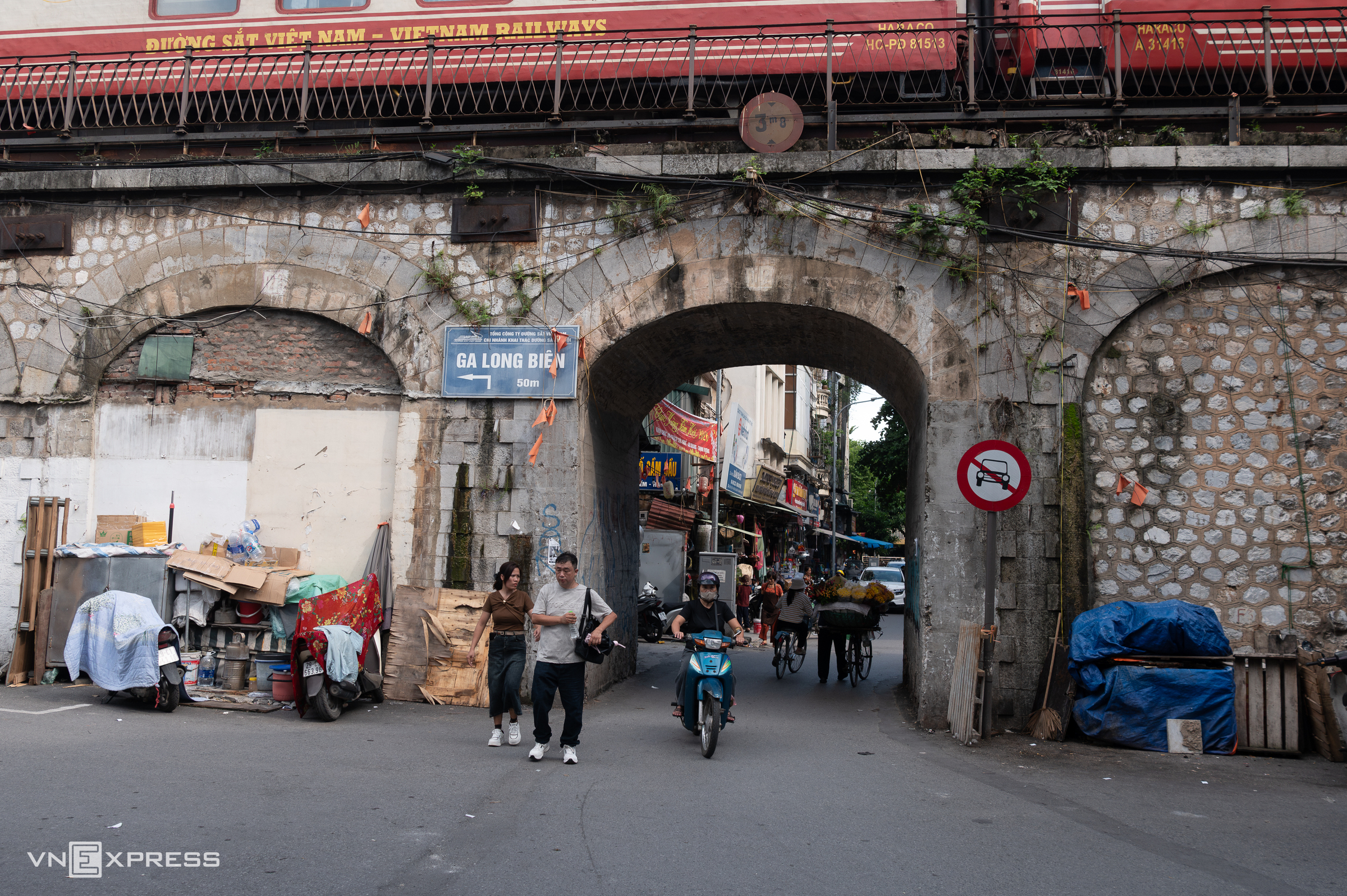
Area D, from Gam Cau street to Nguyen Thiep street, will be transformed into a Bazaar market. It will feature small-scale shops, cafes, restaurants, and spaces for showcasing and selling traditional products and cuisine. Both sides of the street will become pedestrian zones.
 |
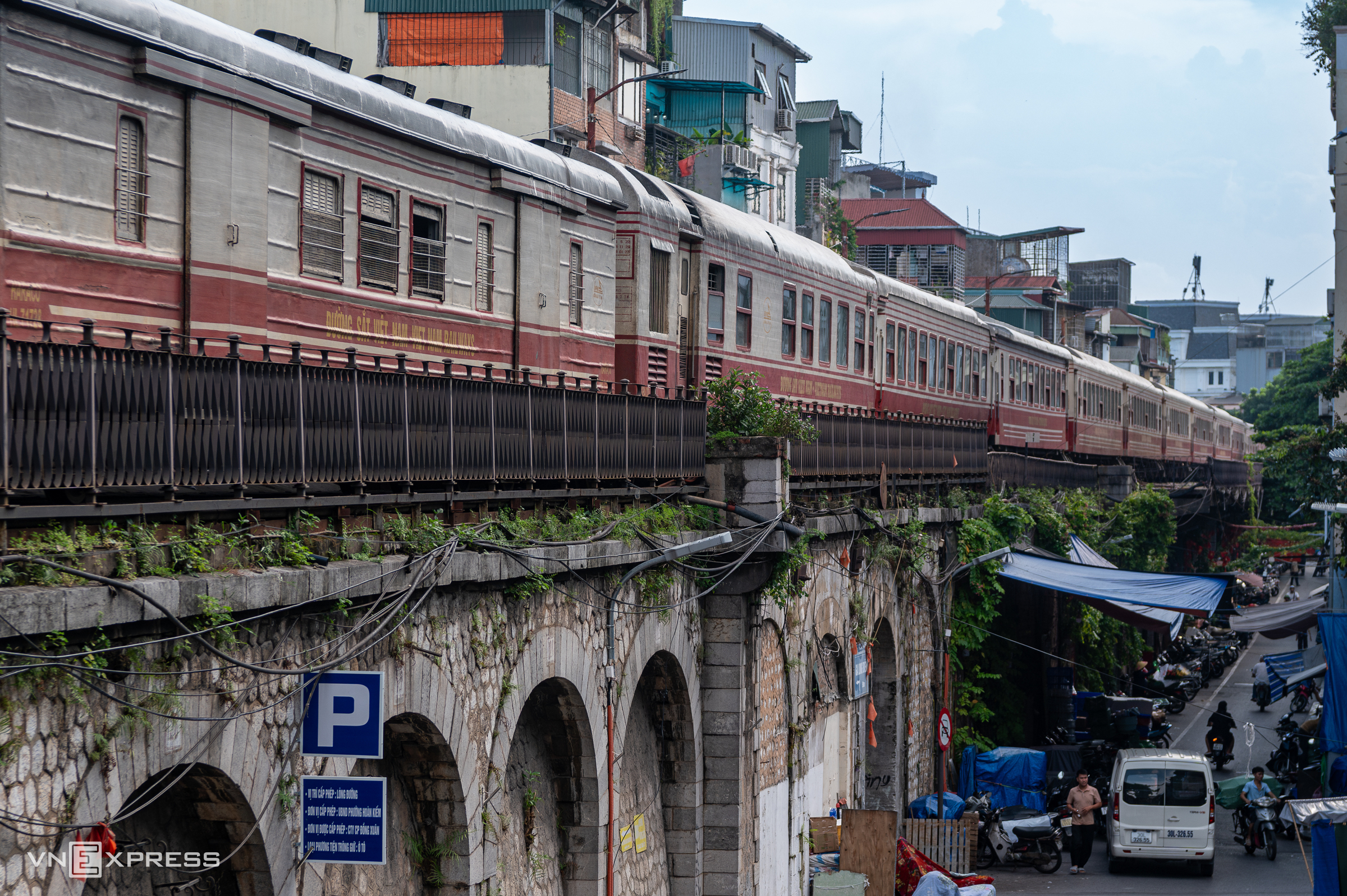
The system of 131 arches comprises the hollow compartments of the railway viaduct, built by the French, extending from Phung Hung street through Gam Cau street to Long Bien station. Most arches were previously sealed to ensure safety and security. Currently, six arches serve traffic, with two remaining in their original state: arch number 122, connecting Nguyen Thiep street, and arch number 9, linking Hang Huong alley to Phung Hung street.
Arch number 93, located at the intersection of Gam Cau street and Hang Giay street, was opened by Hanoi on a trial basis in 2019. However, the opening towards Gam Cau street remains fenced with corrugated iron, while the adjacent outdoor area is used for business. Arch number 79 was opened in 2021. This area was once used for food and beverage businesses but is now closed and fenced. Inside the arch, trees and wild grass grow overgrown.
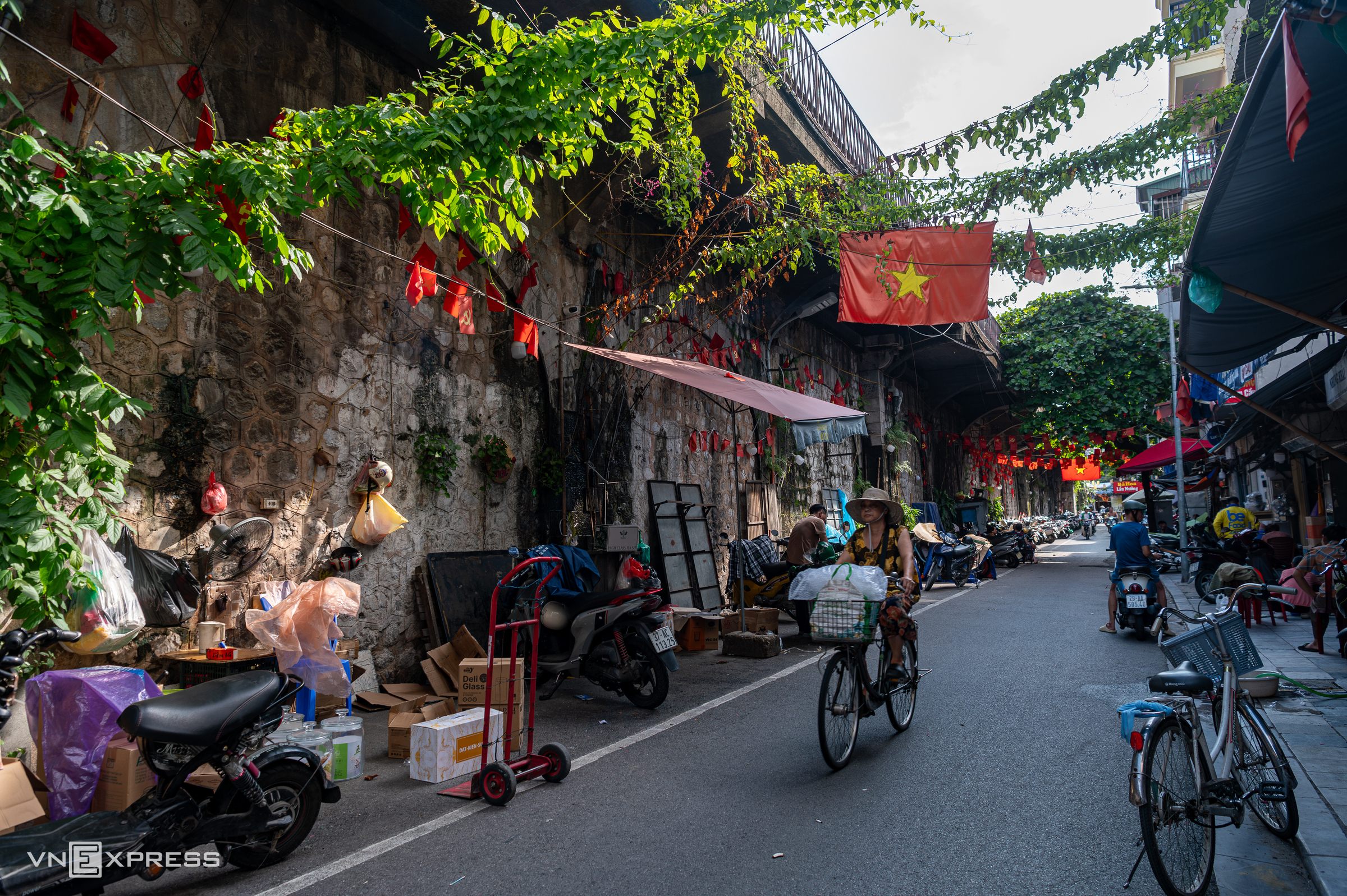 |
The section passing through Gam Cau street, adjacent to Long Bien station, features arches approximately 6 m high. Currently, businesses line this route, while the road segment from Tran Nhat Duat street to Hang Giay street is designated as a parking area.
Many areas beneath the arches and along the structure are currently used for commercial activities, with some locations appearing neglected and detracting from the urban landscape. On the Phung Hung street sidewalk, many sections are also utilized as parking spaces.
The Phung Hung archway route stands as one of Hanoi's relatively intact architectural works from the French colonial era. This system of 131 stone arches not only facilitates the railway line but also represents a significant historical and architectural landmark in the capital's urban development.
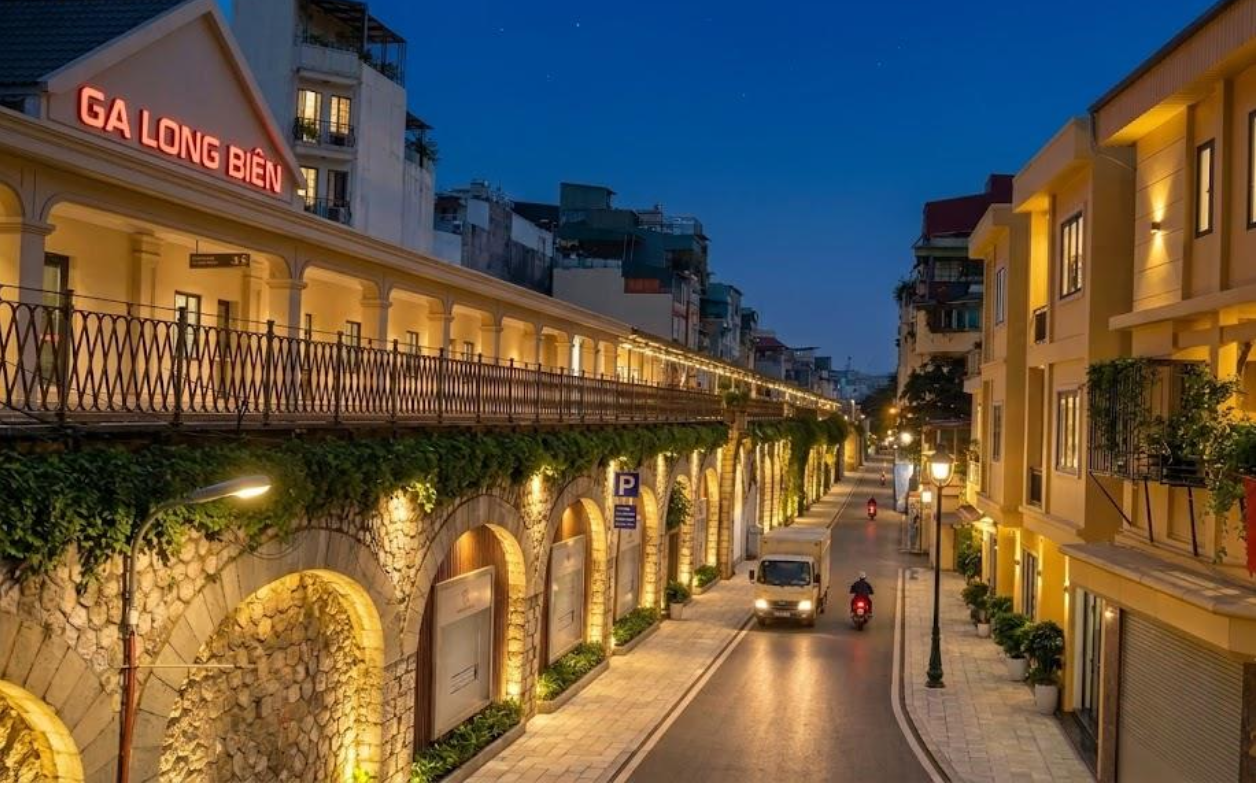
Following the planning orientation, each arch segment will be developed with a distinct function, integrating the preservation of existing architecture with cultural, artistic, commercial, and service activities. Upon completion, the entire route is expected to become a vibrant public space and a heritage experience path, connecting the Old Quarter with Long Bien station.
The Bang