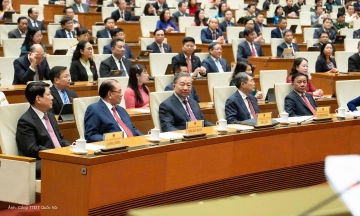
On the morning of 3/8, the National Assembly reviewed the draft resolution outlining specific mechanisms and policies for addressing legal violations concerning the state economy, private sector, science and technology, innovation, and digital transformation.
Presenting the proposal on behalf of the Prime Minister, Minister of Public Security Luong Tam Quang stated that the draft aims to establish a legal framework protecting officials who demonstrate initiative and innovation for the common good, provided there is no corruption, waste, or misconduct. The resolution embodies a humane and lenient policy, prioritizing political, economic, and social effectiveness when determining appropriate disciplinary actions. Economic, civil, and administrative measures will be favored, with criminal prosecution reserved as a last resort. Conversely, individuals who exploit this mechanism for corruption, waste, or other negative acts will face severe penalties.
The draft outlines six conditions under which prosecuting agencies will not pursue criminal charges against individuals who commit violations: * Absence of corruption. * Actions undertaken for the common good. * Completion of investment, production, business, scientific and technological application, innovation, or digital transformation activities, yielding socio-economic benefits for the locality and the nation. * No outstanding complaints or denunciations, or all complaints and denunciations have been fully resolved. * No asset loss or waste, or all consequences have been fully rectified. * The violator provides a clear account of the incident, effectively assisting in the detection and prosecution of crimes.
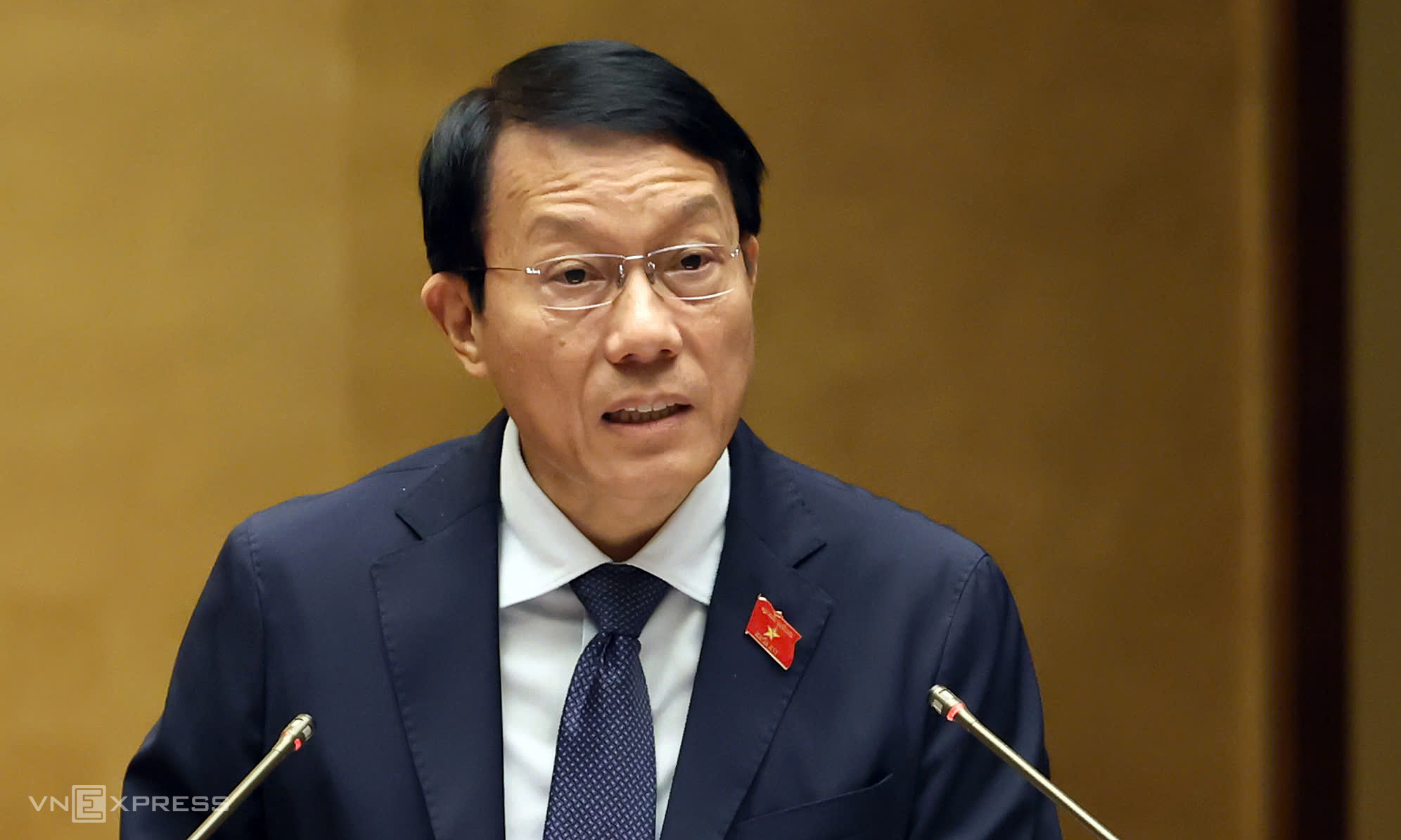 |
Minister of Public Security Luong Tam Quang presented the proposal on the morning of 3/8. *Photo: Ngoc Thanh*
The government explained the resolution's necessity, highlighting that existing laws on investment, state capital and asset management, land, finance, budgeting, public procurement, privatization, and bidding are often overlapping and contradictory. State management currently relies heavily on pre-approval and a 'request-and-grant' mechanism, which hinders the swift, flexible, and innovative decision-making required for development.
Within the state economic sector, particularly state-owned enterprises and public asset management projects, tasks often involve substantial assets, complex multi-layered procedures, and adherence to various specialized laws. Some violations arise from ambiguous regulations, shifting policies, the need to address urgent situations, objective market risks, or business decisions that do not yield anticipated outcomes.
The private sector also encounters significant hurdles in accessing capital, land, technology, data, and skilled human resources. Furthermore, certain business conditions are inadequate, compliance costs are high, and the legal environment lacks stability and predictability.
The Economic and Financial Committee, acting as the appraisal agency, supported the resolution's necessity for addressing pressing issues where existing laws require amendment and for resolving ongoing cases. However, the Committee urged the government to quantify the criteria for classifying violations and the conditions for applying lenient policies. It also called for establishing stringent control and oversight mechanisms to prevent abuse and ensure no exceptions.
Given that the Criminal Code, Criminal Procedure Code, and related laws are currently undergoing amendment, the Committee recommended that the resolution focus only on truly urgent matters, clearly outlining which provisions will eventually be codified into law to prevent overlaps.
The National Assembly will consider and adopt the draft resolution through a streamlined process.
Son Ha