Around 12:00 PM on 15/6, residents of alley 3, Thanh Nien street, Linh Son ward, heard a loud noise from a vacant lot next to their residential area. Upon investigation, they discovered the ground had collapsed, forming a sinkhole approximately 4 meters deep and over 3 meters in diameter. Water rose close to its rim.
The sinkhole revealed a cavernous, undercut void below, with sections of earth hanging precariously. Long cracks appeared around the hole, and soil and rocks continuously slid down. By the afternoon, the area still showed signs of subsidence. The sinkhole was just over one meter from the foundation of Ms. Dang Thi Hoan’s two-story house.
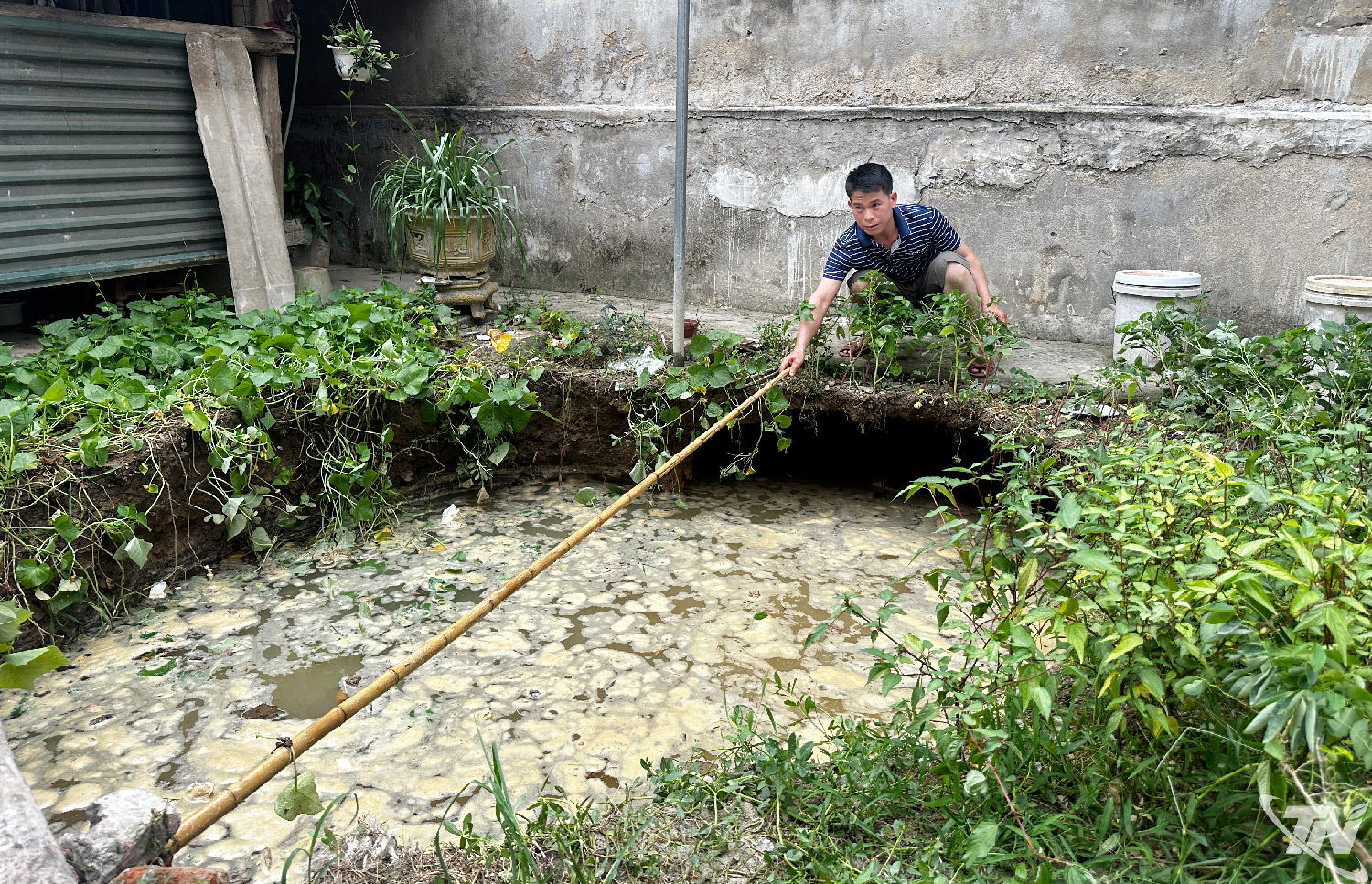 |
The sinkhole in Linh Son ward. *Photo: Thai Nguyen Newspaper* |
Fearing for their safety, residents moved belongings and temporarily left their homes. Linh Son ward authorities inspected the site, cordoned off the dangerous area, and prohibited public access. They reported the incident to specialized agencies to determine the cause and implement a remediation plan.
Thai Nguyen has complex topography and geology, featuring limestone mountains, low hills, and karst valleys. Many areas with carbonate rock formations are susceptible to karstification: a process where groundwater dissolves limestone over long periods, creating underground caves, voids, and fissures.
Subsidence has previously occurred in some areas of Thai Nguyen. Geological experts suggest that prolonged heavy rainfall, groundwater activity, or existing karst voids beneath the ground can increase the risk of "death pits" (sinkholes) appearing.
Gia Chinh