For the past six months, Le Ngoc Hung, 53, owner of a pottery establishment in Mang Thit craft village, has been anxious because the clay supply for production has run out.
Hung's family has been involved in red pottery for over 50 years. His facility, spanning over 11,000 square meters, represents an investment of tens of billions of VND in machinery and once provided regular employment for about 40 workers, each earning approximately 500,000 VND daily.
"On average, our facility needs 3 to 5 cubic meters of clay daily, but for the last six months, the local raw material source has almost disappeared," Hung stated.
The clay shortage has forced the factory to operate intermittently. Previous monthly revenues of 1 to 1,5 billion VND have plummeted by more than 10 times, with some months generating no income. Many skilled workers have been laid off or work only half-days, spending the rest of their time selling lottery tickets to make a living.
Hung attempted to purchase clay from waterway dredging projects, but this material exhibited low plasticity and failed to produce the distinctive red color. Products fired using this clay were prone to cracking, resulting in a high wastage rate. This, combined with increased costs, made them difficult to sell.
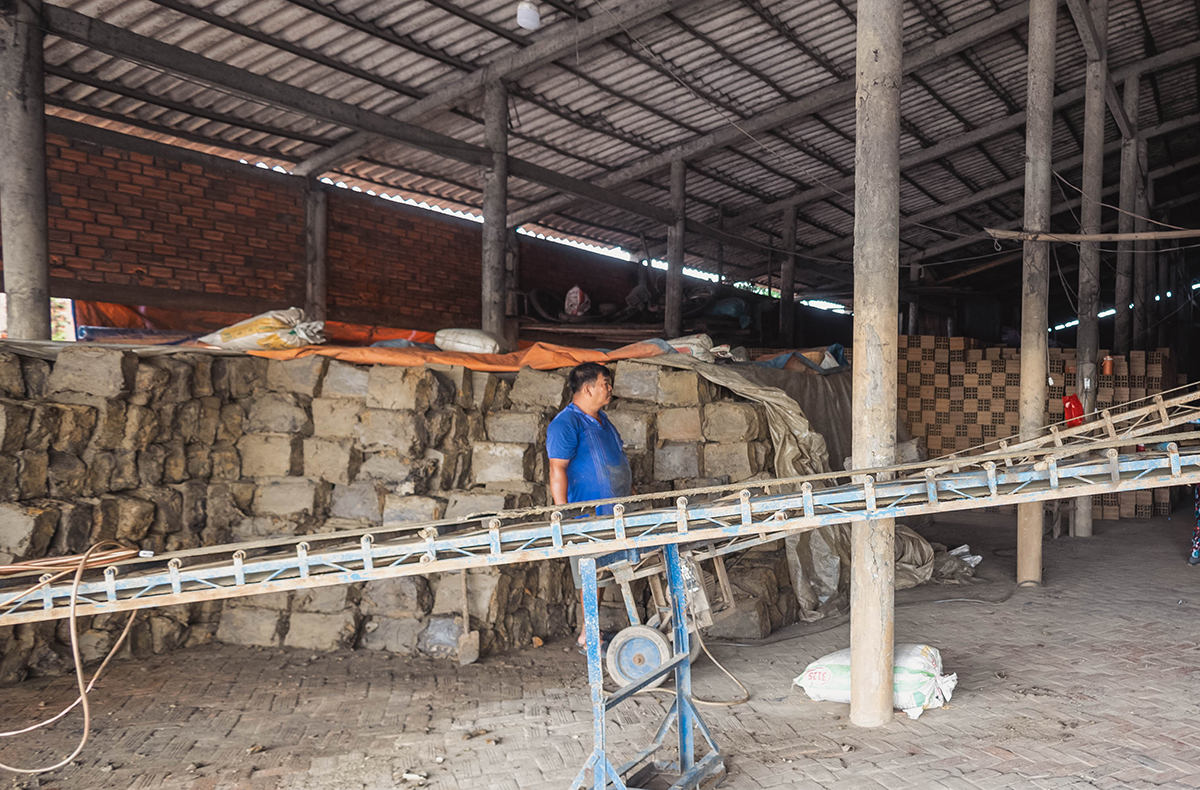 |
The clay source for Vinh Long's red brick and pottery production is severely depleted. Photo: An Binh
Similarly, Nguyen Van Buoi, 65, has also had to scale back production. Buoi has dedicated decades to the craft and owns a 300 square meter traditional house built predominantly with Vinh Long red pottery.
"Fired clay from this region creates a unique color and quality not found elsewhere," Buoi said, explaining that his facility stopped producing export art pottery over one year ago, maintaining only a small scale to preserve the craft and serve tourists.
According to Doan Thi Ngoc Diep, Chairman of the Vinh Long Brick and Art Pottery Association, the province has approximately 50 businesses involved in brick and pottery exports, employing 2,000 workers. Annually, these establishments require over 200,000 cubic meters of clay.
Historically, raw materials were primarily sourced from the topsoil layers of high-ground rice fields during land improvement. However, since 2024, the exploitation of this clay source has been prohibited. After exhausting their reserves, many businesses have been forced to cease or operate at a reduced capacity.
Vinh Long red pottery products are primarily exported to Europe, generating an annual turnover of approximately 450 billion VND. Due to the inability to find alternative raw materials, businesses are hesitant to accept new orders.
"If this situation persists, many businesses will close, workers will lose jobs, and the craft village risks fading away," Diep warned.
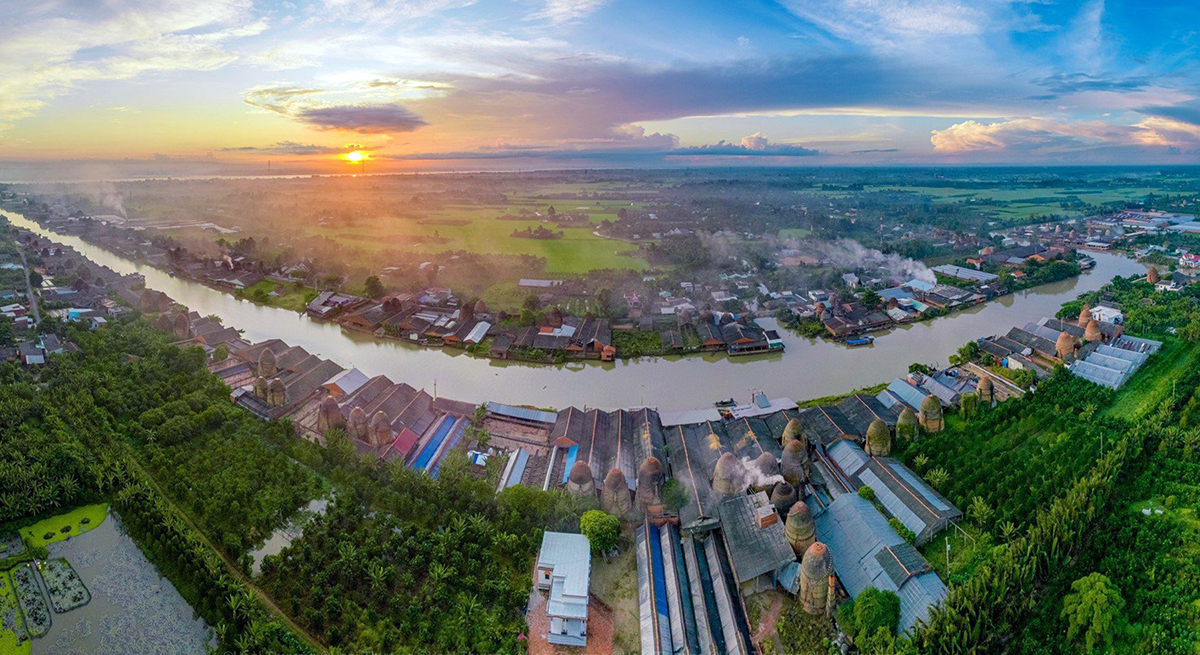 |
The traditional brick and pottery village along the Thay Cai canal in Vinh Long. Photo: An Binh
The Association and businesses have petitioned the province to survey and permit clay extraction in high-ground areas within Tam Binh, Tra On, Binh Tan, and the former Binh Minh town. According to these entities, this approach would both provide raw materials for the craft village and lower the field surface, facilitating agricultural production.
Dang Van Chinh, Permanent Vice Chairman of the Vinh Long Provincial People's Committee, stated on 15/6 that the province has assigned the Department of Agriculture and Environment to investigate, assess, and develop a geological and mineral management plan for the 2021-2030 period, with a vision to 2050.
The project will survey and identify clay-rich areas to expand raw material sources. It will also establish a legal framework for mineral protection, exploration, and exploitation.
While awaiting survey results, the Department of Agriculture and Environment suggested that the Association procure clay from currently licensed mines in the Mekong Delta.
However, representatives from the Association argue that clay from other localities does not meet the specific requirements for plasticity, color, and unique quality characteristic of Vinh Long red pottery. Tested materials have not yet yielded commercially viable products.
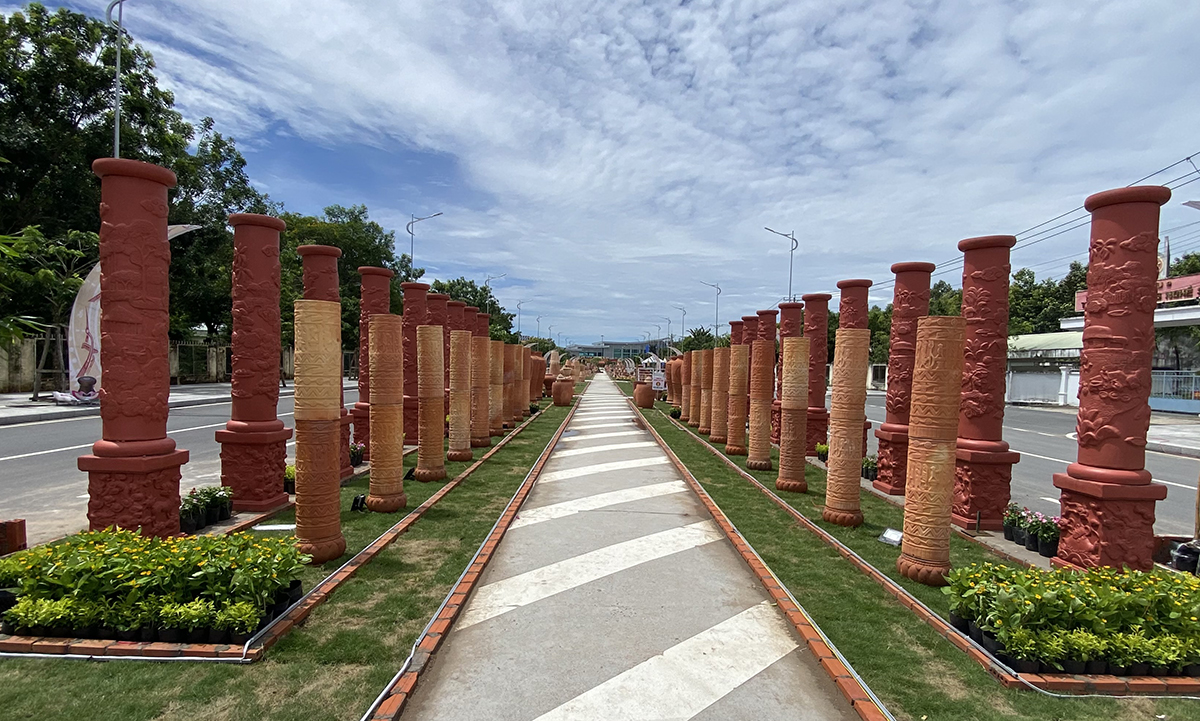 |
Some products from the traditional craft village displayed on the "red pottery road" in the center of Vinh Long province. Photo: An Binh
The Vinh Long red brick and pottery village, established over one hundred years ago, stands as one of the largest craft villages in the Mekong Delta. During its golden age about 20 years ago, the craft village stretched 30 kilometers through Vinh Long city, Long Ho, and Mang Thit districts, with over 3,000 kilns operating.
Currently, approximately 800 kilns remain across the region, concentrated along the Thay Cai canal to its junction with the Co Chien river, a tributary of the Mekong River.
In late 2024, the Vinh Long Provincial People's Committee approved the planning for a brick and pottery kiln area spanning over 3,060 hectares in the communes of My An, My Phuoc, Nhon Phu, and Hoa Tinh in the former Mang Thit district. This area is designated to become a key tourist destination, combining craft preservation with the development of services and a creative economy.
The province has also called for approximately 3,500 billion VND in socialized capital to develop the brick and pottery village into a tourist destination. However, businesses assert that the plan to revive the craft village will be difficult to implement if the clay source problem remains unresolved.
An Binh