On the afternoon of 4/4, the water about 10-50 m from the shore changed color. Scum appeared, extending for nearly 10 km and reaching the Chi Linh beach area. Patches of silt-colored scum floated on the surface, contrasting with the sea's blue.
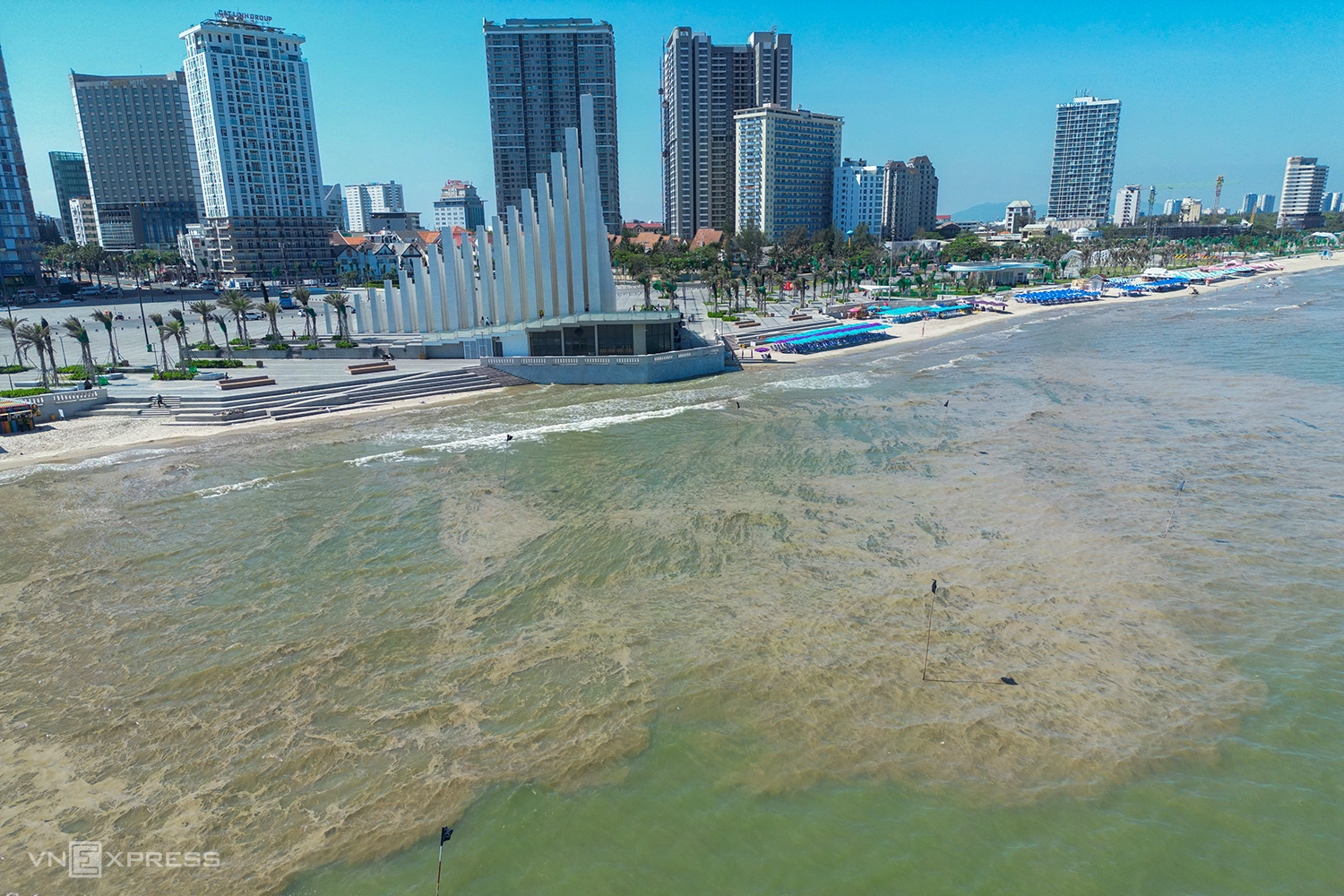 |
Floating scum in the Tam Thang tower area. *Photo: Truong Ha*.
Minh, a resident of Tam Thang ward, stated the phenomenon began on the morning of the same day. As the tide receded, the sandy beach revealed a moss-colored or pinkish water layer, accompanied by the pungent smell of decomposing seaweed and algae. He mentioned he usually swims further out where the water is clearer. He added, "This situation occurs every year, usually lasting only a few days." He also noted he had previously swum in affected areas without experiencing itching or discomfort.
Despite Minh's reassurance, some visitors remain wary. Huynh My Lien, a tourist from Dong Nai, reported that she and her friend only walked along the beach and did not swim. "I've visited Vung Tau many times but have never encountered this phenomenon, so I'm quite hesitant," she stated. However, many other people continued to swim in the area from Hon Ba to Bai Sau Park.
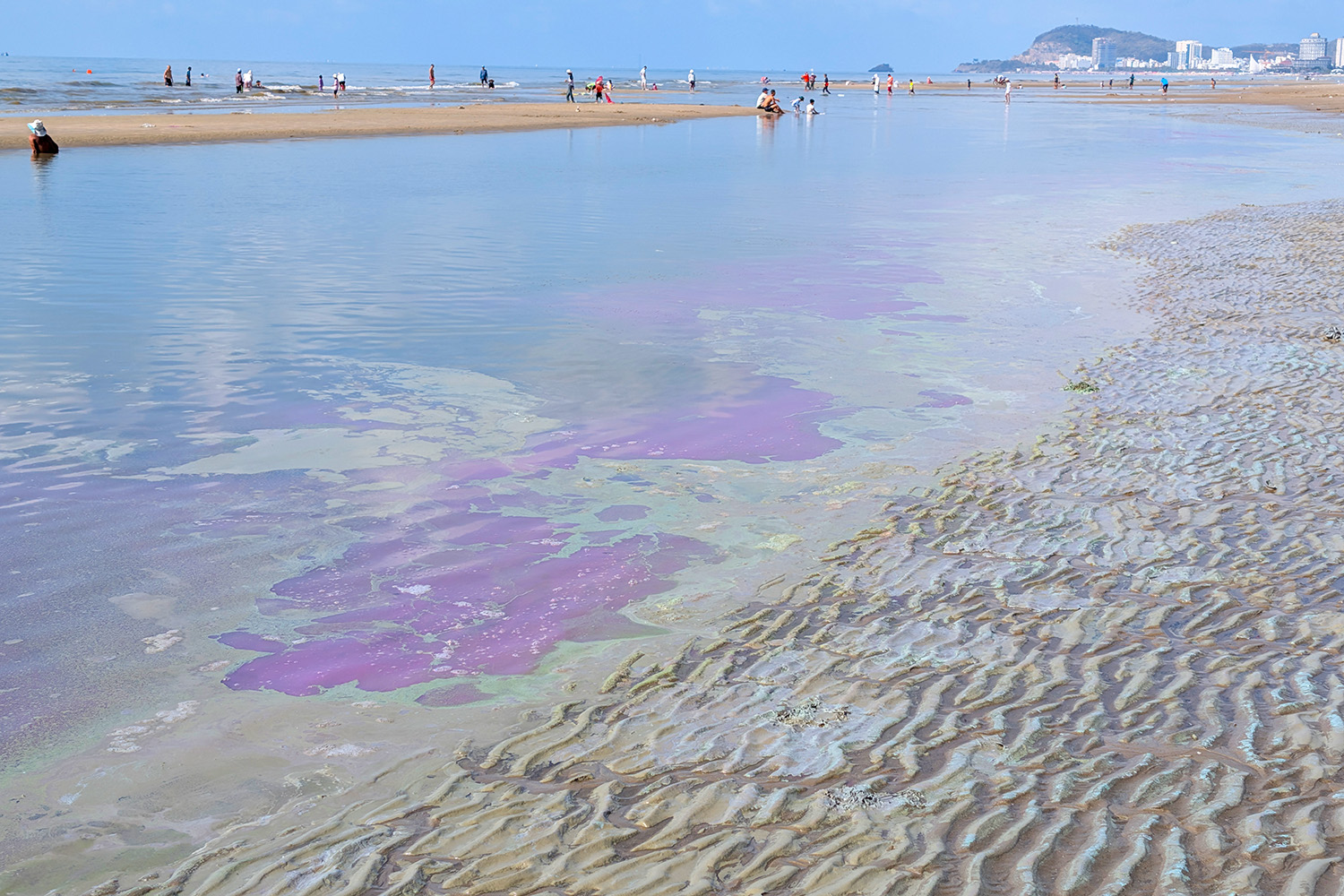 |
When the tide recedes, purple and blue water scum appears. *Photo: Truong Ha*.
A representative from the Vung Tau Ward Public Service Center explained that during the transitional season, seaweed and algae often drift ashore, causing murky water at Bai Sau. Authorities have dispatched officials to investigate and determine the specific cause.
This is not the first instance of unusual water conditions. Late last year, the seawater in this area turned green. Test results then confirmed it was caused by the microalgae Noctiluca scintillans. This widely distributed species has a density that varies over time, does not produce toxins, and does not affect swimming activities.