Ms. Nuong's farm, located in Co To commune and Thoi Son ward, supplies dozens of Nang Nuong-branded mushroom products to the market. In addition to fresh mushrooms, the facility also processes them into tea, shredded floss, snacks, and soaked wine, meeting diverse consumer demands.
Born into a farming family, Ms. Nuong is the daughter of Mr. Chau Thanh Phu, known as the "king of alum treatment" and the creator of the high-yield TP rice variety in the 1990s. Over 30 years ago, her family reclaimed the alum-affected land of Ta Danh, laying the groundwork for sustainable agricultural production.
The idea of cultivating mushrooms emerged during the Covid-19 pandemic, driven by her desire to create clean, nutritious products. In 2020, Ms. Nuong purchased several hundred black termite mushroom and reishi spawns for experimentation. Due to a lack of experience, the first batch of mushrooms showed poor growth and inconsistent quality.
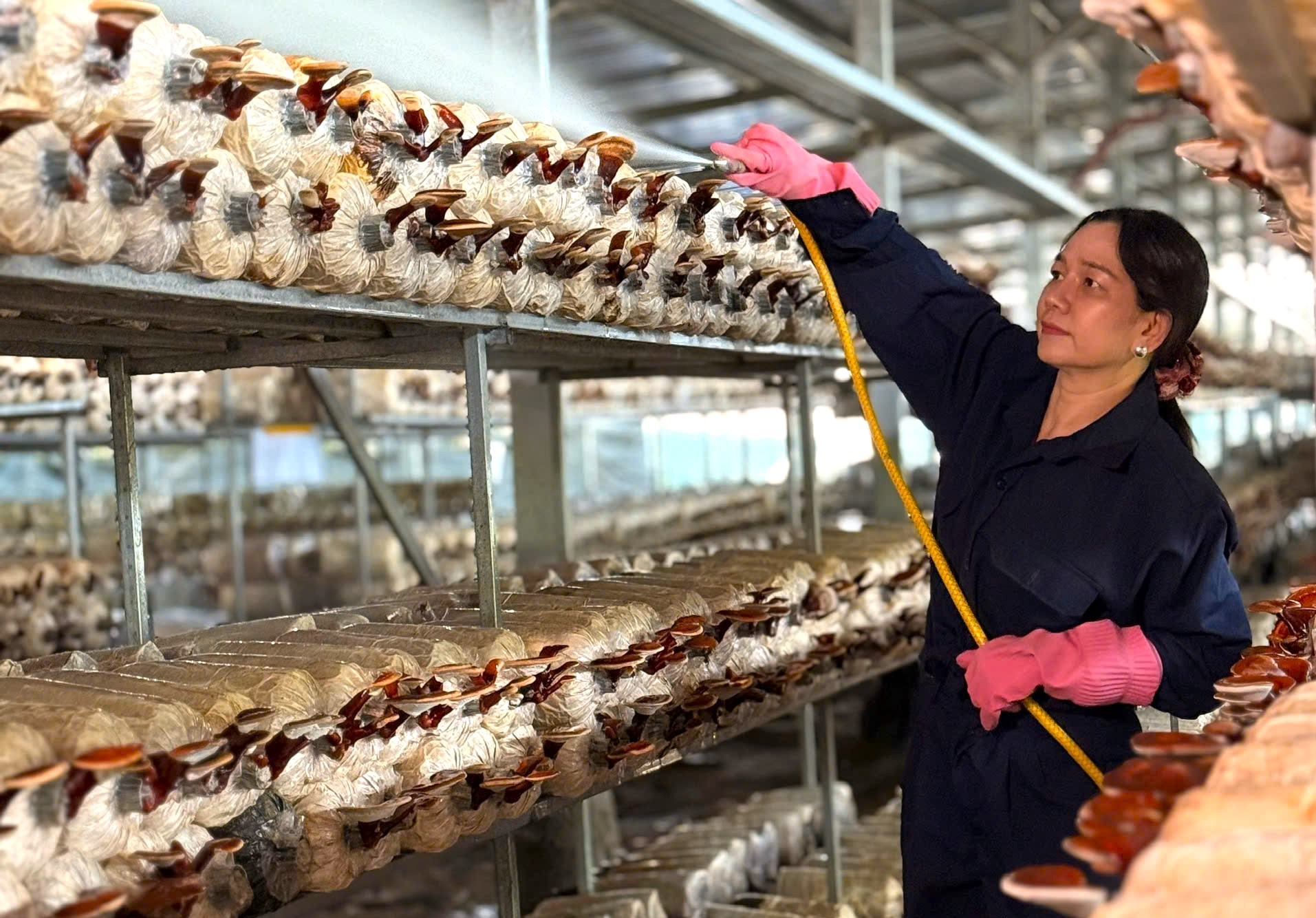 |
Ms. Chau Thi Nuong caring for reishi mushrooms. Photo: An Minh |
Undeterred, she spent months researching documents and directly learning techniques from lecturers at Vietnam National University, Ho Chi Minh City. The entire mushroom cultivation process is strictly controlled, from seed selection to the growing environment. Mushroom spawns are inoculated in sterile rooms, water sources undergo treatment, and farmhouses are designed to actively adjust temperature and humidity according to each growth stage.
According to Ms. Nuong, each mushroom type requires a specific care regimen, including light, ventilation, and harvest timing, to ensure uniform mushroom cap development, natural aroma, and high nutritional content.
After mastering the techniques, she expanded to cultivating cordyceps, oyster, and straw mushrooms. The most challenging aspect is humidity control, which determines yield and quality. "Growing mushrooms is like raising a small child; you have to nurture every tiny detail," she said.
Once reliant on purchasing spawns, Ms. Nuong now isolates strains, produces mycelium, and transfers techniques to other mushroom farms. The production model maximizes the use of local agricultural byproducts. Her family owns over 10 hectares of rice and corn fields, providing straw, husks, sawdust, and corn stalks for mushroom spawns.
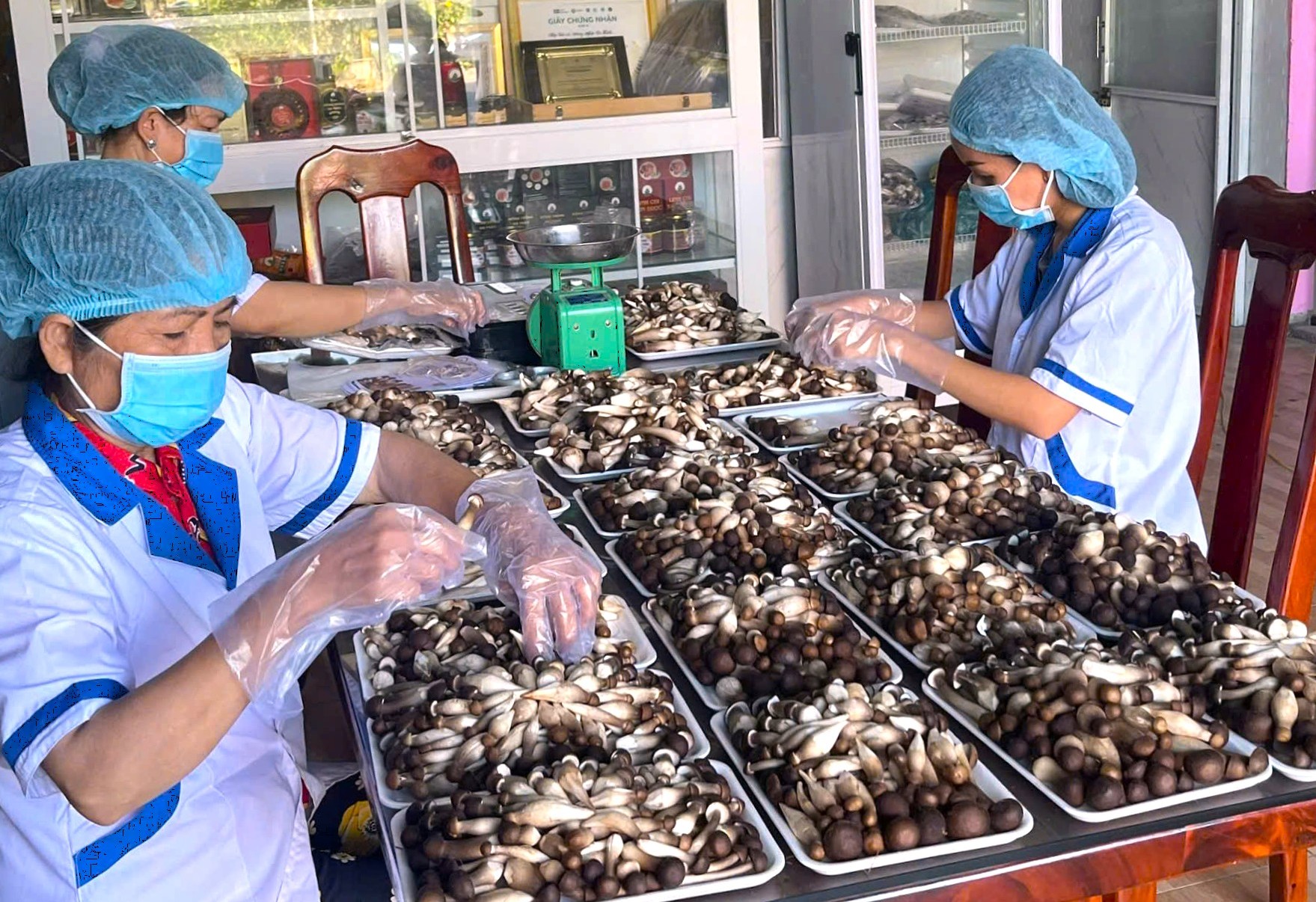 |
Workers processing black termite mushrooms at Nang Nuong workshop. Photo: An Minh |
After harvest, the substrate is either reused or fed to earthworms to create organic fertilizer. The farm also installed a rooftop solar power system, saving approximately 30% on energy costs. The entire cultivation process avoids chemical fertilizers and pesticides, aiming for green and sustainable production.
After over four years of development, Ms. Nuong established the Ta Danh Cooperative with 8 members, supplying about 10,000 mushroom spawns monthly. The farm produces over 1 ton of mushrooms each month, with annual revenue of around 15 billion VND, creating jobs for over 30 local female workers who earn 6-9 million VND monthly, with wages doubling during peak seasons. "I am proud to have created employment for many Khmer women," Ms. Nuong said.
Currently, the facility produces four main types of mushrooms: black termite, reishi, cordyceps, and oyster. Of these, reishi, black termite, and cordyceps mushrooms have received OCOP product recognition.
Last October, Ms. Chau Thi Nuong was honored by the Central Committee of the Vietnam Farmers' Union as an Outstanding Vietnamese Farmer of 2025. Previously, she won first prize in the competition for initiatives to empower women economically in the rice value chain, organized by the Graisea2 project in 2022.
Chuc Ly