 |
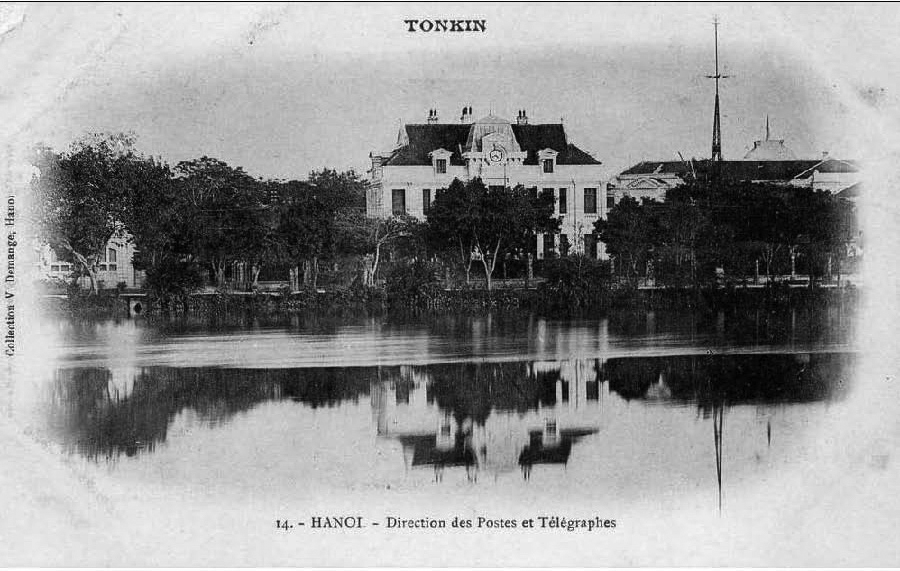
In 1883, the Nguyen dynasty signed the Quy Mui Accord, accepting French protectorate status. During the colonial exploitation, the demand for postal and communication services increased. In the same year, the Hanoi master plan by French Resident Bonnal identified Hoan Kiem Lake as the central area, allocating space for the Hanoi Post Office (pictured). |
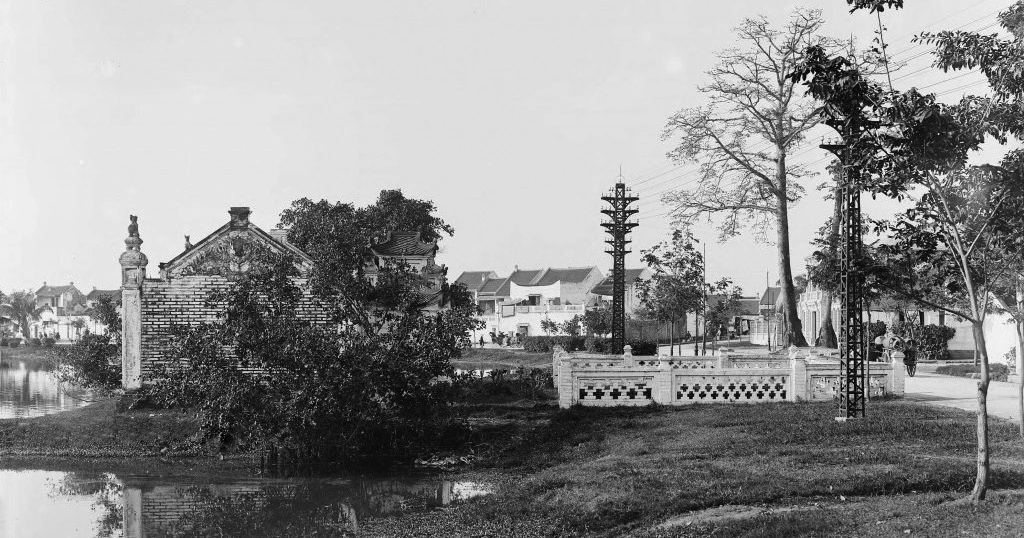
Hanoi is currently gathering public feedback on adjustments to the Hoan Kiem Lake and surrounding areas master plan. The consultation dossier lists several French-era structures near the lake, including Ba Kieu Temple, located opposite Ngoc Son Temple. This temple is dedicated to three goddesses: Lieu Hanh Princess, Quynh Hoa, and Que Nuong. Its architecture reflects the Nguyen dynasty style.
According to Thang Long Co Tich Khao (A Study of Thang Long's Ancient Traces), the temple was built during the Le dynasty, specifically the Vinh To era (1619-1628), and later expanded during the Canh Hung period. During the Tay Son dynasty, a large bell was cast for the temple, and it underwent further renovation during the Tu Duc reign.
When the French occupied Hanoi and expanded streets around Hoan Kiem Lake, a portion of the temple's land was requisitioned. In 1891, this land was handed over to the authorities to establish Boulevard Francis Garnier, now known as Dinh Tien Hoang Street.
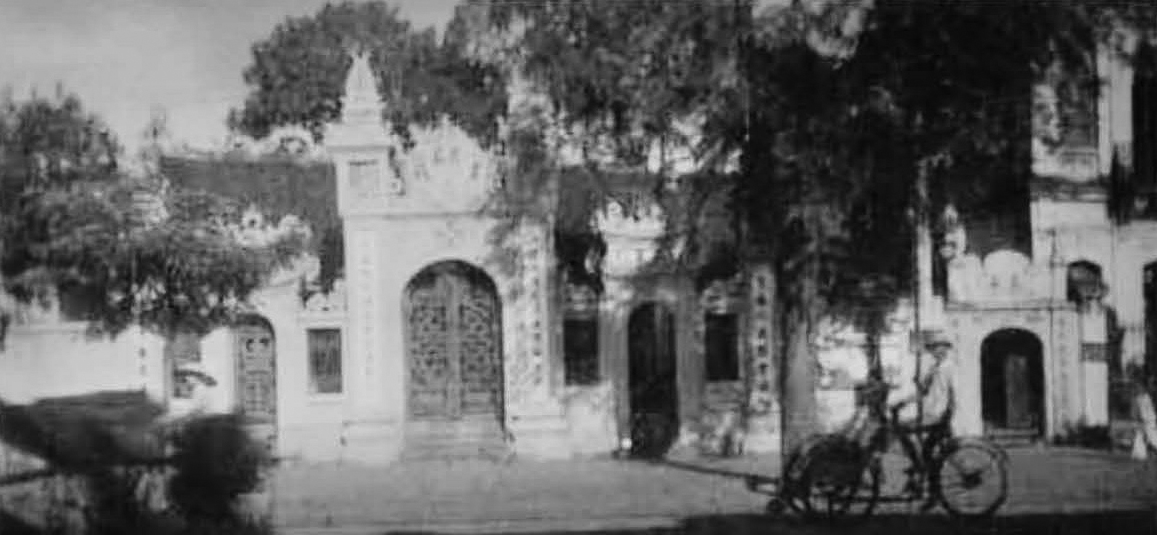 |
The Vu Thach communal house, temple, and pagoda, built during the Nguyen dynasty, were renovated in 1882, 1891, and 1924. However, some artifacts and ritual objects within the relic date from the 18th to the mid-19th century.
Vu Thach Pagoda underwent major restoration and renovation in 1995 on its old grounds. This included the construction of the main sanctuary (tam bao), the Ancestor worship house, the Mother Goddess worship house, the stupa, and a guesthouse. The pagoda gate, featuring a simple architectural style, sits adjacent to Ba Trieu Street. In 2000, the relic was further renovated to commemorate the 990th anniversary of Thang Long - Hanoi.
The Vu Thach communal house, temple, and pagoda were classified as an architectural and artistic heritage site by the Ministry of Culture and Information in 1986.
Thap Hoa Phong (Hoa Phong Tower) is part of the Bao An Pagoda complex. The pagoda was built around 1842 during the Nguyen dynasty, with Governor-General of Ha Ninh, Nguyen Dang Giai, leading fundraising efforts from the public. Located east of Hoan Kiem Lake, the pagoda spanned nearly 100 mau (approximately 36 hectares), comprising 180 chambers and 36 roofs, featuring intricate architecture. In 1888, the French colonial administration demolished Bao An Pagoda to construct a post office. In subsequent years, many residential areas around Hoan Kiem Lake were cleared following major fires in the Cau Go, Hang Be, Hang Mam, Hang Thung, Hang Voi areas and Cuu Lau village in 1891. After the pagoda's demolition, the land became desolate. Today, Thap Hoa Phong is the only remaining structure of Bao An Pagoda.
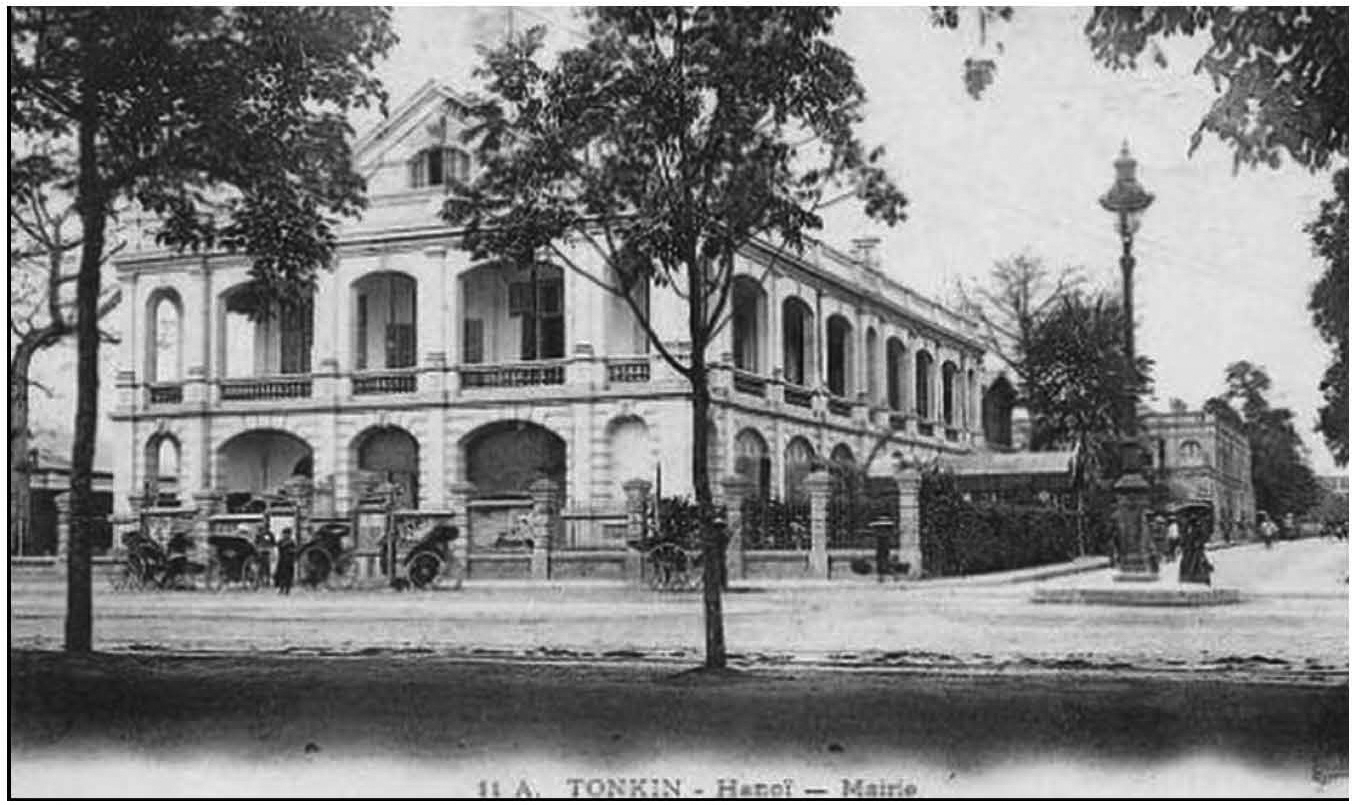 |
The Doc Ly Building, the predecessor to the current headquarters of the Hanoi People's Committee, was built on the site of Pho Giac Pagoda. This pagoda, constructed during the Later Le dynasty (1770-1774), once stood by Hoan Kiem Lake.
From the late 19th century, as the French expanded streets, barracks, and public offices, this area gradually developed into a European quarter. Pho Giac Pagoda was relocated to the former garden of the Institute of Royal Medicine, now at the end of Ngo Si Lien Street; the pagoda's former ground was used to build the Hanoi Doc Ly Building.
After 1945, when the French reoccupied Hanoi, the Doc Ly Building was renamed City Hall, with a mayor as its head. Between 1985 and 1987, the city of Hanoi rebuilt the People's Committee headquarters on the site of the old structure.
 |
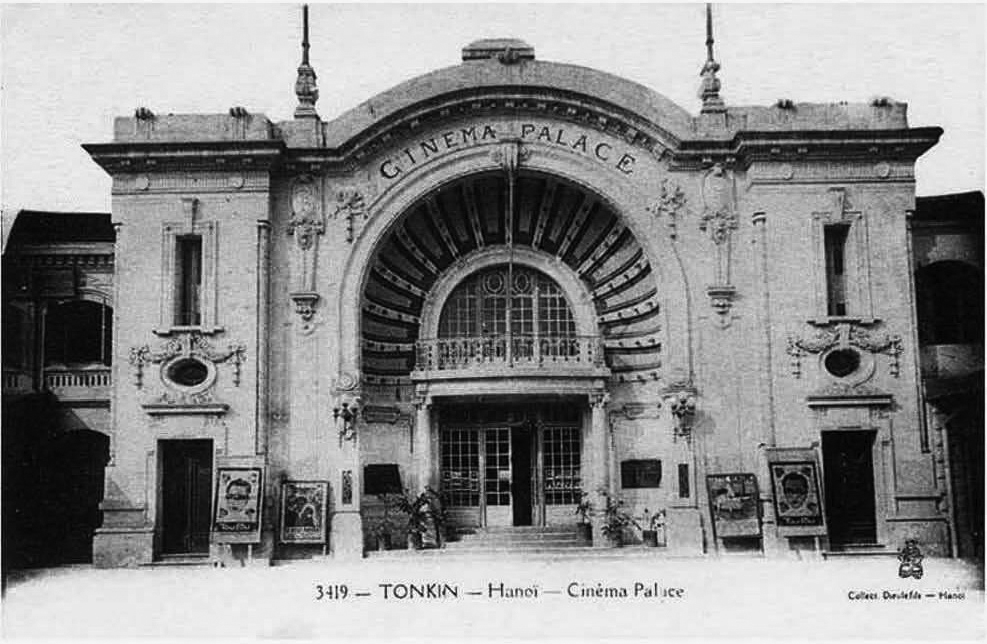 |
Cong Nhan Theater, formerly known as Cinema Palace, was started by the French in 1917 and completed in 8/1920. During the French temporary occupation of Hanoi (1947-1954), the theater's facade was renovated and its name changed to Cinema Eden, becoming one of the city's most luxurious cinemas.
After the liberation of the capital on 10/10/1954, it was renamed Cong Nhan Cinema. In 1990, the building was renovated, its facade altered, and it was transformed into a multi-functional performance venue. From 1995, the theater was handed over to the Hanoi Drama Troupe (now the Hanoi Drama Theater) for managing various art forms, including drama, cheo (traditional opera), cai luong (reformed opera), and music and dance performances.
On 22/10/2007, the Cong Nhan Theater began reconstruction, and the new building was inaugurated on 2/10/2010.
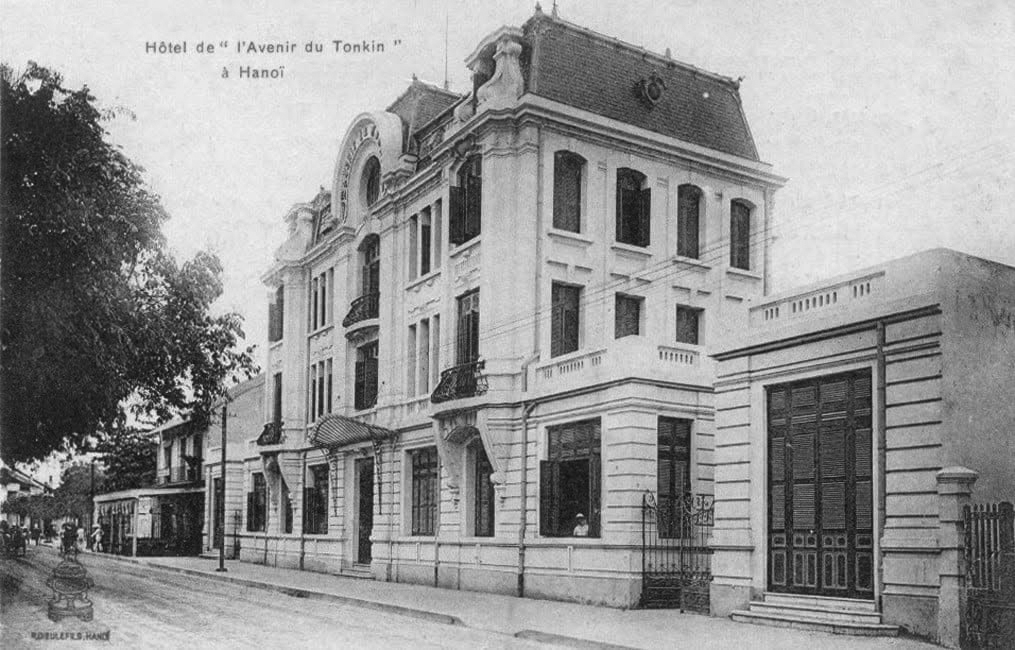 |
The building at 44 Le Thai To Street, now the headquarters of the Hanoi Moi newspaper, was constructed in 1893 in the French colonial architectural style. The building was once located at 144 Rue Jules Ferry, overlooking Hoan Kiem Lake.
Previously, this site housed the editorial office of L’Avenir du Tonkin (The Future of Tonkin), a French-language newspaper that published its first issue on 14/6/1886. Jules Cousin served as the editor-in-chief during its initial years.
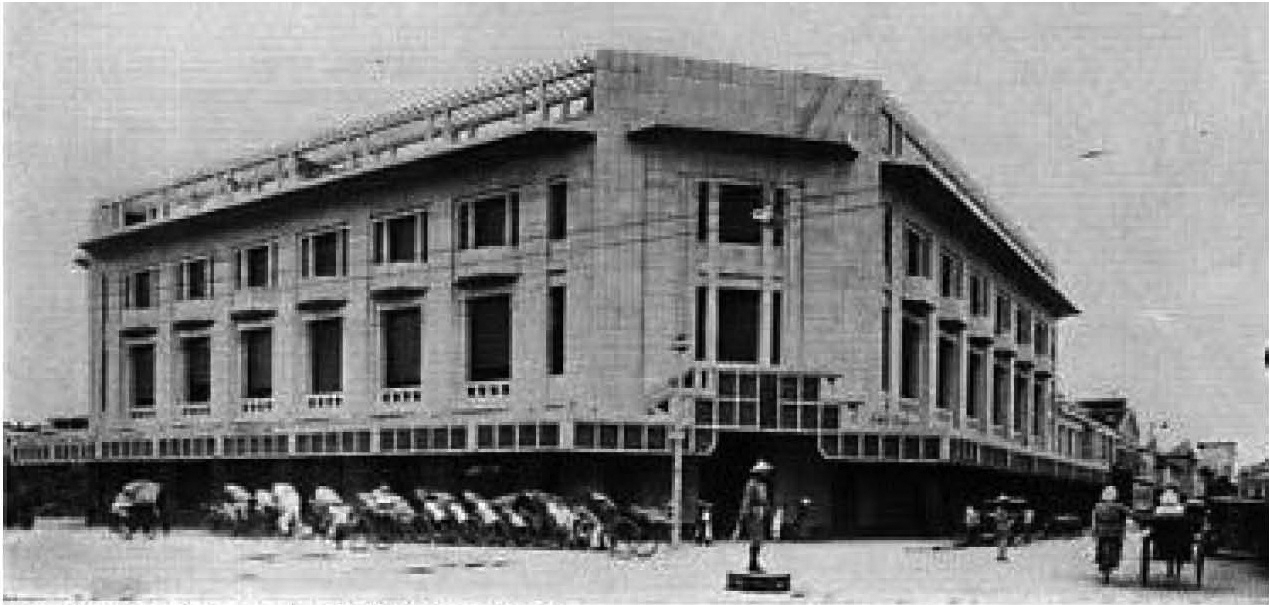 |
The Hanoi Information - Exhibition Center, built around 1905-1920, was originally named Lacaze. From 1920-1929, the building was renamed Terminus Hotel. After 1929, the hotel was demolished, and a new owner purchased additional land to construct the headquarters of Credit Foncier de l’Indochine (Indochina Land Bank).
Designed by architects Trouve and Verbie in the Art Deco style, the building stands three stories tall and faces Trang Tien, Dinh Tien Hoang, and Dinh Le Streets. Around 1934, many entrepreneurs rented space and opened Taverne Royale (Royal Tavern).
A historical highlight of the building occurred on the evening of 29/4/1936, when actor Charlie Chaplin visited Taverne Royale for a drink and was recognized by fans, who requested his autograph. After 1954, the building was allocated to several agencies, including the Hanoi Information - Exhibition Center.
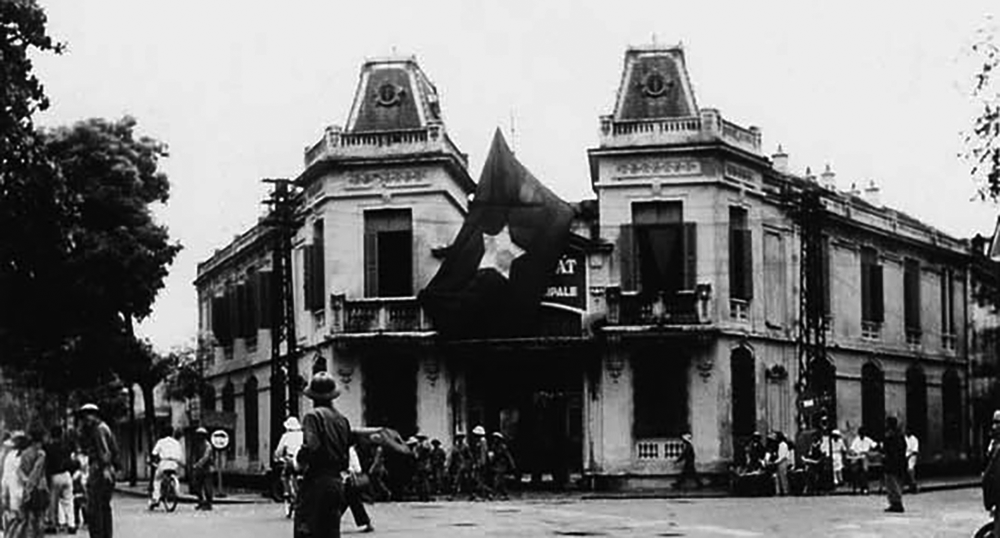 |
The current headquarters of the Hoan Kiem District Police was built in 1915, featuring distinctive French colonial architecture. At that time, it served as the headquarters of the Central Police Department.
After the liberation of the capital, in early 1955, the Hanoi Public Security Department established four inner-city district police units, including the Hoan Kiem District Police. The Hoan Kiem District Police was later renamed Hoan Kiem Area Police.
On 31/5/2021, the project to renovate and repair the Hoan Kiem District Police headquarters began. The project was completed, inspected, and handed over on 21/8/2024.
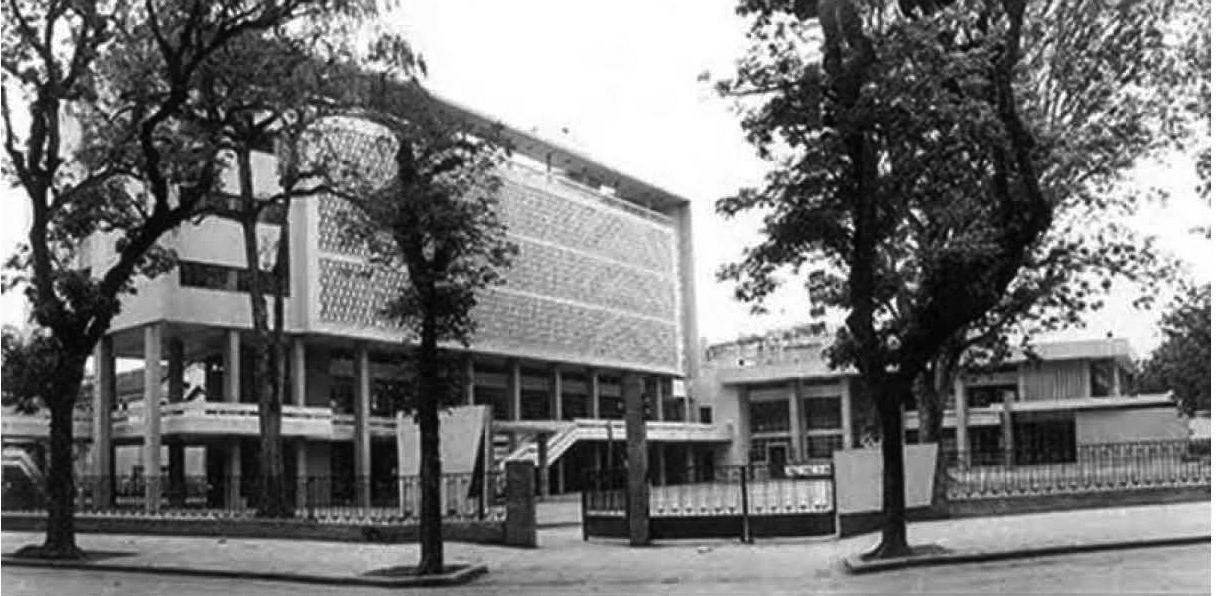 |
Au Tri Vien - Hanoi Children's Palace. Around 1930, the land was divided into two facilities. The northern part was Au Tri Vien, originally a kindergarten that also hosted adult activities such as markets and beauty contests. The southern part was a French club, commonly known as Nha Xec Tay, which still features an old French architectural structure.
After the August Revolution, the site was used to care for and nurture orphaned and impoverished children in Hanoi. On 6/3/1946, President Ho Chi Minh signed the Preliminary Agreement between Vietnam and France here, making the building a site linked to national history.
After the liberation of the capital in 1954, it became the Hanoi Youth Club, though the name Au Tri Vien was still used for a period. On 1/6/1955, Au Tri Vien was officially renamed the Hanoi Children's Club.
The main building block and the Red Scarf Theater were designed by architect Le Van Lan in 1974 and put into use on 19/2/1977.
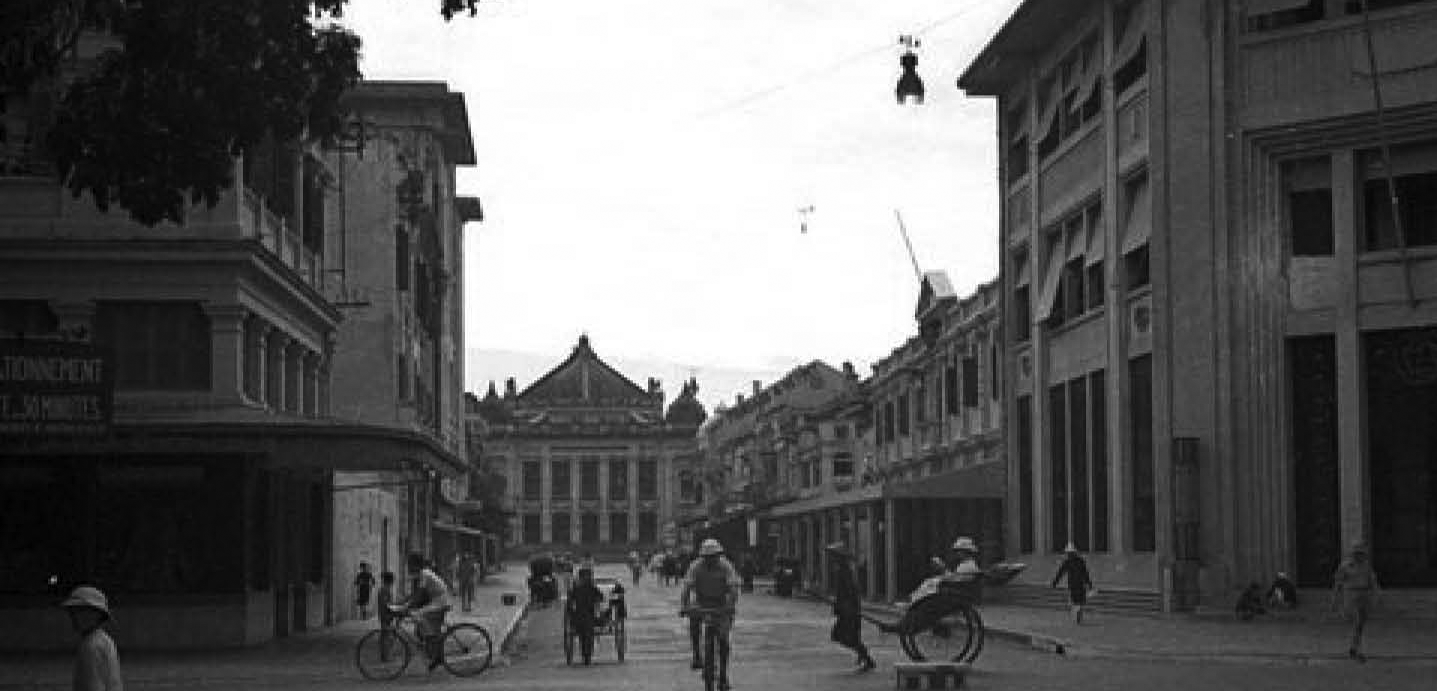 |
Trang Tien Street was formerly part of the villages of Cuu Lau, Thach Tran, and Tay Long, in Phuc Lam (Huu Tuc) commune, Tho Xuong district. In 1808, the Nguyen dynasty established the Bao Tuyen Bureau, a mint, here. Residents commonly referred to this area as Trang Tien.
Around 1886-1888, the French developed a road connecting the concession area through the Grand Opera House to Hoan Kiem Lake. The section from the Grand Opera House towards the lake was named Rue Paul Bert; the section between the French School of the Far East Museum and the Grand Opera House was named Rue de France.
After 1945, Rue de France was renamed Don Thuy; Paul Bert Street was renamed Trang Tien - Hang Khay. In 1949, the old Trang Tien section merged with Don Thuy Street, taking the name Phap Quoc; the Hang Khay section took the name Anh Quoc.
After the liberation of the capital on 10/10/1954, the names Phap Quoc and Anh Quoc were dropped, reverting to Trang Tien and Hang Khay. Trang Tien Street has retained its name to this day.
Pham Chieu
Archival photos