The issue of personnel shortages and officials taking on duties outside their expertise in communes and wards was a central topic at a recent dialogue conference in Khanh Hoa. The conference, which brought together nearly 200 commune-level officials, civil servants, and public employees, was chaired by Provincial Party Secretary Tran Phong and Provincial People's Committee Chairman Nguyen Viet Hung. Delegates raised numerous concerns regarding the operational mechanisms of the two-tier local government model, organizational restructuring, and personnel arrangements, with human resources receiving significant attention.
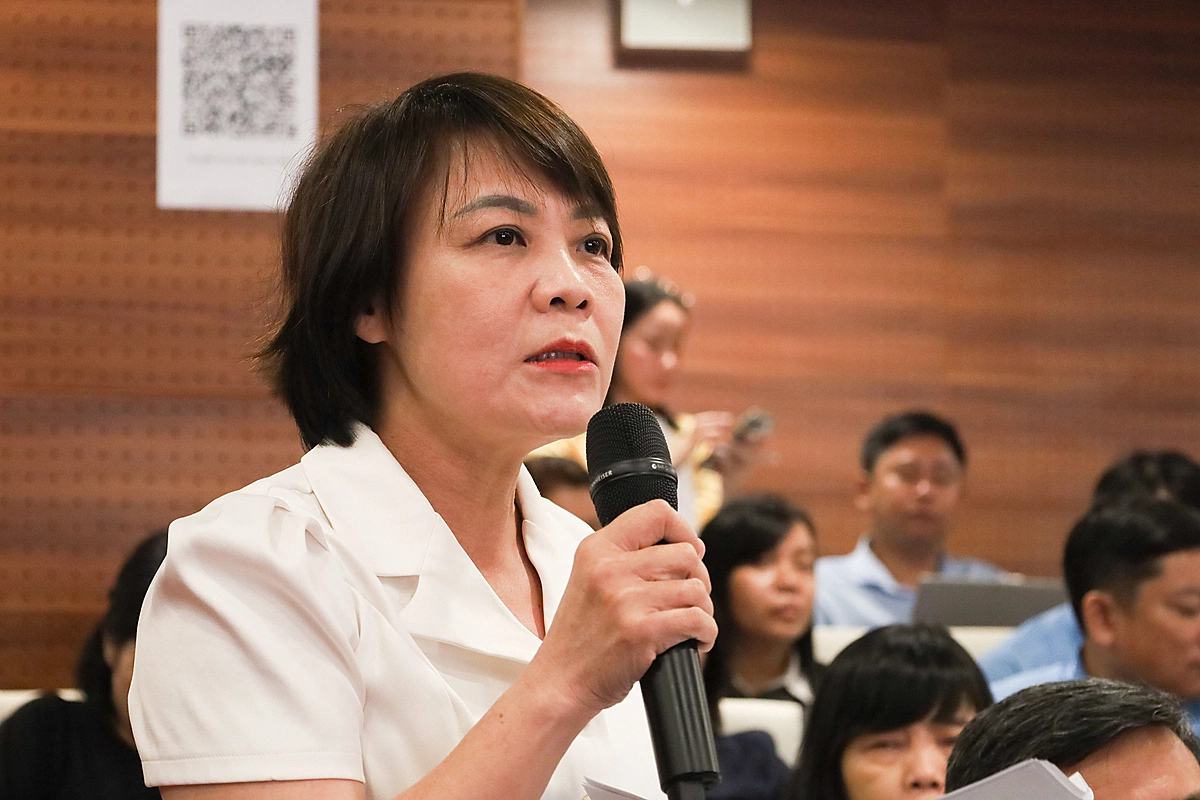 |
Ms. Truong Thi Thu Thao, Deputy Head of the Party Committee Building Board of Nam Nha Trang Ward, presented her views at the conference. *Minh Khue* |
Ms. Truong Thi Thu Thao, Deputy Head of the Party Committee Building Board of Nam Nha Trang Ward, highlighted the challenges faced by her locality. While the two-tier local government model has facilitated administrative procedures for citizens since the mergers, Nam Nha Trang Ward, covering 82 km2 with a population exceeding 130,000, faces a substantial workload in administration, land management, and environmental affairs. According to Ms. Thao, the ward experiences a personnel shortage, and some officials lack the specialized expertise required for environmental and mineral sectors. This often forces staff into non-specialized roles, such as a culture-society official also being responsible for healthcare. Furthermore, the Department of Economy - Infrastructure, despite having 24 staff members, manages a vast area and numerous tasks from various departments, leading to inefficient personnel allocation.
To address these issues, Ms. Thao proposed that the province flexibly allocate staffing, prioritizing localities with large areas and heavy workloads. She also advocated for increased specialized training for officials. Other communes and wards, including Phan Rang, Tu Bong, Ca Na, and Bac Ai Tay, echoed these concerns, reporting that their large areas and dense populations are not adequately served by the current number of civil servants. Some localities, such as Khanh Son, Phuoc Hau, Anh Dung, and Hoa Thang, further suggested allowing contracts within staffing quotas, particularly for land management and information technology positions.
Provincial authorities have begun to address these staffing challenges. Mr. Tran Gia Van, Deputy Head of the Khanh Hoa Provincial Party Committee Organization Board, explained that the province will provisionally allocate 2025 personnel when the two-tier local government model begins operating from 1/7/2025. He added that once the Central Government allocates staffing for the 2026-2031 period, the Provincial Party Committee Organization Board and the Department of Home Affairs will calculate and distribute personnel based on each locality's area, population, urbanization rate, economic development, and Party building requirements. Mr. Vo Chi Vuong, Director of the Khanh Hoa Department of Home Affairs, confirmed that his unit had submitted a plan to the Provincial People's Committee to recruit 417 personnel to meet post-restructuring needs. The examination is expected in July, with immediate results to ensure timely personnel additions for localities. However, Mr. Vuong noted that critical positions in information technology, construction, and land management often receive few applications in previous recruitment rounds. He urged localities to proactively seek and introduce human resources for these vacant positions.
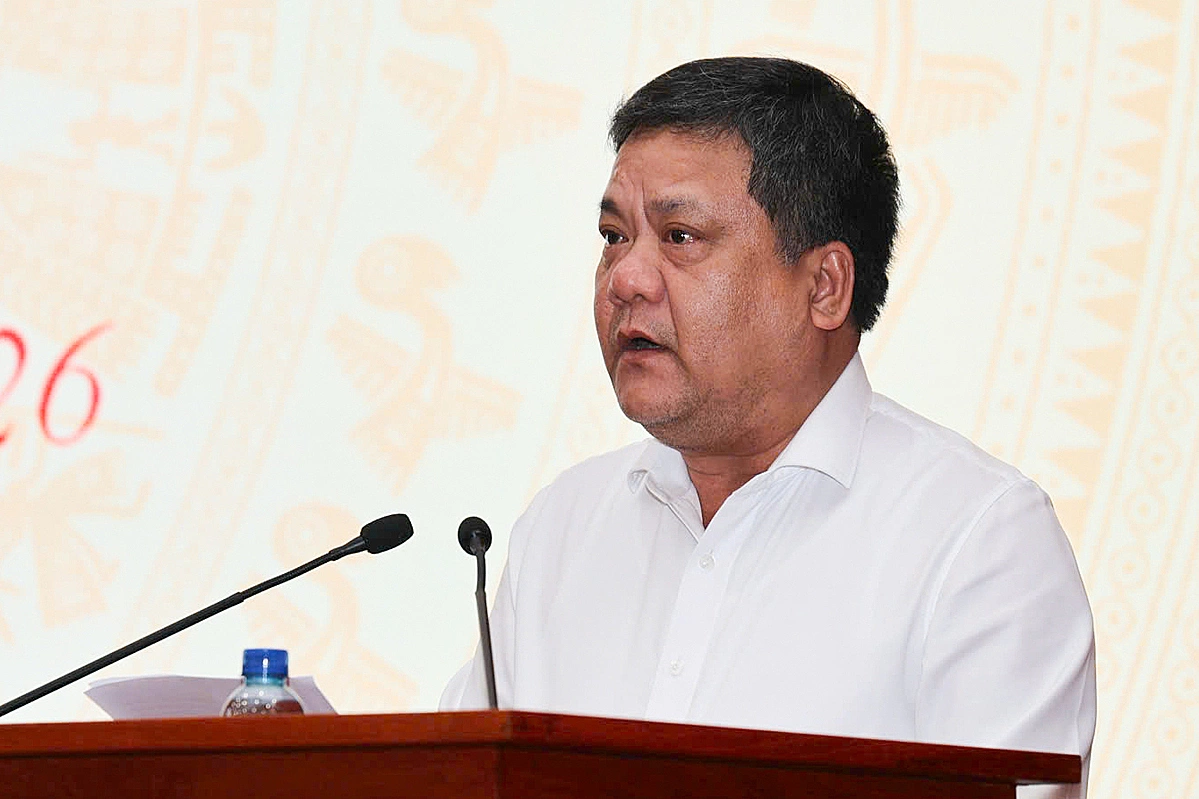 |
Mr. Tran Phong, Secretary of the Khanh Hoa Provincial Party Committee, spoke at the conference. *Minh Khue* |
Concluding the conference, Provincial Party Secretary Tran Phong issued directives to improve the situation. He assigned the Department of Home Affairs to coordinate with the Provincial Party Committee Organization Board to conduct a comprehensive review of each locality. This review will inform suitable staffing allocation plans, prioritizing areas with large geographical sizes, dense populations, and substantial workloads. He also urged communes and wards to proactively coordinate with relevant departments to promptly resolve difficulties. Mr. Tran Phong emphasized that leaders of departments and sectors must change their working methods, proactively engage with the grassroots level, communicate directly with localities instead of waiting for centralized conferences, and assign officials to monitor specific areas to promptly advise the Provincial People's Committee on addressing challenges.
Bui Toan