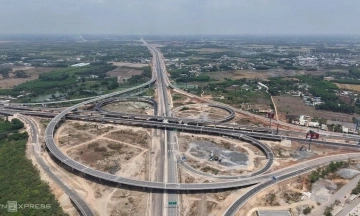
The investment policy for component project 2-2 of Ho Chi Minh City Beltway 4, utilizing a public-private partnership (PPP) model, was approved by the Dong Nai Provincial People's Committee on 22/5.
The total investment for the project exceeds 16.2 trillion VND. The Dong Nai provincial budget will contribute over 4 trillion VND, accounting for approximately 25%, with investors mobilizing the remaining over 12.2 trillion VND.
This 46 km section of the beltway will span nine wards and communes. It begins at Thu Bien Bridge, linking to Ho Chi Minh City across the Dong Nai River, and concludes at Chau Duc Bridge, which borders Ho Chi Minh City.
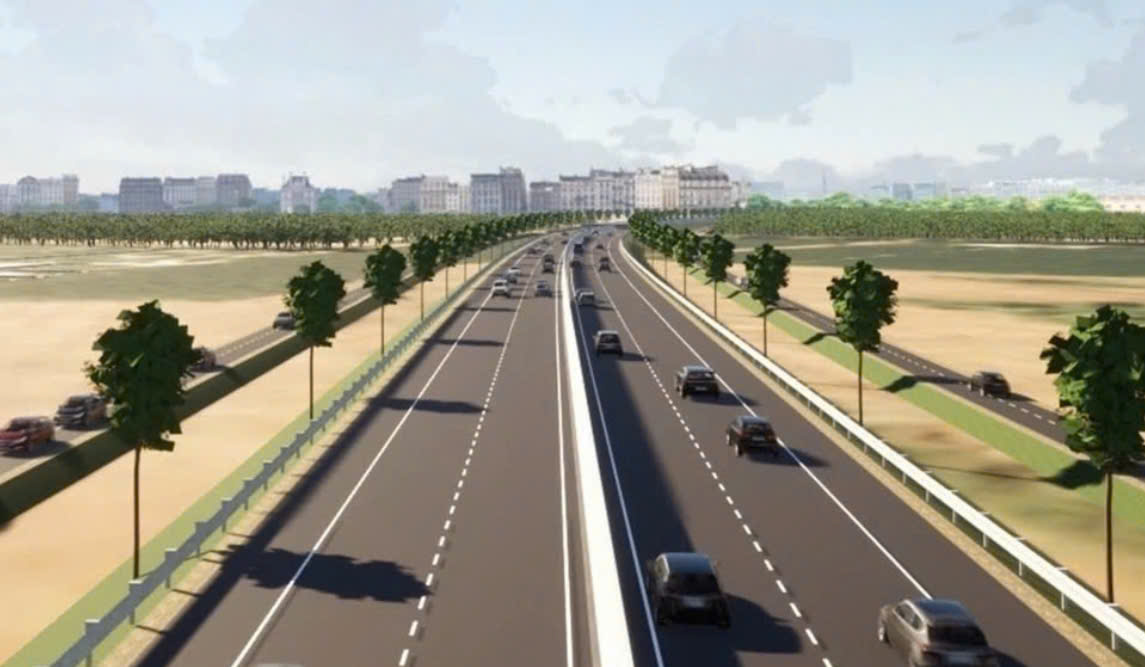 |
Perspective view of Ho Chi Minh City Beltway 4. *Photo: Ho Chi Minh City Department of Construction*. |
The plan outlines an 8-lane expressway with a design speed of 100 km/h. The project includes bridges, interchanges, drainage systems, lighting, traffic signaling, weight control stations, and toll booths.
Construction is slated to begin late this year, with the beltway expected to be operational by 2029.
In March, the Dong Nai Provincial People's Committee had approved component project 1-2, which focuses on compensation, resettlement support, and the construction of service roads along the route.
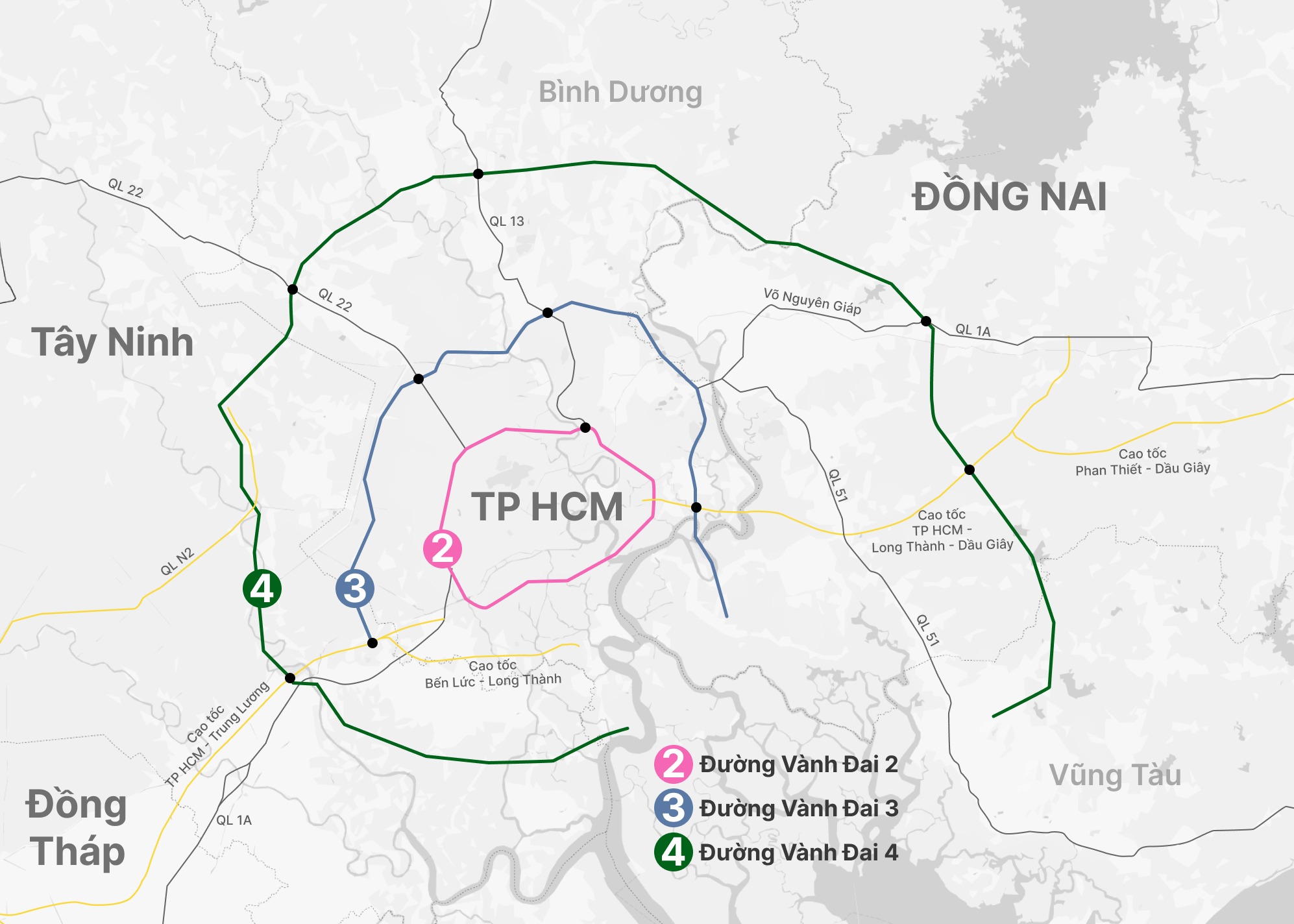 |
Alignment of Ho Chi Minh City beltways. *Graphic: Hoang Thanh*. |
Ho Chi Minh City Beltway 4, with a total length of approximately 207 km, will traverse Ho Chi Minh City and various localities within the Southeast region. This is the largest beltway project in the area, anticipated to enhance inter-regional connectivity, alleviate traffic congestion in Ho Chi Minh City's inner areas, and drive socio-economic development across the Southern key economic region.
Phuoc Tuan