 |
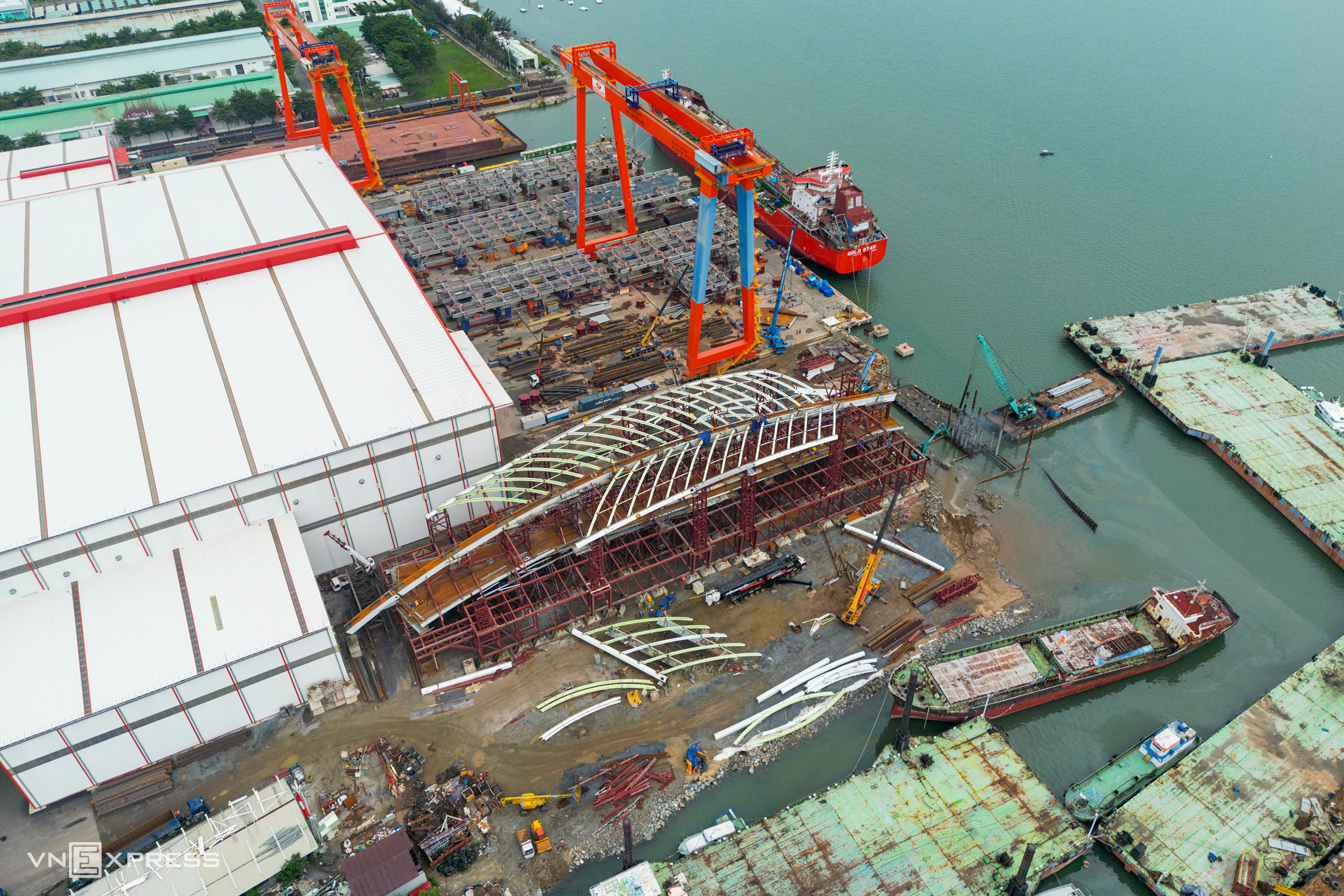
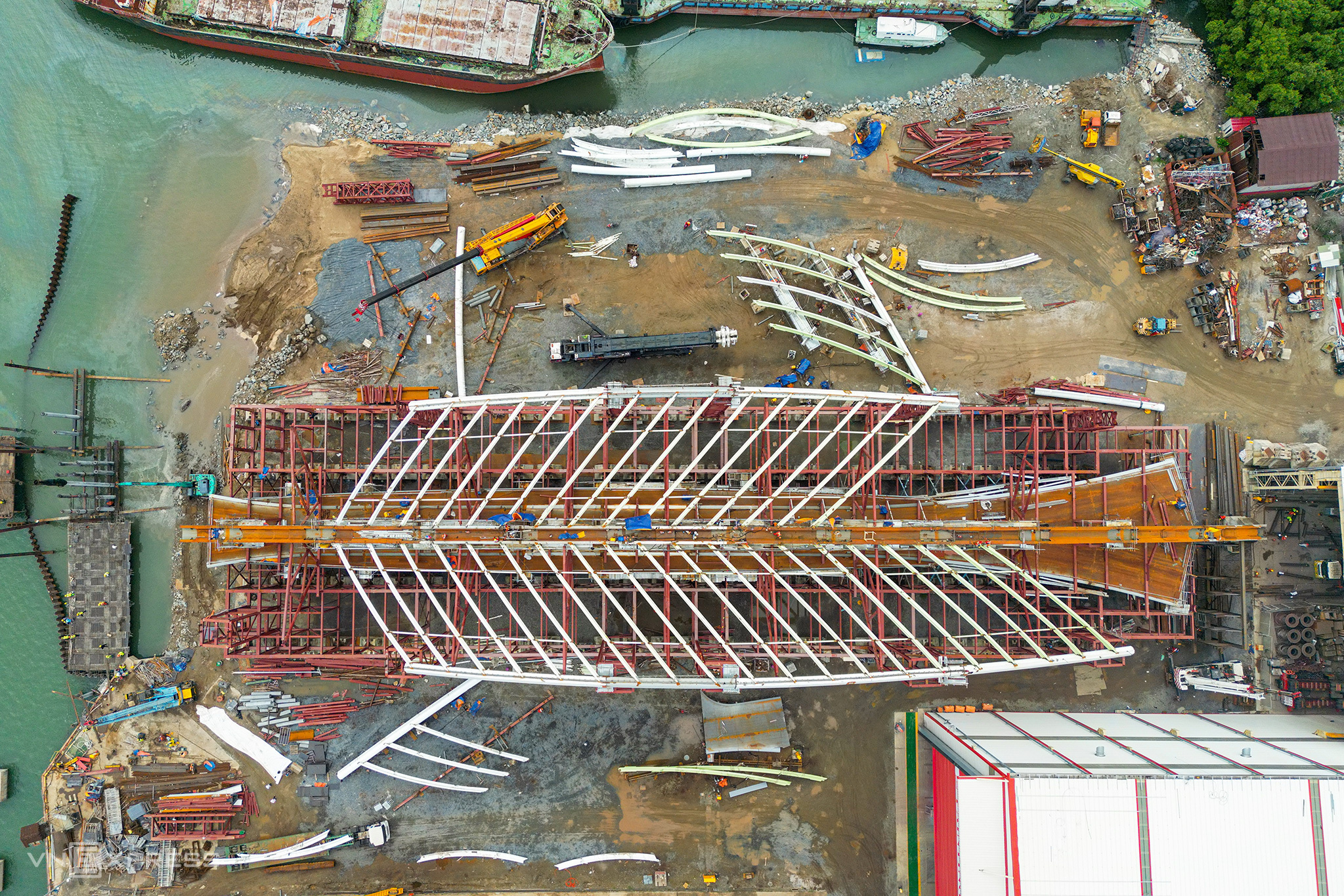
The assembly of a 3,400-ton steel arch for a new pedestrian bridge over the Saigon River is nearing completion at the Dai Dung Shipbuilding Joint Stock Company factory in Dong Xuyen Industrial Park, Rach Dua ward, TP HCM. This arch, over 187 m long, is being finalized from dozens of steel segments and is slated for installation on the Saigon River by late August. Expected to be completed by National Day 2/9, the bridge will connect the two banks of the Saigon River, creating a public space and an architectural highlight for the city center. The project, costing nearly 1,000 billion VND, is sponsored by Nutifood Nutrition Food Joint Stock Company.
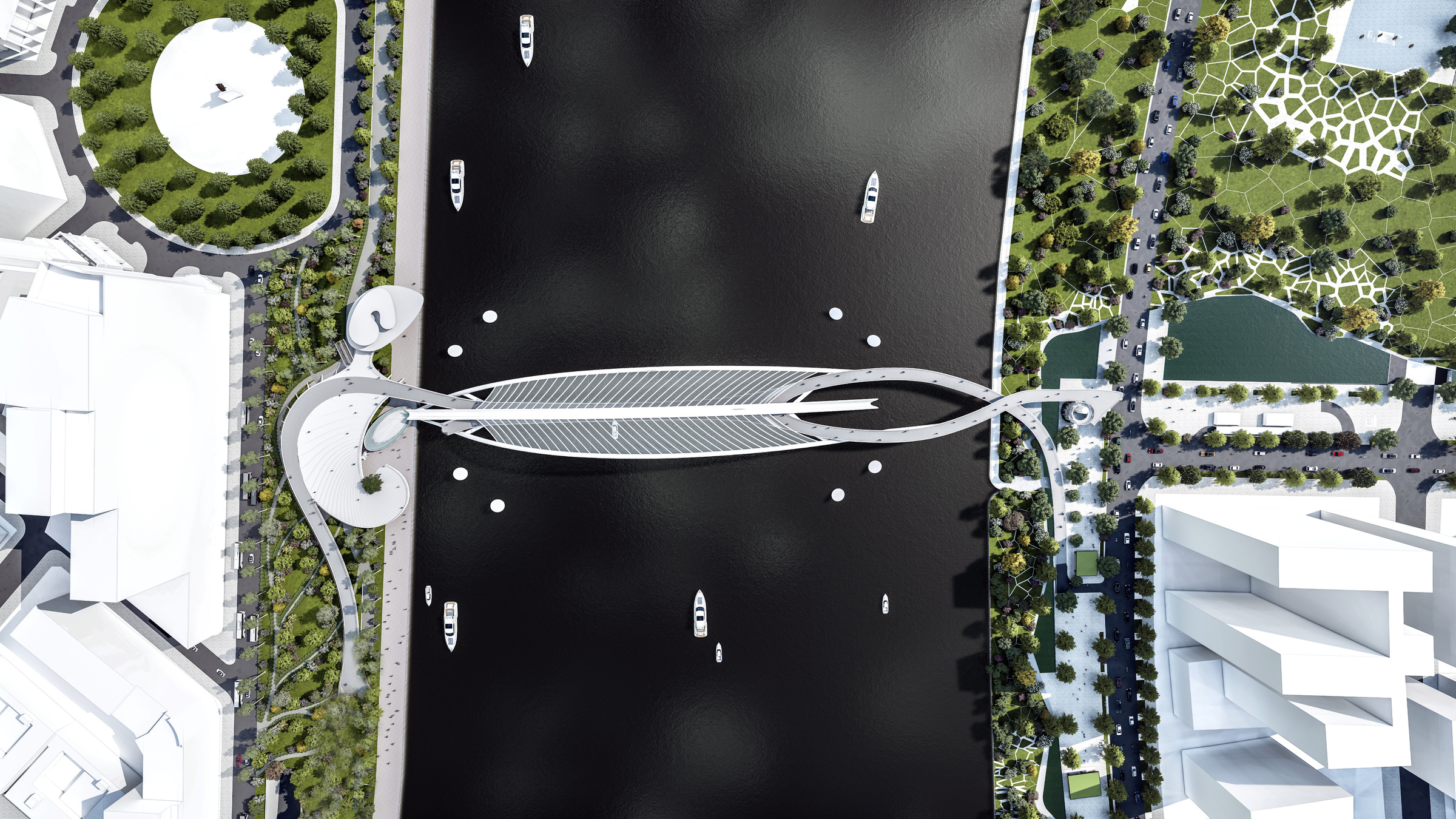
The bridge will be located between Ba Son Bridge and the Saigon River Tunnel. It will stretch 720 m long, with a width varying from 6 to 11 m, and a clearance of 10 m. The architectural design, resembling a nipa palm leaf—a characteristic symbol of the Southern region—was created by the joint venture Chodai, Takashi Niwa Architects, and Chodai Kisojiban Vietnam, winning the design competition.
 |
 |
At the factory, the steel arch is being assembled on a high staging platform. This platform, erected on a nearly 4,000 m2 plot of land, is as tall as an 8-story building. The temporary scaffolding alone required about 1,800 tons of steel. Workers are meticulously welding connections along the bridge's spine, as seen from above, bringing the nipa palm leaf-shaped frame to life.
On the top of the steel arch, workers are welding connections along the bridge's spine. On a nearly 4,000 m2 plot of land, a support system as high as an 8-story building has been erected to assemble the steel arch. The temporary scaffolding structure alone uses about 1,800 tons of steel.
 |
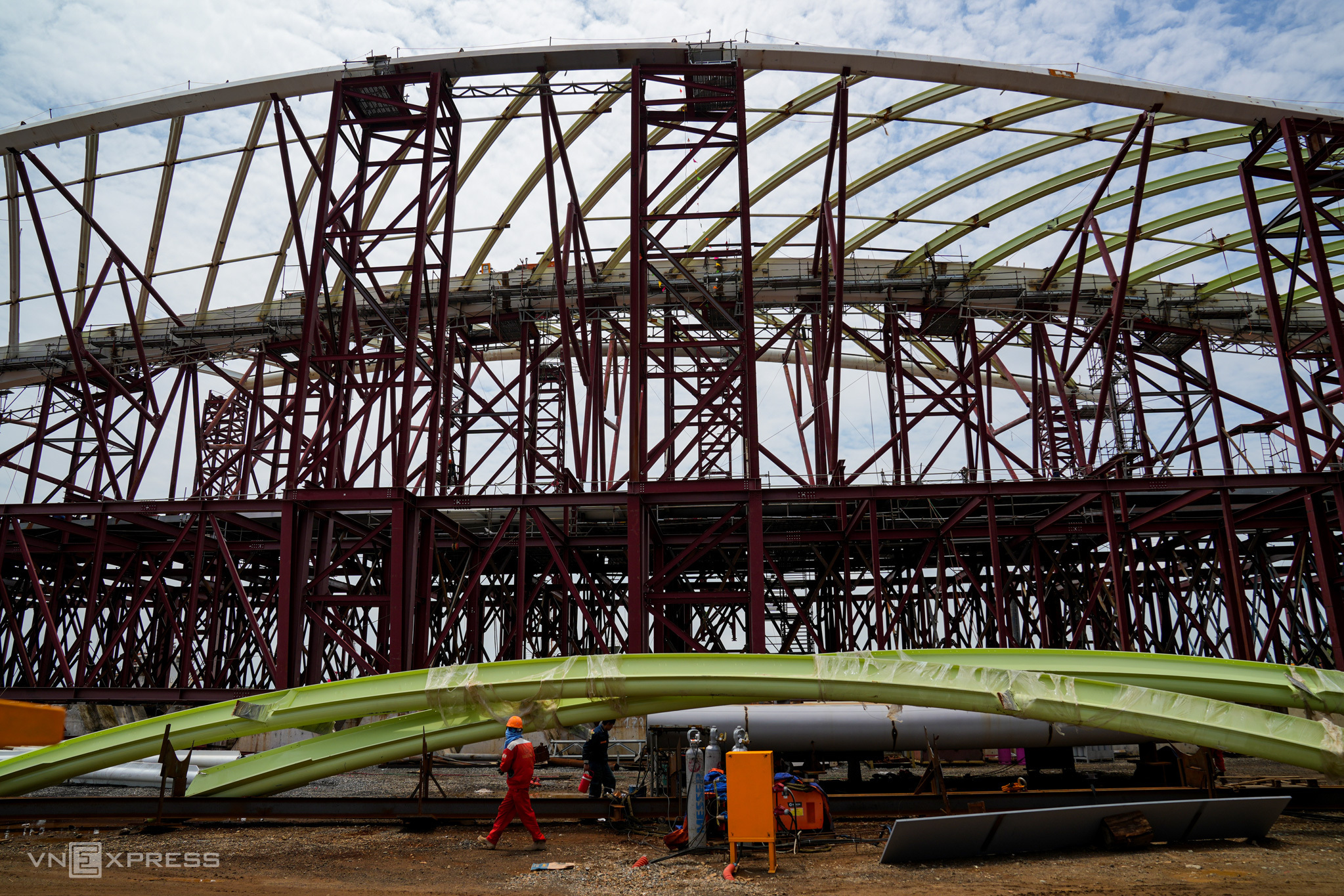
Steel components shaped like nipa palm leaves are assembled on the ground before being hoisted onto the assembly platform. The bridge arch consists of 14 sets of nipa palm leaf-shaped structures, all fabricated at the factory.
 |
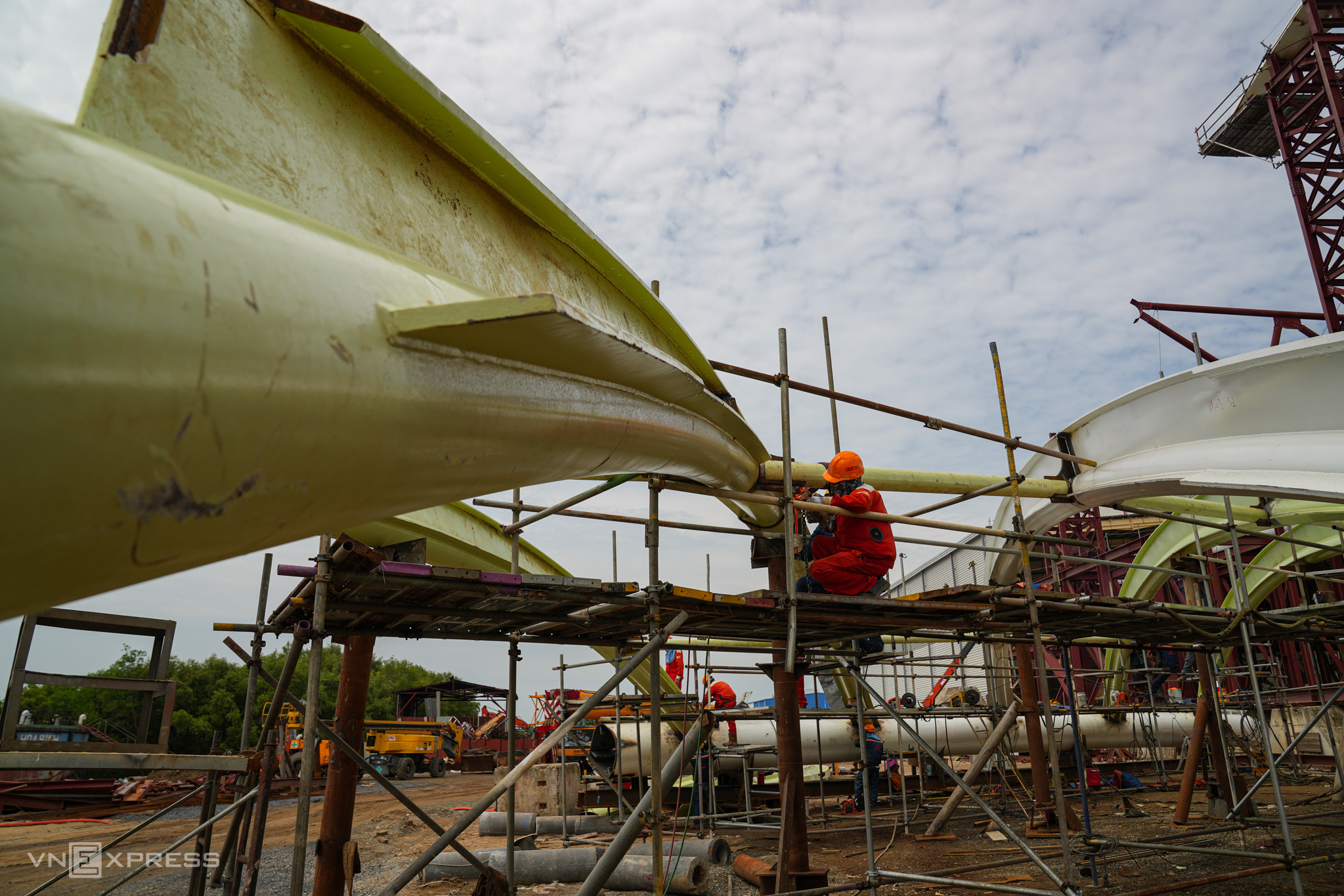
The bridge deck is fabricated at a workshop approximately 200 m from the assembly site. The bridge arch comprises 20 steel beam segments, 6-11 m wide, integrated with 800 mm diameter steel pipes as the main load-bearing structure. As of now, the project has achieved about 95% of its fabrication volume and over 70% of its assembly work. Duong Phuc Luoi, the factory director, stated that the most challenging part is fabricating the three-dimensional curved sections that form the nipa palm leaf shape, requiring each component to be precisely adjusted before assembly.
The factory uses a CNC laser steel cutting system and automatic welding machines to fabricate the bridge deck plates, minimizing warping during the manufacturing process.
In inaccessible areas, where machinery cannot reach, workers must enter confined spaces to weld submerged joints, while strictly adhering to safety procedures. According to Luoi, to ensure the fabrication progress of the 3,400-ton steel arch, at times the factory mobilized about 500 engineers and workers, working continuously for over two months.
The assembly yard for the arch is situated next to Ganh Rai Bay. Once fully assembled, the 3,400-ton structure will be transferred by specialized vehicles onto a 14,000-ton barge. It will then be transported to the central area of TP HCM for installation by late August.
The project is expected to be completed by National Day 2/9, connecting the two banks of the Saigon River, creating additional public space and an architectural highlight for the city center.
Location of the pedestrian bridge construction over the Saigon River. Graphics: Hoang Khanh
Truong Ha