On the afternoon of 9/10, the Da Nang City Steering Committee for Civil Defense concluded a training course, issuing certificates for inland watercraft operation to trainees. This force comprises officials and soldiers from the city's Military Command, self-defense militia, and core personnel from wards and communes.
After two days of final assessment, 100% of the trainees qualified for certification. They will be deployed to local areas, operating watercraft to access deeply flooded and isolated regions to evacuate residents and transport essential goods, following the "four on-site" principle.
The 33-day course, organized by the city's Steering Committee for Civil Defense in coordination with Maritime and Waterway College II, began on 25/8. Trainees received instruction on waterway traffic regulations, vehicle inspection, docking and undocking procedures, collision handling, and search and rescue.
Practical sessions took place in challenging weather conditions, simulating real-life rescue scenarios. During one training session near Thuan Phuoc bridge, trainees collaborated with local residents to rescue a person from drowning.
 |
Trainees practice operating a rescue boat on the Han River. Photo: Quang Cuong |
Da Nang is located in the South Central Coast region, with terrain ranging from coastal plains to western mountains, featuring two major river systems: Vu Gia and Thu Bon. The flood season typically occurs from October to December, accounting for 65-70% of the year's total water flow.
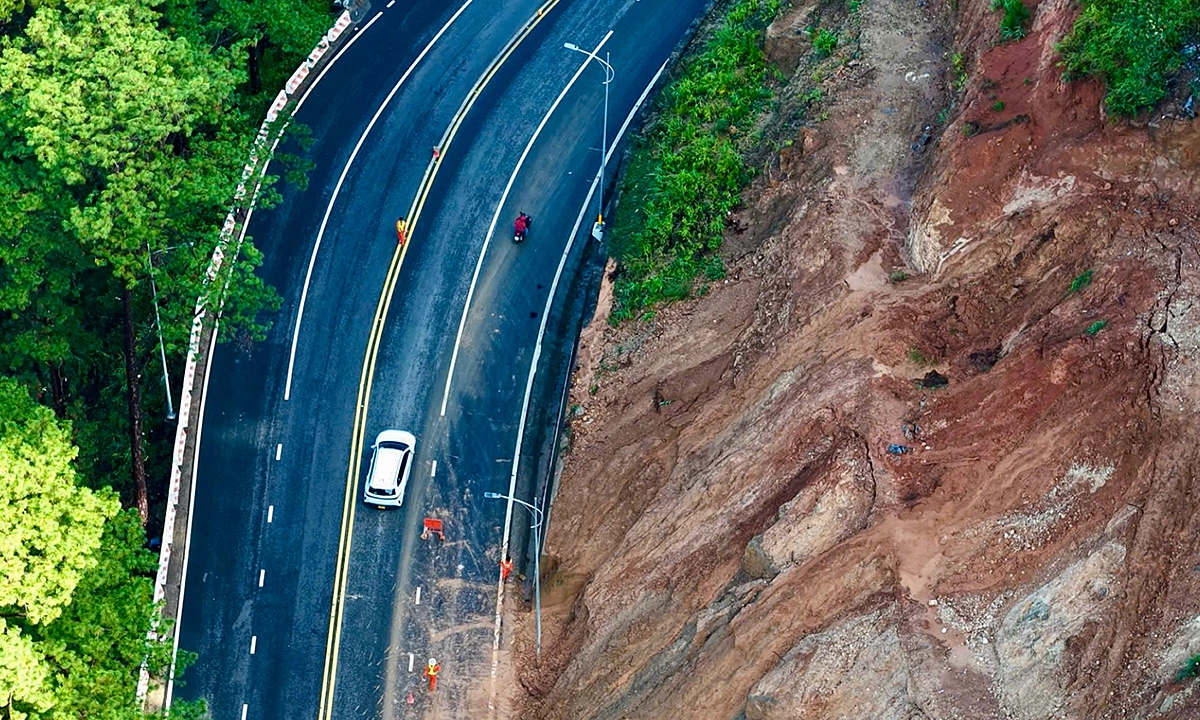
Recent heavy rains in early October caused localized flooding and landslides in some city areas. In the 24 hours leading up to the morning of 8/10, rainfall generally ranged from 50-130 mm, with Tam Tra recording 216 mm and Tam Ky 170,2 mm. Authorities evacuated residents from dangerous areas.
On 6/10, the City People's Council approved a project for relocating and stabilizing residents in disaster-prone areas, identifying approximately 8.895 households requiring resettlement. Of these, 7.174 households are expected to be arranged in 160 concentrated resettlement zones and sites.
Nguyen Dong