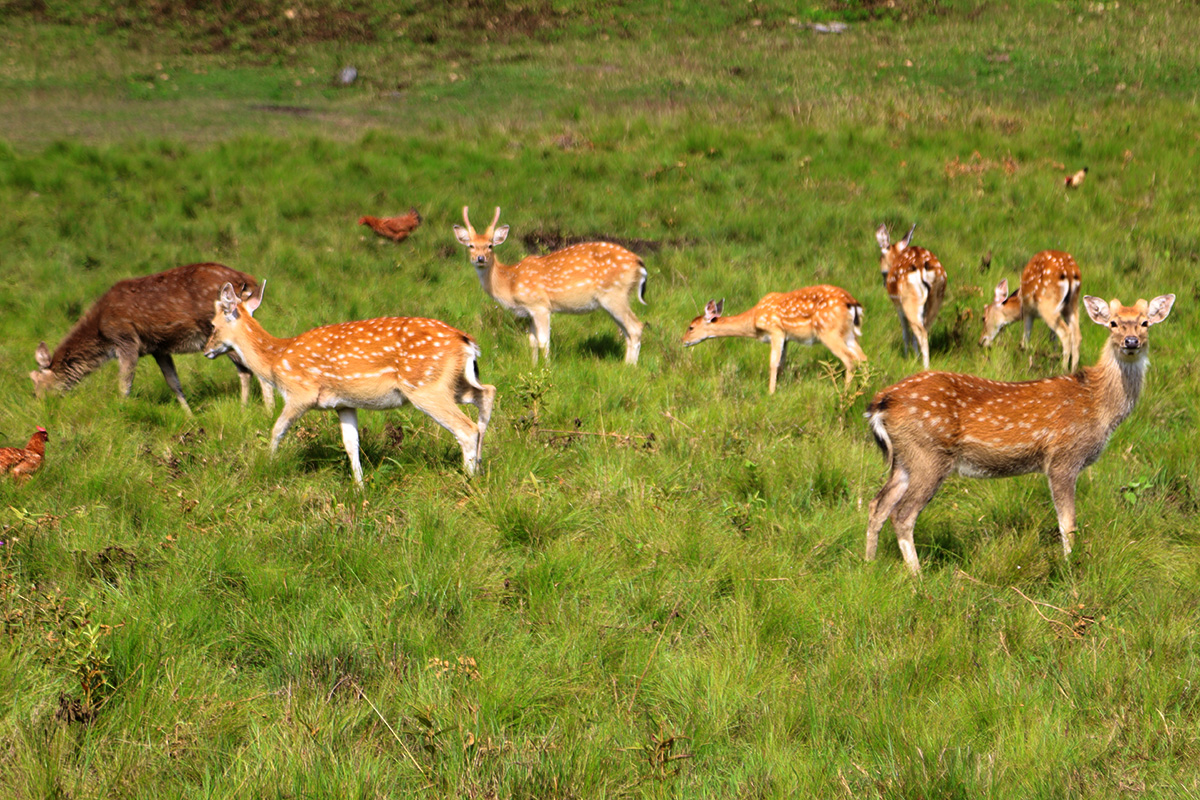
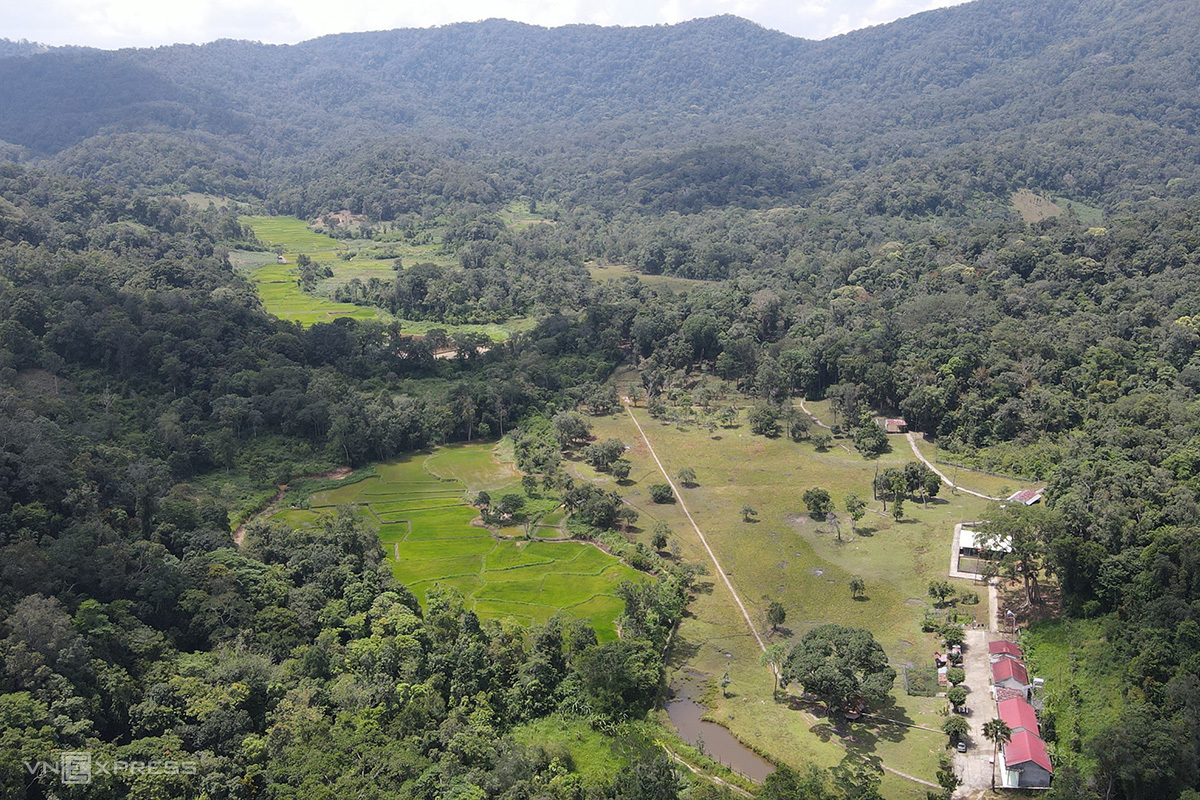
The Bai Nai area, spanning over 10 hectares deep within Kon Ka Kinh National Park, is currently home to 34 sika deer and eight sambar. Here, the animals freely forage, run, jump, and wallow in mud, thriving in a near-natural environment.
Tran Van Thu, Director of the Wildlife Rescue, Conservation and Development Center, explained that the area is named Bai Nai because it was originally a natural, mineral-rich grassland, which frequently attracted wild deer and sambar for foraging. Recognizing this habitat's suitability for hoofed animals, the national park established the rescue center and constructed a semi-wild breeding facility here in 2012.
 |
The Bai Nai valley is located within Kon Ka Kinh National Park. Photo: Ngoc Oanh |
A year later, the center received seven sika deer from a Pleiku business. These animals had endured prolonged captivity, leaving many emaciated, afflicted with skin diseases and digestive disorders, and nearly stripped of their natural instincts due to inadequate care.
The deer subsequently received treatment, nutritional supplements, and minerals, leading to their gradual recovery. They began to reproduce, with successive fawns boosting the herd's numbers annually. The center also acquired more deer through breeding and gene conservation programs. By 2019, it had distributed 30 breeding animals to residents in the buffer zone to support livestock development.
 |
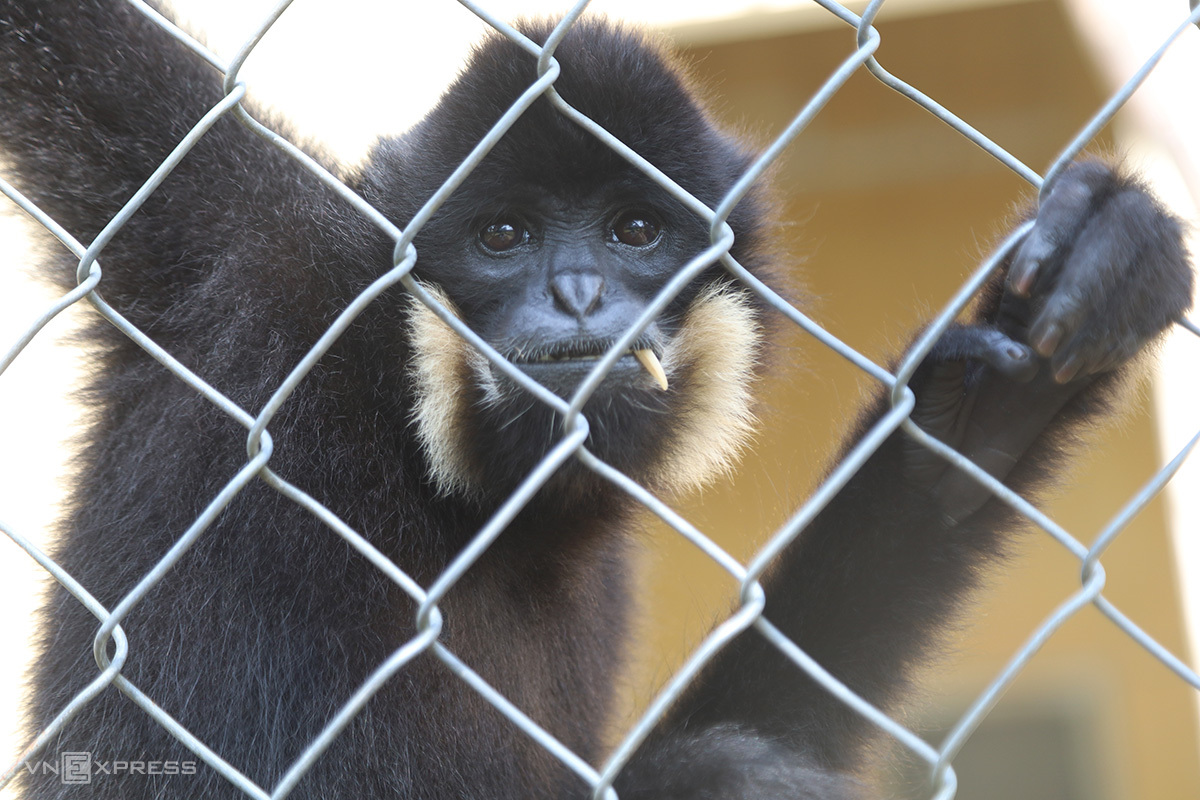
A yellow-cheeked gibbon is being cared for and rescued by the center. Photo: Ngoc Oanh |
Deer and sambar forage on the grassland in Kon Ka Kinh forest. Photo: Ngoc Oanh
 |
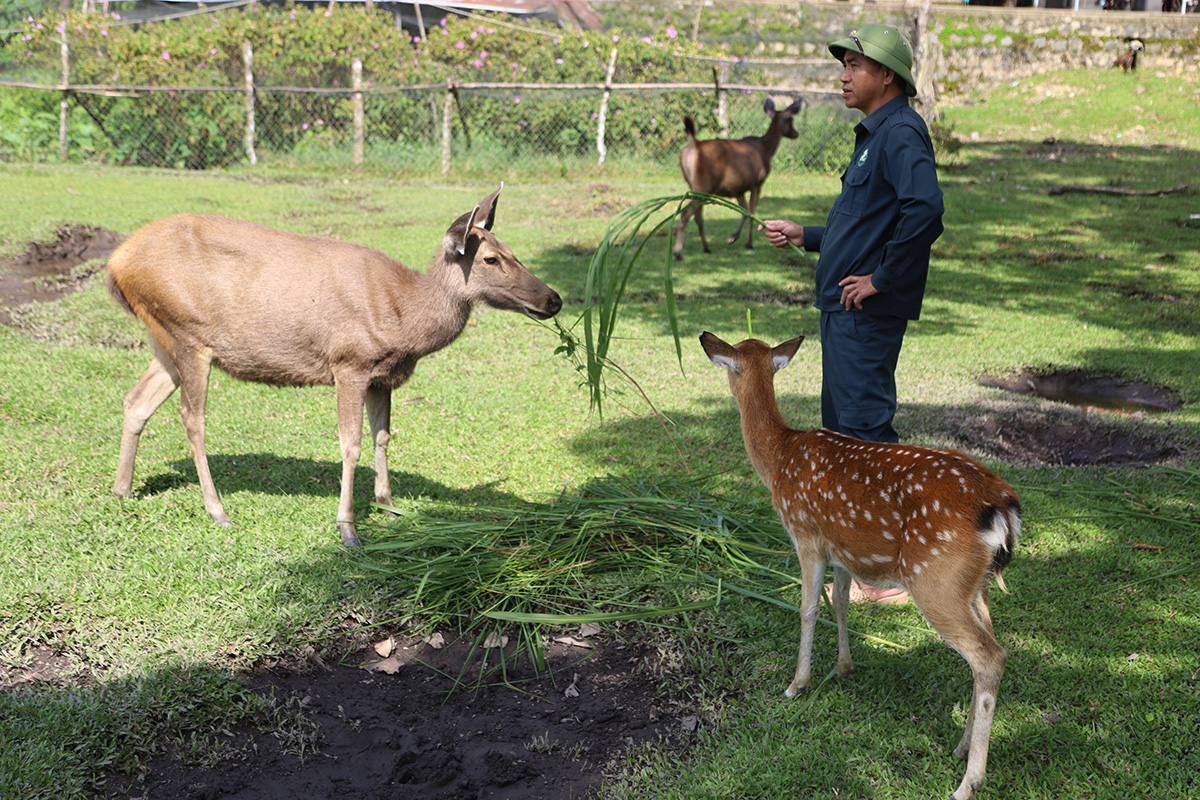
Tran Van Thu cuts grass for the deer and sambar. Photo: Ngoc Oanh
To ensure a consistent food supply, particularly during the dry season, center staff daily supplement fresh grass by foraging for leaves in the forest. Thu explained that sika deer have a digestive system more akin to goats than buffalo or cattle. Therefore, their diet requires leaves, fruits, and mineral licks to prevent digestive disorders and enhance immunity.
In contrast to the relatively tame sika deer, the eight sambar maintain their wild instincts. Upon sensing human presence, they quickly retreat into dense vegetation to hide. Each adult sambar, weighing approximately 100 kg, was transferred from captive facilities that could no longer provide adequate care.
Beyond deer and sambar, the center actively rescues numerous rare and wild species, including pangolins, turtles, pythons, gibbons, langurs, and pig-tailed macaques. Rehabilitated individuals that meet release criteria are returned to their natural habitats.
 |
Gia Lai's ecotourism development project, approved on 8/7, designates Bai Nai and the rescue area as future attractions. These sites will offer experiences integrated with environmental education, with projected revenues reinvested into animal rescue operations and forest protection.
The project outlines five sites and 12 ecotourism routes, totaling over 200 km, within Kon Ka Kinh National Park. During giai doan 2026-2030, the province plans to invest nearly 300 billion VND to complete infrastructure supporting tourism and conservation efforts.
Kon Ka Kinh National Park, covering over 42,000 hectares, features a peak of 1,748 meters, often referred to as Gia Lai's "roof". The park boasts a diverse tropical forest ecosystem, providing a habitat for many rare species, including the grey-shanked douc langur.
Ngoc Oanh