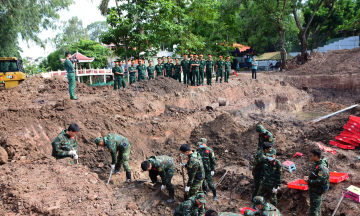
On 19/7, Doctor Doan Ngoc Khoi, Deputy Director of the Quang Ngai General Museum, announced that the kilns were discovered during an excavation of two pits covering approximately 100 m2 at the ancient Chau Sa citadel in Tinh Khe commune.
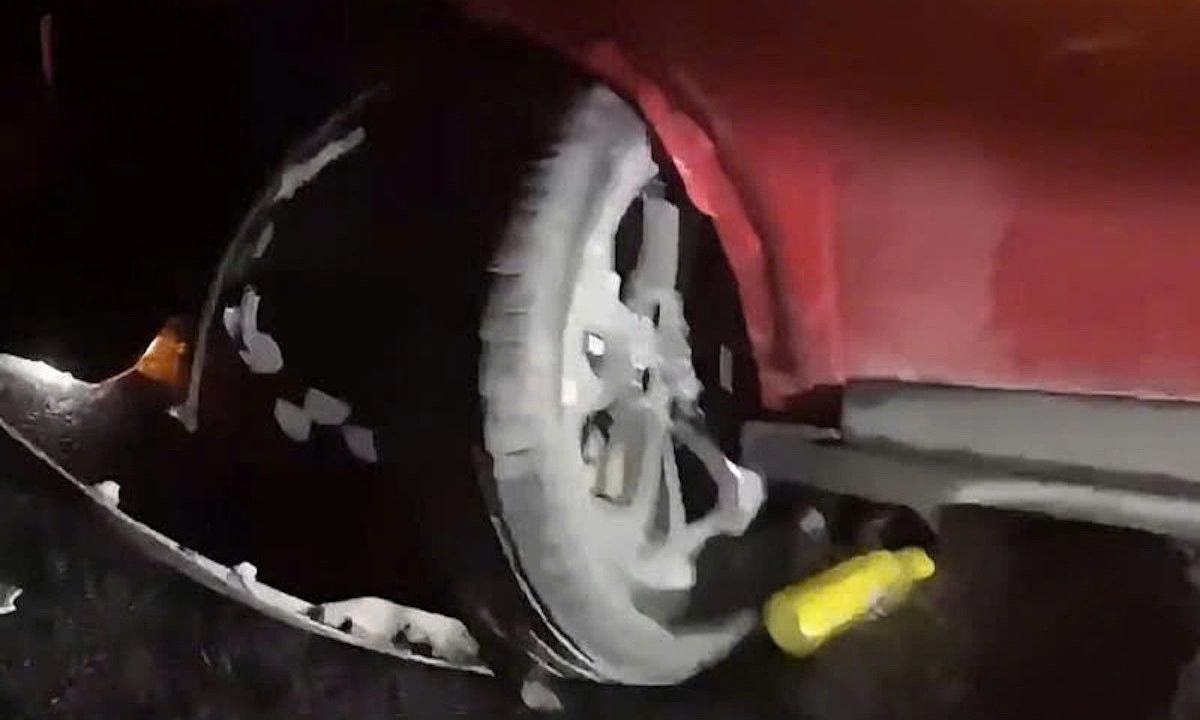
The kilns, largely intact, are oval-shaped, measuring about 3,5 m long and one meter wide, and date back to the 2nd-3rd centuries. Alongside the kilns, the archaeological team recovered numerous tile fragments, charcoal, and related artifacts.
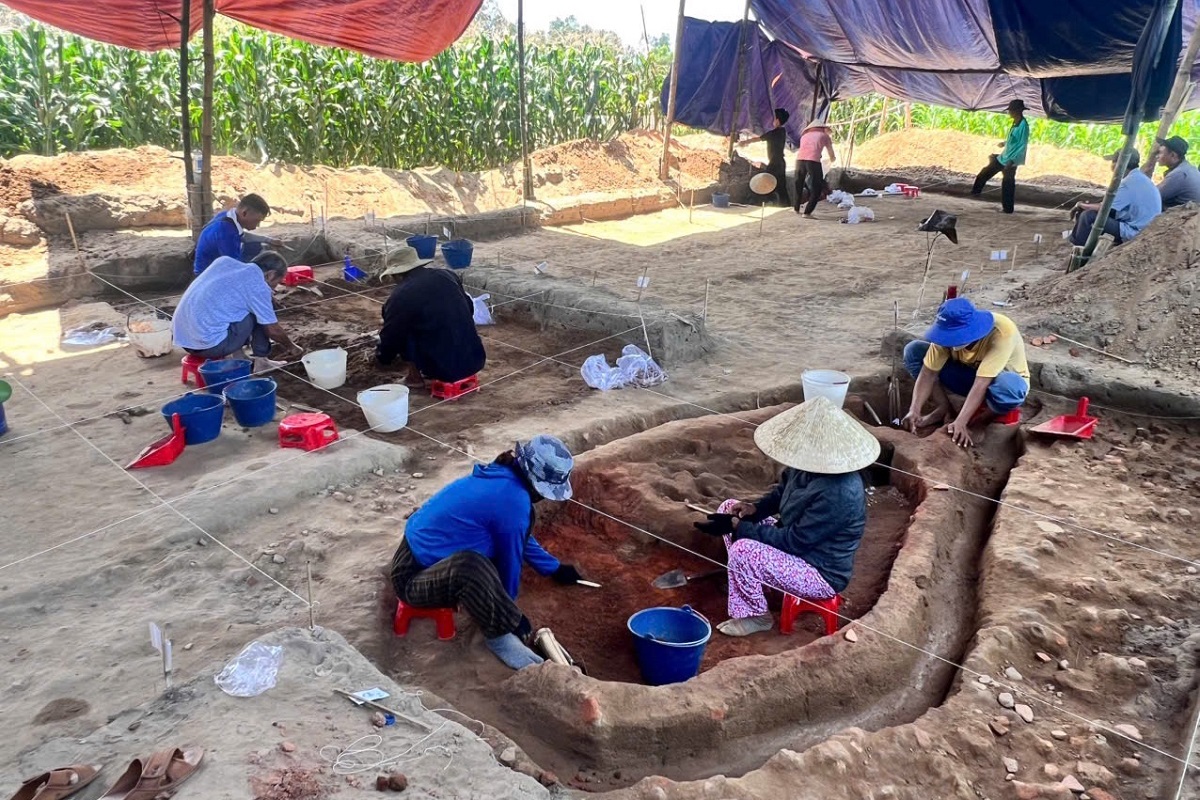 |
The kilns were excavated in the ancient Chau Sa citadel area. Photo: Minh Huy |
The emergency excavation was initiated after local residents, while digging holes for planting trees, exposed a portion of an ancient kiln. The relic, lying under about 30 cm of alluvium, was vulnerable to agricultural activities, prompting the Quang Ngai Department of Culture, Sports and Tourism to propose urgent excavation. Previously, in 2006, the Quang Ngai General Museum had discovered a Cham kiln in this area.
"The 4 kilns discovered so far indicate that the ancient Chau Sa citadel once housed an entire complex of Cham tile kilns", Doctor Khoi stated.
According to him, this discovery helps clarify the material production techniques of ancient Cham residents and provides additional research material on the transitional period from Sa Huynh culture to the formation of ancient cities in the central region.
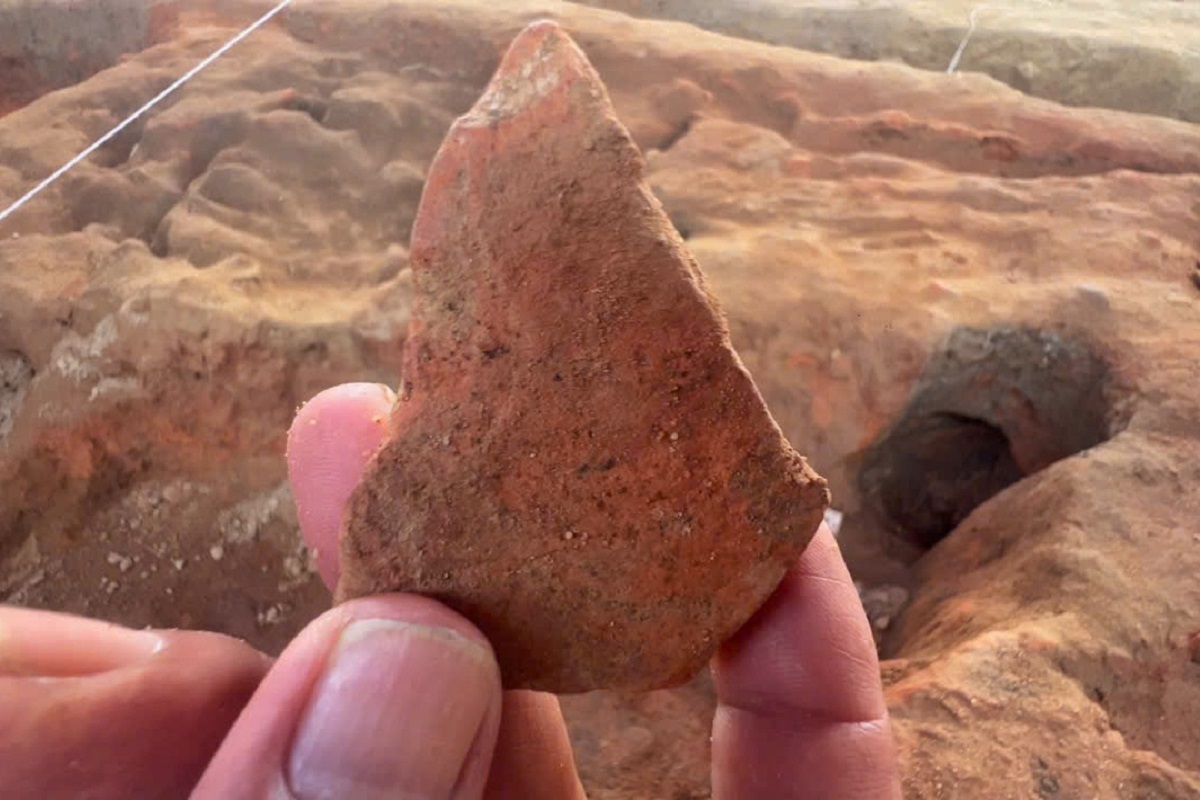 |
Broken tile fragments in the kiln. Photo: Minh Huy |
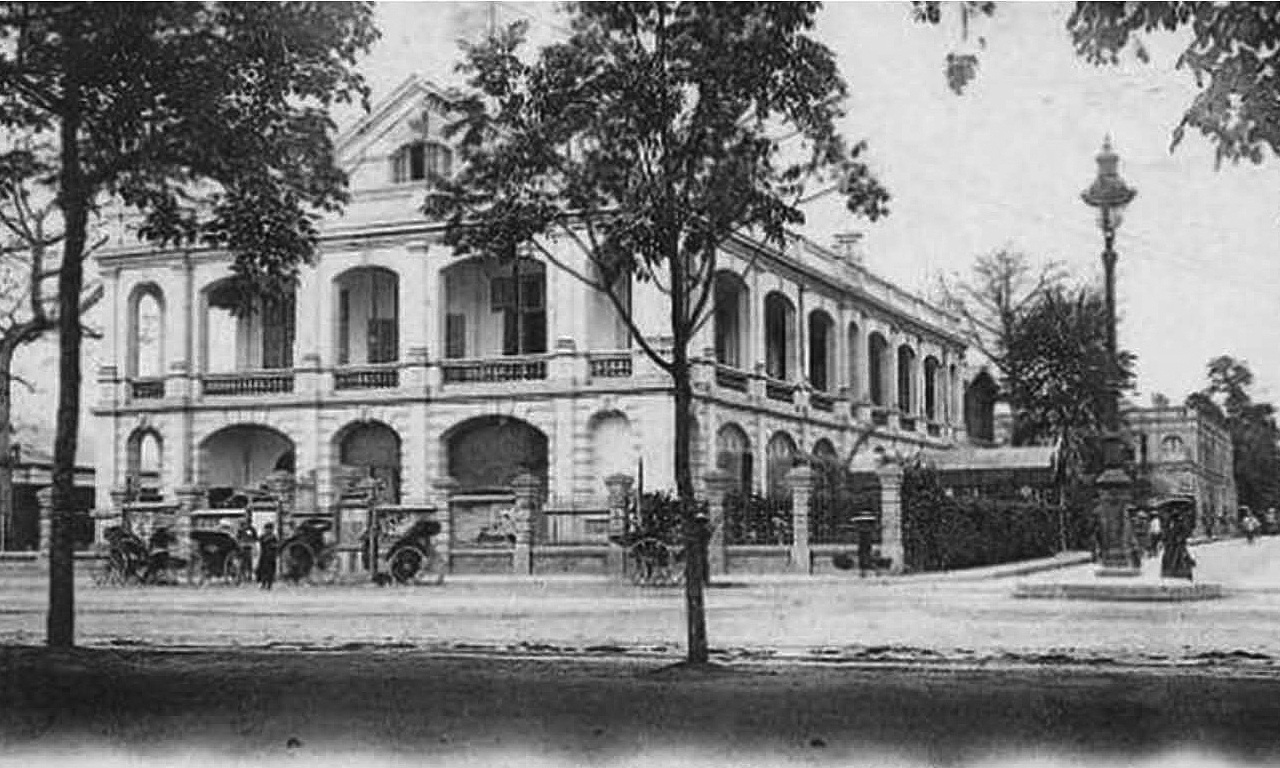
The ancient Chau Sa citadel is situated on the north bank of the Tra Khuc River, spanning Tinh Khe commune and Truong Quang Trong ward. Constructed before the 10th century, the structure featured two defensive walls, inner and outer, connecting the Tra Khuc River to Dai and Sa Ky estuaries, which provided trade and defense advantages.
After Dai Viet took control of this land in 1471, King Le Thanh Tong chose Chau Sa citadel as the location for the Thua Tuyen (administrative unit) of Quang Nam, governing the area from Quang Nam to Phu Yen.
Designated a national relic since 1994, most of the ancient citadel's area is still cultivated by local residents. Experts believe that the primary use of manual farming tools, rather than machinery, has preserved many underground artifacts.
Doctor Khoi proposed expanding the excavation area, combining research with conservation, and re-planning agricultural land around the ancient citadel.
"Instead of excavating and then refilling, we could build protective roofs, create visitor corridors, and reconstruct ancient pottery kilns to transform this site into a center for research, education, and cultural tourism", he said.
Pham Linh