On 23/4, the Ninh Binh Department of Culture and Sports announced its collaboration with specialized agencies to determine the age and function of three wooden stakes. These stakes were uncovered during the dredging and embankment project along the Van River, near Cha La Bridge in Hoa Lu Ward.
According to the Ninh Binh Provincial Museum, on 15/4, workers operating an excavator to dredge the right bank of the Van River, approximately 30 meters north of Cha La Bridge, discovered three large wooden stakes emerging from the sedimentary mud. The construction unit subsequently removed the stakes using the excavator before reporting the find to authorities.
Initial assessments indicate that all three stakes are solid, round timber, with one end sharpened and the other decayed. The stakes measure 3,76-4,15 meters in length and 1,16-1,46 meters in circumference, with the sharpened tip extending about 1,1 meters. The stake bodies bear visible marks of careful carving, suggesting consistent craftsmanship.
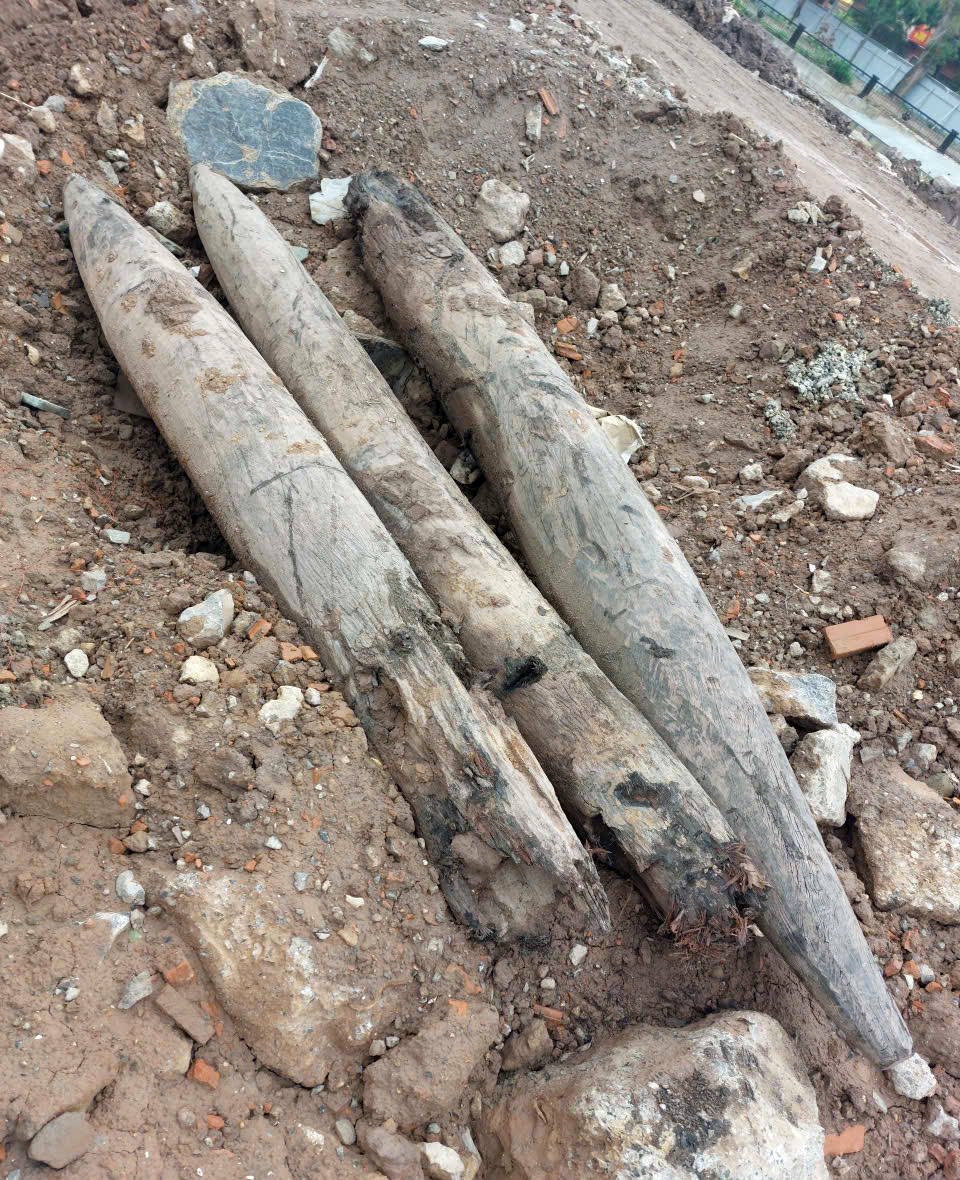 |
The discovered wooden stakes are quite intact. Photo: Hoa Lu |
At the time of discovery, the stakes were vertically embedded with their sharpened ends pointing downwards, and parts of their bodies exposed above the mud. The three stakes were arranged in two parallel rows, oriented north-south, aligning with the Van River's current. The distance between the two rows was approximately 2 meters, and stakes within the same row were also about 2 meters apart. One row contained one stake, while the other held two stakes.
Experts believe the careful crafting, vertical placement, and intentional geometric arrangement of the stakes indicate they are man-made artifacts, not naturally occurring driftwood. It is likely that these stakes were installed at the same time, forming part of a historical site and serving a common purpose.
Historians note that this system of stakes shares similarities with wooden stakes previously found at Sa Market in Bac Ninh, within the Luc Dau Giang battlefield area, which was significant during the resistance against the Yuan-Mongol invaders. These similarities include crafting techniques, shape, and river mouth location. Consequently, experts suggest these discoveries could be remnants of a Tran Dynasty defensive formation or military structure.
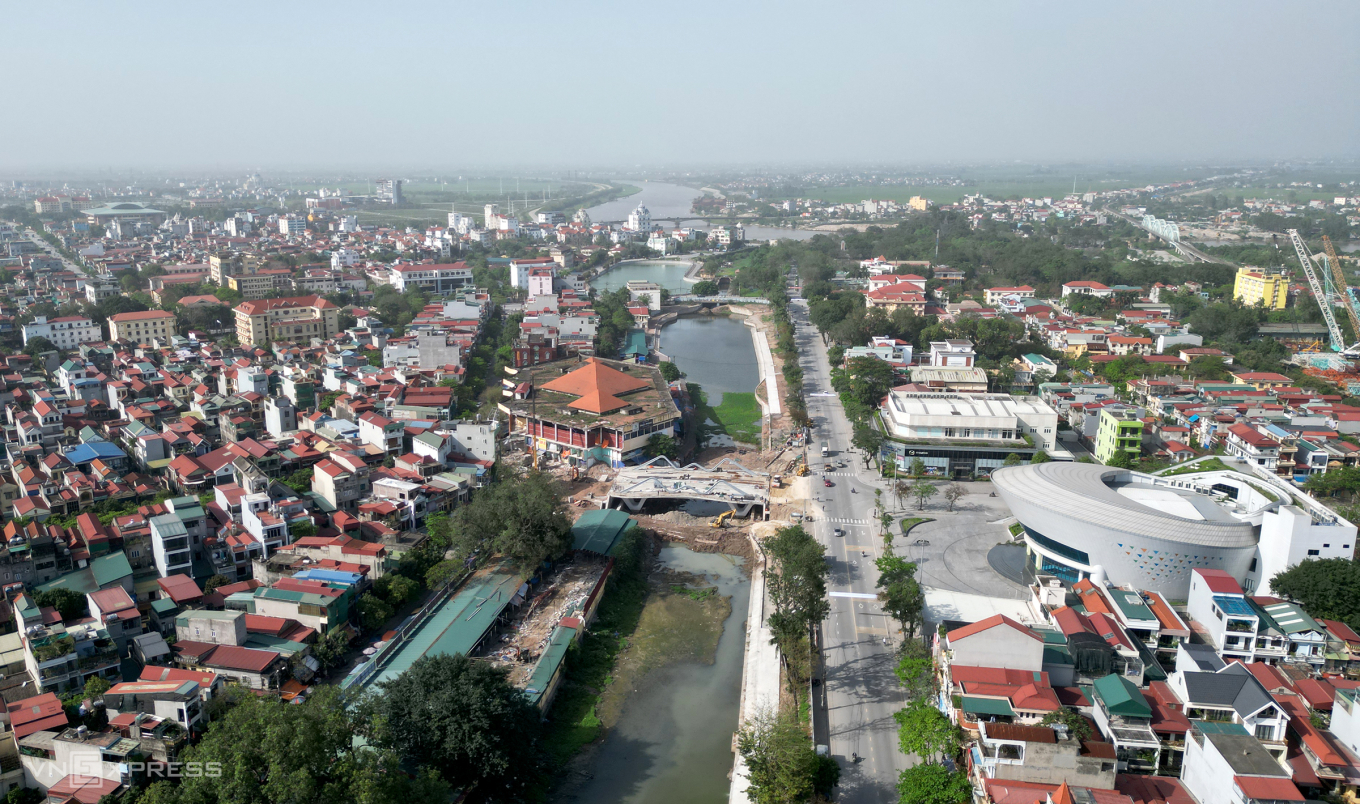 |
Van River where the wooden stakes were found. Photo: Le Hoang |
Nguyen Cao Tan, Deputy Director of the Ninh Binh Department of Tourism and Vice Chairman of the Ninh Binh Provincial Historical Science Association, stated that the Van River is an ancient waterway with a rich history, playing a crucial role in the transportation and defense systems of the Hoa Lu capital. The discovery of these wooden stakes here suggests the existence of a defensive structure at the capital's southeastern gateway.
He added that the Van River was not only a strategic waterway connecting the Day River, Vac River, and Than Phu estuary but also a vital shield protecting the capital through numerous dynasties.
Vu Thi Thu, Deputy Director of the Ninh Binh Provincial Museum, reported that after receiving the artifacts, the unit cleaned and preserved them and will establish a professional council for assessment and expert consultation. She stated, "While there is insufficient evidence to precisely determine their age and function, the technical characteristics and site conditions indicate an organized man-made structure, likely related to Tran Dynasty military activities in the 13th century."
Based on the initial survey findings, the Provincial Museum has requested the project's investor to review the entire construction area, particularly in regions with similar terrain and sedimentary conditions to the discovery site. The specialized agency also mandated that if more wooden stakes or similar remnants are found, the construction unit must immediately halt work, preserve the current state, and report to authorities.
Le Hoang