Situated at an altitude of over 1,500 meters, many villages in Na Ngoi commune have experienced frost and hoarfrost from midnight to early morning since 29/11. Trees and crops are covered in a white layer of ice. Some roads have become slippery and difficult to navigate.
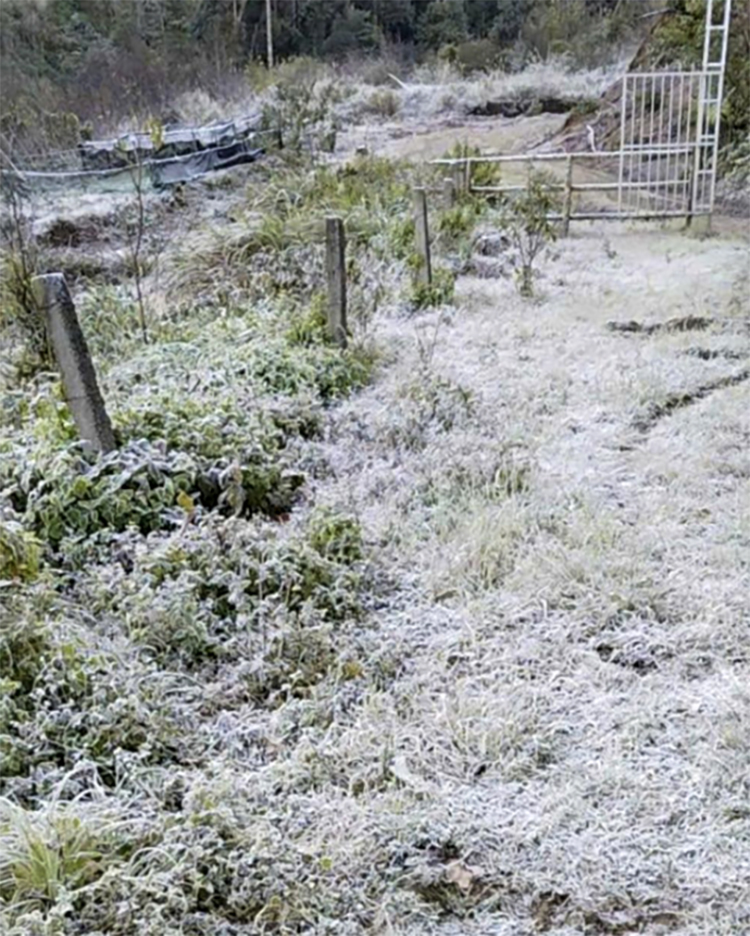 |
Ice covers the vegetation in Buoc Mu village, Na Ngoi commune, on 1/12. *Photo: Hai Thuong* |
According to a leader at the Buoc Mu Border Control Station, Na Ngoi Border Post, the ice begins to melt gradually after 9h each day once the sun emerges. This phenomenon has disrupted residents' lives and put crops at risk of damage. Many families cultivating peach trees are concerned that the cold will delay the blooming of flowers, preventing them from being sold in time for Tet Nguyen Dan (Lunar New Year).
 |
Trees frozen due to the ice. *Photo: Hai Thuong* |
Border guards have arrived to assist residents in the villages with reinforcing homes and providing guidance on caring for and warming their livestock and poultry to minimize losses.
According to the meteorological agency, temperatures in Nghe An are expected to remain low in the coming days. Beyond Na Ngoi, other mountainous and high-altitude communes such as Na Loi, Muong Tip, and Nam Can (formerly part of Ky Son district) are also likely to experience hoarfrost and frost.
 |
Border guards assist residents in reinforcing their homes to protect against severe cold. *Photo: Hai Thuong* |
A strong cold front swept into the northern region from 27/12, subsequently spreading to the North Central region. The lowest temperature in the North plummeted to 2 degrees Celsius, recorded in Dong Van and Sin Ho on the morning of 28/11. One day later, Ba Vi, Ha Noi dropped to 9 degrees Celsius, marking the lowest temperature since the beginning of winter.
Forecasters predict that temperatures in the northern and central regions will gradually rise in the coming days as the cold front weakens.
Duc Hung